


















































Huawei Opens Its Chip Interconnect Patents for Free in a Bid to Take on Nvidia's AI Empire
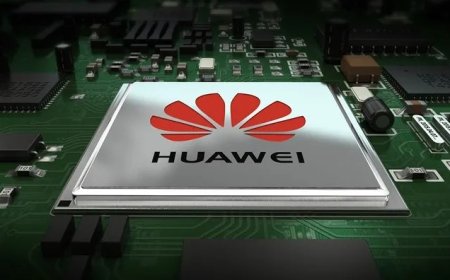
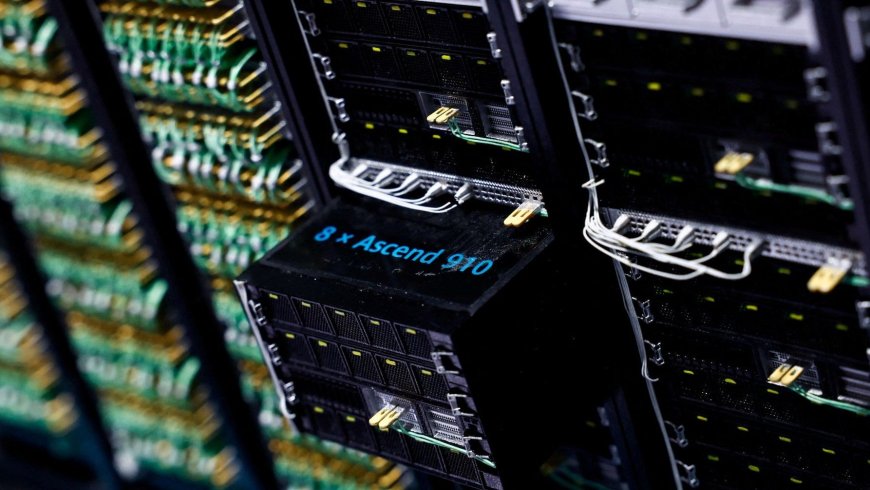
Huawei is offering free licences for patents covering UnifiedBus, its chip-interconnect technology, and has set up dedicated semiconductor and artificial intelligence patent teams, as it tries to build an overseas computing ecosystem around its Ascend processors to rival Nvidia.

Huawei Opens Its Chip Interconnect Patents for Free in a Bid to Take on Nvidia's AI Empire
Huawei is giving away access to some of its most strategically important chip technology for free. The Chinese company is offering royalty-free licences for patents covering UnifiedBus, the interconnect technology that links its AI processors together, as it tries to build a computing ecosystem broad enough to challenge Nvidia's dominance in artificial intelligence hardware.
The move was disclosed by Huawei's chief intellectual property officer, Alan Fan, in an interview with the South China Morning Post, and highlighted by DigiTimes on November 26. It is part of a wider push that also sees Huawei create dedicated patent teams for semiconductors and artificial intelligence, moving some engineers out of research and development roles to staff them.
Two new patent teams for chips and AI
Huawei's intellectual property operation was built on telecommunications, where the company has long been one of the world's biggest patent holders. It is now extending that operation into computing. Fan told the South China Morning Post that the company had created a semiconductor IP team and an AI-focused unit, with engineers transferred from its research and development departments.
The reason, he said, is that Huawei is now generating far more inventions in computing and AI infrastructure, and it wants to protect them. "Our own investment is indeed increasing," Fan said. "There are so many inventions being produced that are worth protecting."
The timing is no accident. Huawei presented its latest chip and interconnect work at its seventh Innovation and Intellectual Property Forum in Beijing on November 24, where it promoted UnifiedBus alongside advances in 3D chip packaging and near-packaged optics. The forum set the stage for the free-licensing offer, which is aimed squarely at hardware makers outside China.
What UnifiedBus is, and why Huawei is giving it away
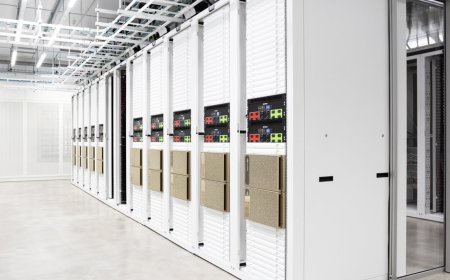
UnifiedBus, also known as Lingqu, is the technology that lets processors, memory, storage, network interface cards and switches talk to each other at high speed inside a single system. Huawei describes it as a foundation of its Peerium computing architecture, which is designed to let very large groups of processors operate more like one machine. An updated version of UnifiedBus was unveiled in September alongside Huawei's Atlas computing systems.
By offering free licences for the patents behind it, Huawei wants other chipmakers to build components that work with its systems. The offer is aimed at the less glamorous but essential layers of an AI machine: peripheral chips, circuit boards and connectors. Fan said Huawei was not always able to make those simpler components cost-effectively, giving it a practical reason to bring outside suppliers into its ecosystem.
"Of course we hope these standards will be international and these partnerships will be cross-border," Fan said, adding that Huawei wanted to work with companies in Europe and Japan whose technologies complemented its own.
The contest with Nvidia is about the whole system
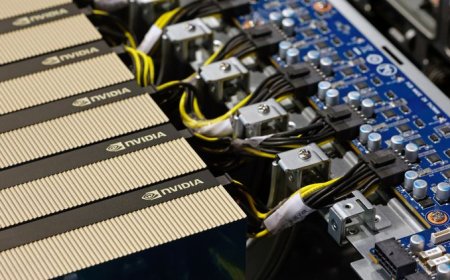
The free-licensing offer is Huawei's answer to a problem that goes beyond any single chip. Nvidia's grip on AI computing rests not only on its graphics processors but on CUDA, the software platform of programming tools and libraries that developers use to build applications for its chips. Huawei is promoting its own CANN software platform alongside its Ascend processors, and UnifiedBus is the connective tissue between them.
Fan described Huawei's approach to connecting chips as "more open" than Nvidia's, although Nvidia has also expanded access to its interconnect technology through partnerships with other chip designers. The contest, in other words, has moved from individual processors to complete computing systems and the ecosystems of suppliers and developers around them.
That shift is visible in Huawei's hardware. At the MWC Barcelona tech show in March, the company introduced the Atlas 950 SuperPoD, built around its Ascend AI processors, and the TaiShan 950 SuperPoD, based on general-purpose processors. The patent teams and the free licences are meant to help those large-scale systems find an overseas foothold.
A patent business that is not run for profit
The licensing offer sits on top of a large and growing patent business. Huawei reported around US$800 million in patent licensing revenue in 2025, up 27 per cent from US$630 million a year earlier, and said the cumulative value of its outbound licensing agreements exceeded US$6.9 billion. The company held more than 165,000 active granted patents worldwide at the end of 2025.
Wireless communications accounted for 41 per cent of those active granted patents at the end of 2025. AI and computing accounted for 13 per cent, making it the third-largest category — a share that is likely to grow as the new patent teams get to work.
Fan stressed that the intellectual property department was not run as a profit centre. Its work ultimately supports Huawei's operating businesses by helping to attract developers and sell more products and services, he said. "The main purpose is to protect our ecosystem and the features that make our products competitive," he said.
Limits to the overseas push
Huawei's ambitions face real constraints. In September, rotating chairman Eric Xu said Huawei was supplying limited volumes of AI chips to some countries, but domestic demand was limiting its capacity for a broader international expansion. And in May 2025, the US Commerce Department said the use of certain advanced-computing chips from China, including specified Huawei Ascend chips, could raise export-control risks under its General Prohibition 10 guidance — a warning that still hangs over any company considering Huawei hardware.
Huawei has also not publicly laid out the full commercial terms, technical documentation or roster of suppliers that will use the free UnifiedBus licences. The announcement is best read as an opening bid: an attempt to turn interconnect intellectual property into a magnet for a wider AI hardware supply chain that depends less on the United States.
Whether suppliers take up the offer will decide whether UnifiedBus becomes a genuine industry standard or remains a Huawei-only technology. But the direction is clear. Huawei is no longer competing chip against chip. It is competing ecosystem against ecosystem, and it is using its patents as the invitation.
Sources
What's Your Reaction?
 Like
0
 Dislike
0
 Love
0
 Funny
0
 Angry
0
 Sad
0
 Wow
0