




























































Oil Surge Adds Inflation Risk for US Stocks Before October 22 Open
Brent climbed above $112 in early Thursday trading as attacks in Saudi Arabia heightened supply concerns, creating a fresh inflation and cost-pressure risk for U.S. equity investors.

Oil Surge Adds Inflation Risk for US Stocks Before October 22 Open
A sharp rise in crude oil prices is adding a new inflation and corporate-cost risk to the October 22 U.S. stock-market outlook, after attacks in Saudi Arabia intensified concerns about supplies from the Middle East.
Brent crude futures rose $3.35, or 3.08%, to $112.17 a barrel by 08:18 GMT on Thursday, according to Reuters. That was 4:18 a.m. Eastern time, well before the U.S. cash-market open. Brent earlier reached $112.55, its highest level since May 18. U.S. West Texas Intermediate gained $2.68, or 2.76%, to $99.83.
Those figures are a timestamped early-session snapshot, not live prices at publication and not Thursday’s closing levels for either oil or U.S. equities.
Security concerns lift the supply-risk premium
Reuters reported that Houthi strikes on Saudi targets on Wednesday killed at least one person and wounded eight at a civilian airport in Dammam. Two people were killed in a drone attack on a Saudi oil field. The news agency also reported, citing U.S. officials, that the State Department had ordered some diplomats and family members to leave its Saudi missions.
For investors, the immediate issue is the risk of a wider disruption to production and shipping. The attacks do not, by themselves, establish how much Saudi oil output has been lost. A higher futures price can reflect concern about potential shortages as well as confirmed supply changes.
Reuters separately reported an actual production reduction in Libya after a pipeline valve serving the Hamada and Tahara fields was closed. That adds another supply constraint, but it should not be confused with a quantified Saudi outage.
Why the move matters beyond energy shares
A sustained rise in oil can benefit some producers while raising fuel, freight and input costs elsewhere. Airlines and transport businesses are especially exposed to fuel expenses, although hedging, contract terms and pricing power mean the effect differs by company. Higher energy bills can also reduce the money households have available for discretionary purchases.
The inflation channel matters for equity valuations. If elevated fuel prices feed into broader costs, they can complicate the outlook for interest rates. That is a risk to assess, not evidence that the Federal Reserve has made a new policy decision or that Treasury yields must move in a particular direction.
What to watch during the US session
The durability of the price increase matters more than one early quote. Investors will be watching verified updates on physical production, shipping routes and diplomatic developments, alongside any changes companies make to fuel-cost assumptions.
The October 22 oil move is a distinct pre-market catalyst. It does not establish how the S&P 500, Nasdaq Composite or Dow Jones Industrial Average will finish Thursday, and no closing result for that session is available in this report.
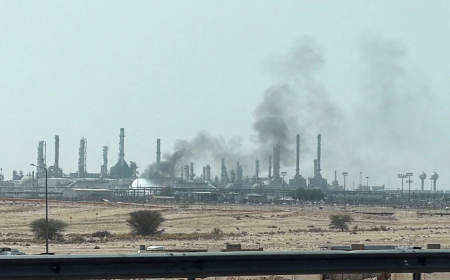
Main image: illustrative refinery photograph from Rosemount, Minnesota, by Tom Fisk / Pexels. Cropped to 16:9 under the Pexels License; not a photograph of the Saudi attacks.
Sources
- Reuters: October 22 oil prices and regional supply-risk reporting
- Tom Fisk / Pexels: original refinery photograph; Pexels License
What's Your Reaction?
 Like
0
 Dislike
0
 Love
0
 Funny
0
 Angry
0
 Sad
0
 Wow
0