


















Samsung Galaxy A18 4G Arrives With a New Exynos Chip and a Promise to Stay Updated Until 2032
Samsung has quietly launched the Galaxy A18 4G in selected European markets, bringing a new Exynos 1610 processor, a 90Hz Super AMOLED display and six generations of Android updates. With security support promised through October 2032, Samsung is making long-term software support one of the phone’s biggest selling points.

Samsung’s New Budget Galaxy Has One Very Long Future
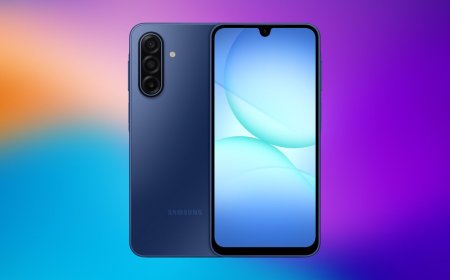
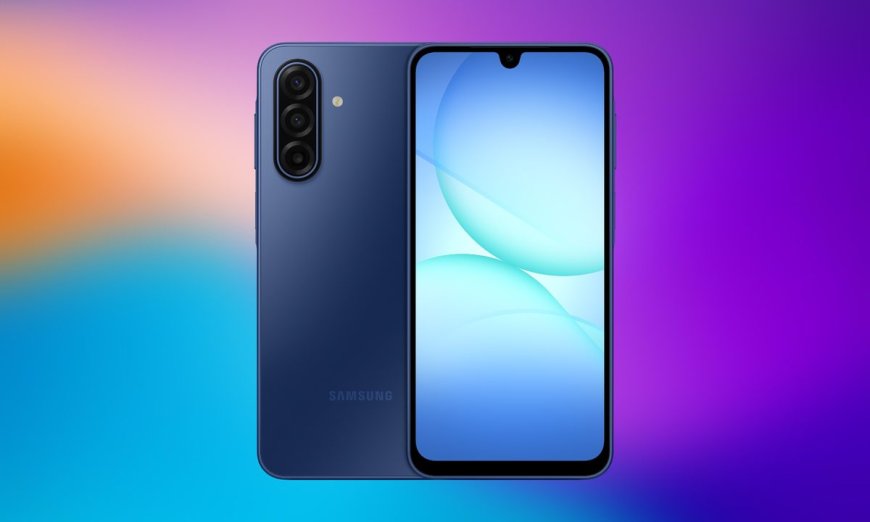
Samsung has quietly added another phone to its Galaxy A series, and the Galaxy A18 4G is arriving with an unusual promise for a phone in this price range: Samsung says it will keep the device updated for six years, with security updates extending through October 2032. The phone has launched in selected European markets at around €280 for the 4GB RAM and 128GB storage configuration.
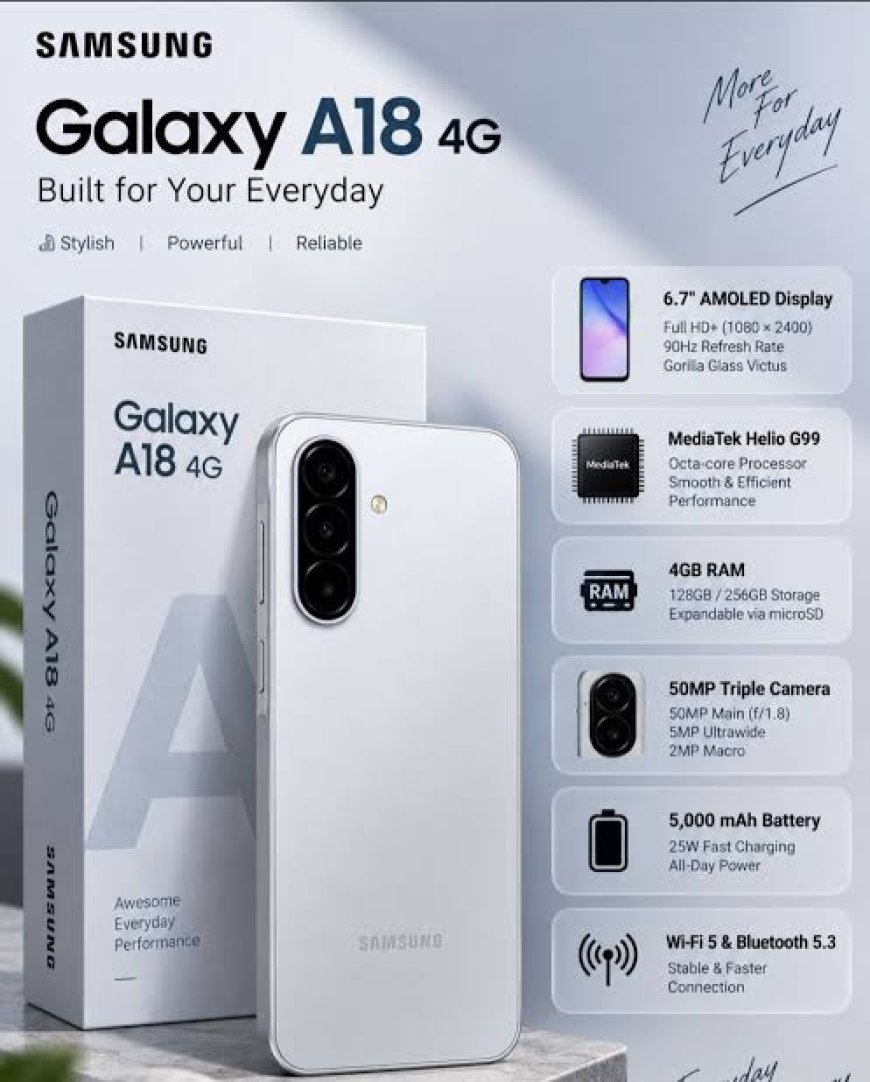
The A18 4G may not look like a dramatic generation-to-generation upgrade, but Samsung has made a few important changes. The biggest one is underneath the display: the familiar MediaTek Helio G99 from the Galaxy A17 has been replaced by Samsung’s own Exynos 1610. Samsung has not yet published extensive performance information for the new chip, so independent testing will be important before anyone can say how much faster—or slower—the A18 actually is.
A Familiar Samsung Design With a Better Display Experience
The Galaxy A18 4G keeps the familiar affordable Galaxy formula. There is a 6.7-inch Full HD+ Super AMOLED display with a 90Hz refresh rate, giving the phone the kind of smooth scrolling and strong contrast that has become increasingly common even in less expensive smartphones. The resolution is 2340 × 1080, while a waterdrop-style notch houses the 13MP front camera.
Around the back, Samsung has gone with a triple-camera setup consisting of a 50MP main camera, 5MP ultrawide and 2MP macro camera. The main camera does not offer optical image stabilization, and video recording is limited to 1080p at 30fps. In other words, Samsung appears to be keeping the camera system practical rather than trying to turn the A18 into a camera-focused phone.
The 5,000mAh Battery Is Familiar Territory
Power comes from a 5,000mAh battery, paired with 25W wired charging. That capacity has become almost standard across Samsung's affordable Galaxy phones, so there is no huge battery surprise here. The phone is also slightly thicker and heavier than its predecessor, measuring 7.7mm thick and weighing 196 grams.
Samsung has, however, improved the phone's resistance to dust and water splashes. The Galaxy A18 carries an IP64 rating, compared with IP54 on the previous A17. That doesn't mean the phone is designed for underwater use, but it does provide better protection against dust and everyday splashes.
Android 17 Today, Updates Through 2032
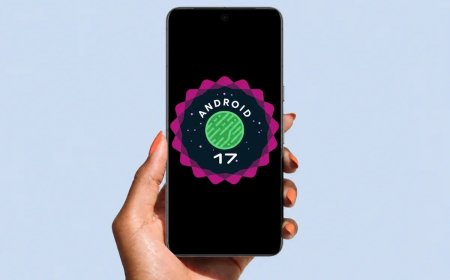
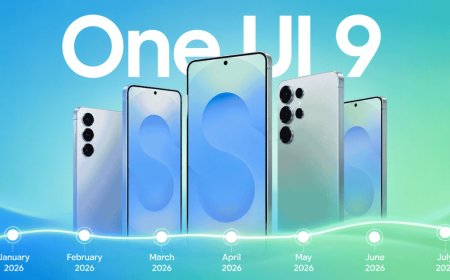
This is where the Galaxy A18 becomes much more interesting. The phone launches with Android 17 and One UI 9, and Samsung promises six generations of major Android OS upgrades along with six years of security updates. Samsung says security support will continue through October 2032.
For a relatively affordable phone, that's a significant commitment. Budget smartphones have traditionally had shorter software lifespans than expensive flagship models, which means buyers often face a difficult choice between spending more today or replacing their cheaper phone sooner. Samsung is increasingly trying to change that equation by extending software support across more of its lineup.
There is another interesting side to the promise. If Samsung follows through on the announced six generations of OS upgrades, the A18's software journey could take it from Android 17 toward Android 23. Of course, future Android releases and Samsung's exact upgrade schedule will determine how that plays out in practice, but the support commitment itself is unusually long for this segment.
But Samsung Has Also Made Some Curious Choices
The Galaxy A18 isn't simply a list of upgrades. Samsung has made some compromises too. The standard configuration comes with 4GB of RAM, while the Galaxy A17 was available with 6GB in some configurations. Storage, meanwhile, is offered at 128GB and 256GB, with expandable storage support.
That makes the long software-support promise particularly interesting. Six years is a long time for any smartphone, and today's 4GB of RAM may feel considerably more restrictive several years from now as Android and mobile applications become more demanding. Samsung has not publicly explained the reasoning behind the RAM configuration, so the real-world longevity of the hardware will be something to watch.
The new Exynos 1610 is another unanswered question. Because the processor is new and detailed independent benchmark information is still limited, buyers don't yet have the same performance reference point they would have with a familiar Qualcomm or MediaTek chip. That doesn't automatically mean the processor is weak—it simply means there isn't enough testing yet to make a confident judgment.
Price and Availability
Samsung has launched the Galaxy A18 4G in selected European markets, including France, Norway and Sweden. The base 4GB/128GB model is listed at around €280, although pricing varies by market. Samsung's French announcement confirms the European launch and the device's six-generation software commitment.
There is currently no confirmed global launch schedule for every market, and availability in countries such as Bangladesh will depend on Samsung's local plans. Some local listings are already showing expected pricing, but those should not be treated as official Samsung Bangladesh pricing until the company announces local availability.
A18 Is Less About Big Hardware and More About Time
The Galaxy A18 4G isn't trying to reinvent the affordable smartphone. Its 90Hz AMOLED screen, 5,000mAh battery and 50MP camera are familiar territory. Even the new Exynos 1610 is still something of an unknown quantity until more real-world testing becomes available.
What makes this phone stand out is something less visible: time. Samsung is effectively saying that an affordable phone launched in 2026 doesn't have to become a forgotten device after two or three years. If the company delivers on its promise of six generations of Android updates and security support through 2032, the Galaxy A18 could remain part of Samsung's software ecosystem long after many similarly priced phones have stopped receiving meaningful updates.
That may ultimately be the Galaxy A18's most important feature. Not the megapixel count, not the processor name and not the design—but the possibility of buying a relatively affordable phone today and knowing Samsung intends to keep supporting it for most of the decade.
What's Your Reaction?
 Like
0
Like
0
 Dislike
0
Dislike
0
 Love
0
Love
0
 Funny
0
Funny
0
 Angry
0
Angry
0
 Sad
0
Sad
0
 Wow
0
Wow
0