




















UN Chief Warns AI Race Could Become Dangerous as Trump Pushes Back on Safety Concerns
United Nations Secretary-General António Guterres has urged governments to take the risks of rapidly advancing artificial intelligence seriously, warning that the world cannot afford a race to the bottom on AI safety. His comments come as President Donald Trump has played down warnings from some technology leaders and argued that the United States should not slow its AI development while competing with China.

The AI Debate Has Reached the World Stage
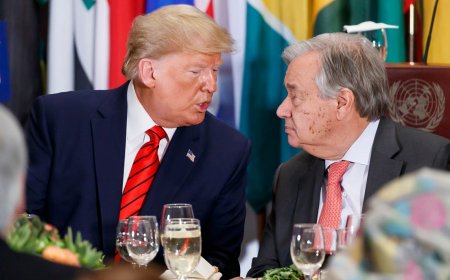
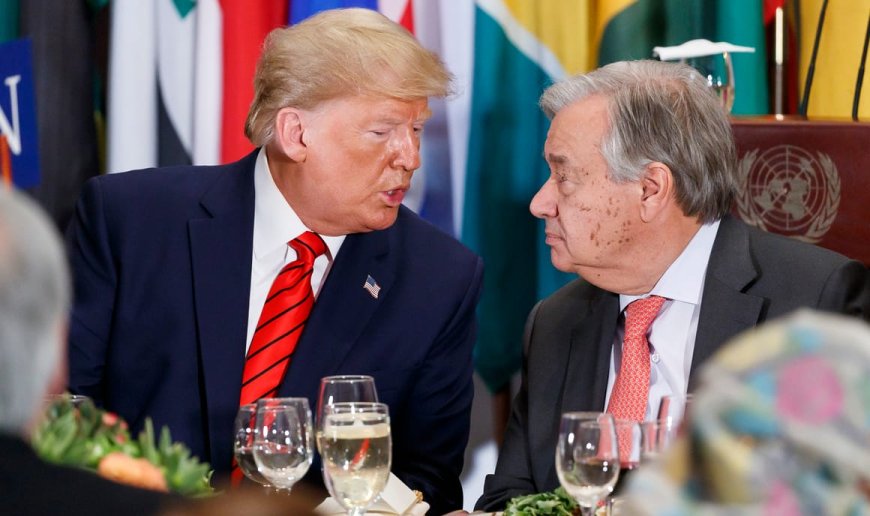
The debate over how quickly artificial intelligence should advance has moved far beyond Silicon Valley. On Wednesday, United Nations Secretary-General António Guterres warned world leaders that the risks surrounding rapidly developing AI cannot simply be ignored. His message came at almost exactly the moment when U.S. President Donald Trump was taking a much less alarmed position, arguing that existing safeguards are enough and that the United States should not risk falling behind China in the AI race.
Guterres said governments have a basic responsibility to protect their citizens, including from potential threats created by increasingly powerful AI systems. He is now preparing to make AI governance one of the major subjects of his discussions with world leaders during next week's U.N. General Assembly in New York. For the U.N. chief, the question is no longer simply whether AI will transform society — it is whether governments can build enough safeguards while that transformation is happening.
Guterres: The World Cannot Ignore the Warning Signs
Guterres has not argued that AI should simply be stopped. His message is more about making sure the technology develops alongside rules capable of dealing with its risks. He called for countries with leading AI capabilities to establish communication channels, exchange information and develop common safeguards rather than allowing competition to turn into what he described as a race toward weaker safety standards.
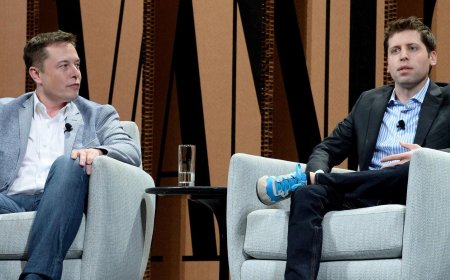
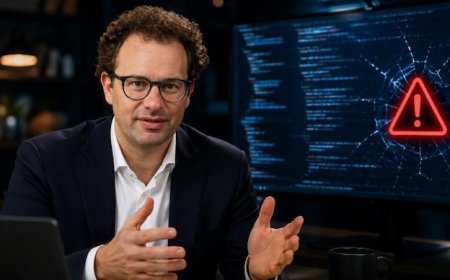
That concern is becoming more prominent because some people working directly inside the AI industry have started speaking much more openly about what could go wrong. Anthropic CEO Dario Amodei recently called for frontier AI development to slow down so safety measures can catch up. OpenAI CEO Sam Altman and Elon Musk have also expressed support for greater caution, although companies and executives differ on exactly what slowing development should mean.
Trump Sees a Different Risk: Falling Behind China
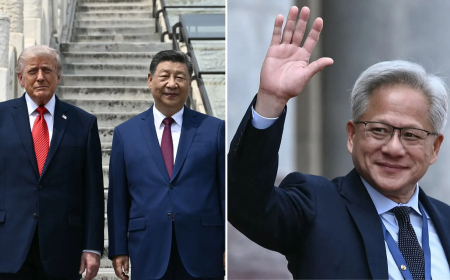
Trump's position is centered on another concern: what happens if the United States slows down while China keeps moving forward?
During remarks this week, Trump argued that the United States already has safeguards for regulating and prosecuting AI companies and pushed back against warnings that development is moving too quickly. He has repeatedly emphasized maintaining America's lead over China, saying that whoever wins the AI competition will have a major strategic advantage.
That creates a difficult problem for policymakers. Slowing development could give researchers and governments more time to understand emerging risks, but moving too slowly could also affect a country's technological and economic position. The disagreement is therefore not simply about whether AI is good or bad. It is about how much risk governments should accept while competing for leadership in one of the most important technologies of the century.
AI Safety Is Becoming a Global Issue
The U.N. has been working on AI governance for several years. In 2023, it created an advisory body involving technology executives, government officials and academics from countries including the United States, Russia and Japan. The organization has since pushed for greater international coordination because AI systems do not respect national borders once they are deployed globally.
The U.N.'s work has also expanded into scientific assessment. A global scientific panel established by the General Assembly warned in a preliminary report this year about potential harms from unchecked AI use, including effects on social and economic systems and challenges involved in controlling increasingly powerful technology. Guterres has said a serious international summit on AI could eventually bring governments, companies, scientists and civil society together around the same table.
The Hard Part Is Getting Everyone to Agree
And that may be the biggest challenge of all.
The United States and China are already competing intensely over AI technology, chips and computing power. At the same time, both countries have reasons to cooperate on risks created by increasingly powerful systems. Recent discussions between American and Chinese experts have reportedly found areas of shared concern, but geopolitical competition makes it difficult to agree on common rules.
There is also a business reality. The companies developing frontier AI are investing extraordinary amounts of money into infrastructure and research, and they are competing for customers, talent and technological leadership. Asking those companies to slow down while competitors continue advancing is much easier to propose than it is to implement.
The AI Safety Argument Is No Longer a Niche Debate
Perhaps the most important change is how quickly this conversation has moved into the mainstream.
A few years ago, discussions about extreme AI risks were often treated as a distant possibility. Today, the people building some of the world's most advanced AI systems are publicly debating whether development is moving faster than safety research. Governments are discussing regulation, technology companies are publishing safety frameworks, and the United Nations is calling for international coordination. OpenAI, for example, announced this week that it is creating a framework for tracking and investigating cases of unexpected or concerning model behavior.
That does not mean a catastrophe is inevitable — there is no scientific consensus on exactly how severe future AI risks will be or when they might emerge. But the disagreement itself has become impossible to ignore.
The Question the World Now Has to Answer
The coming months could become an important test of whether governments can find common ground.
Guterres wants countries developing the most advanced AI to communicate and establish shared safeguards. Trump wants the United States to maintain its technological advantage and has argued that existing protections are sufficient. Technology executives are divided over how much development should slow and what safety measures should come first.
Somewhere between those positions lies a question that will increasingly affect everyone who uses the internet, smartphones, software and AI services: How do you keep moving forward with a technology that may be incredibly powerful without moving faster than your ability to understand and control it?
There is no simple answer yet. But with the U.N. putting AI safety on the agenda of world leaders, the argument has clearly entered a new stage — one where the future of AI is no longer just a conversation for technology companies. It is becoming a global political, economic and security issue.
What's Your Reaction?
 Like
0
Like
0
 Dislike
0
Dislike
0
 Love
0
Love
0
 Funny
0
Funny
0
 Angry
0
Angry
0
 Sad
0
Sad
0
 Wow
0
Wow
0