




























































SpaceX Catches Starship Ship for the First Time as Flight 15 Booster Is Lost in the Gulf
SpaceX's Starship Flight 15 ended in a split result on November 14: the Super Heavy booster aborted its catch and was destroyed over the Gulf of Mexico, but Ship 42 returned from orbit after more than 22 hours and was caught by the launch tower — the first time a Starship upper stage has ever been recovered.
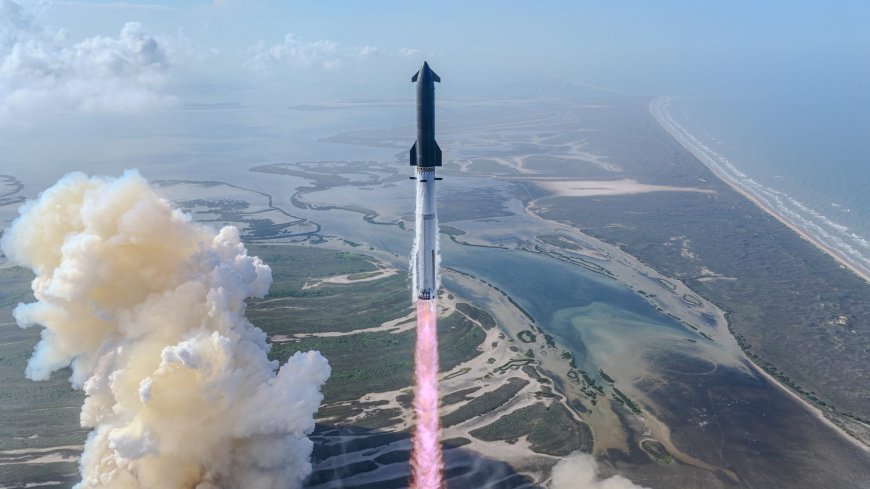
SpaceX Catches Starship Ship for the First Time as Flight 15 Booster Is Lost in the Gulf
SpaceX has pulled off the first-ever catch of a Starship spacecraft returning from orbit — and lost the mission's booster in the same flight. Flight 15, the most ambitious Starship test yet, ended on Saturday with one half of its planned double recovery in the tower's arms and the other half in the Gulf of Mexico.
The 124-metre rocket lifted off from Starbase, Texas, at 5:47 p.m. Eastern time on Friday, November 13, on the 15th test flight of the world's largest launch system. It was the fourth flight of the redesigned Starship Version 3, and the first time SpaceX had tried to catch both stages — the Super Heavy booster and the Ship upper stage — back at the launch tower in a single mission.
Only one of those catches happened. The other will have to wait.
Booster catch aborted minutes after liftoff
The trouble came early. About two and a half minutes after launch, the Ship ignited its engines and separated from the Super Heavy booster in the hot-staging manoeuvre SpaceX uses to get the upper stage accelerating toward orbit before the two stages fully part. The booster, designated Booster 22, then turned back toward Starbase, where the tower's mechanical arms — nicknamed Mechazilla's chopsticks — were waiting.
SpaceX had initially given the catch a go. But near the end of the booster's descent, the vehicle aborted the attempt on its own. Company spokesman Dan Huot said on the webcast that the booster had detected a guidance, navigation and control issue, and the automated systems did what they were built to do: they called off the tower catch and sent the booster to a contingency landing zone offshore.
The booster came down over the Gulf of Mexico about six and a half minutes after liftoff, roughly when the landing burn and catch had been scheduled. It began its landing burn, including a hover, then shut its engines down. The flight termination system triggered as it descended softly over the water, and the booster exploded a few feet above the waves, leaving a section sticking out of the sea vertically.
SpaceX stressed that steering a booster away from the tower when conditions are not right is a deliberate safety precaution, and that protecting the launch infrastructure takes priority over any recovery attempt. The precise cause is still under investigation. SpaceX's Kate Tice said early indications pointed to the booster's boostback burn ending early because of a low fuel mass alarm, which left the vehicle out of position for a catch. Elon Musk wrote on X that the initial reason appeared to be that the booster was running low on fuel, adding that flight telemetry would need to be reviewed before any definite conclusion.
Musk was sanguine about the loss. "These early ships and boosters are already outdated by improved designs in production or on the test stand, so this booster loss does not change our timeline to reach high volume, fully reusable Starship flights," he wrote.
Ship 42 spends a day in orbit, then comes home
While the booster was falling into the Gulf, the Ship — Ship 42 — was heading the other way. Its engines completed the ascent burn a little over eight minutes after liftoff, and a second, roughly 20-second firing put it into orbit about 275 kilometres above Earth. It was only the second time a Starship had reached full orbit; Flight 14 was the first, and earlier flights had flown suborbital trajectories.
Over the next 42 minutes the Ship deployed all 26 Starlink V3 satellites it carried, the mission's main payload objective. SpaceX reported the spacecraft and its heat shield healthy as it settled in for roughly 14 orbits of the planet — a flight of more than 22 hours.
The return, on Saturday afternoon, was the part of the mission nobody had ever attempted. A spacecraft coming back from orbit falls far faster and from far higher than a returning booster, and must survive the extreme heat of re-entry before it can be caught. SpaceX cleared the return to the launch site, and after a roughly 10-second deorbit burn the Ship re-entered over Mexico, swung out over the Gulf, flipped around, relit its engines and flew back to Starbase.
At about 3:21 p.m. Central time on Saturday — around 3:21 a.m. on Sunday in Bangladesh — Ship 42 nestled into the chopstick arms of the same tower it had left the previous evening. "Mechazilla catches Starship!" SpaceX posted on X. Musk followed with: "Congratulations to an incredible team at SpaceX!!!" and SpaceX launch vice-president Kiko Dontchev added: "We did it!!!!!!"
It was the first time a Starship upper stage has been caught, and the first recovery of a Starship returning from orbit.
Half a milestone, and the bigger goal still ahead
The result leaves SpaceX exactly halfway to the goal Flight 15 was built around. The company calls full recovery and reuse of both stages the "holy grail of rocketry" — the step that would drastically cut the cost and turnaround time of launching the giant rocket. That achievement will have to wait for a later flight.
Even so, the Ship catch is a genuine industry milestone. SpaceX has caught and reflown Super Heavy boosters before, but always the earlier Version 1 design; Booster 22 was the first Version 3 booster to attempt a catch, and that attempt failed. No spacecraft returning from orbit had ever been caught by a launch tower until Saturday.
Starship matters well beyond the test programme. It is central to SpaceX's plans to expand its Starlink internet constellation and to launch larger AI satellites, and the company has already begun cutting back flights of its workhorse Falcon 9 as Starship takes over more of the workload. Alongside Blue Origin's Blue Moon landers, a modified Starship is also a key part of NASA's Artemis programme: on Artemis III, planned for 2027, a Starship Human Landing System is due to dock with the Orion spacecraft in lunar orbit and carry astronauts down to the Moon.
SpaceX is also preparing to take Starship to Florida. Pad 39A at Kennedy Space Center is expected to be ready later this month, and the company has already paused Starlink launches on Falcon 9 out of Florida in preparation for the first Space Coast Starship flight. No launch date has been set, and no Starship has arrived in Florida yet.
For now, Flight 15 goes into the record as a flight of two halves: a booster lost to an automated abort six minutes after launch, and a spacecraft that spent a day in orbit and came home into the arms of its tower — the first time that has ever been done.
Sources
- USA Today — SpaceX catches Starship for first time in Texas, making space history
- Engadget — SpaceX successfully catches Starship after launch for the first time
- Phys.org (AFP) — SpaceX's Starship set for return to Earth after booster catch aborted
- Aerospace Global News — SpaceX aborts Starship booster catch as Flight 15 reaches orbit
- CGTN — SpaceX's Starship double catch falls through, booster ends up at sea
Related: SpaceX's $74 billion AI supercomputing campuses in Texas and Arizona
What's Your Reaction?
 Like
0
 Dislike
0
 Love
0
 Funny
0
 Angry
0
 Sad
0
 Wow
0