





























AMD Bets $8.2 Billion on Physical AI With Fei-Fei Li’s World Labs
AMD is acquiring AI research company World Labs, founded by renowned AI researcher Fei-Fei Li, in an all-stock deal valued at approximately $8.2 billion. The move gives AMD access to advanced research in spatial intelligence and “world models” designed to help AI understand and interact with 3D environments, positioning the chipmaker deeper into the emerging physical AI market.

AMD Makes an $8.2 Billion AI Bet
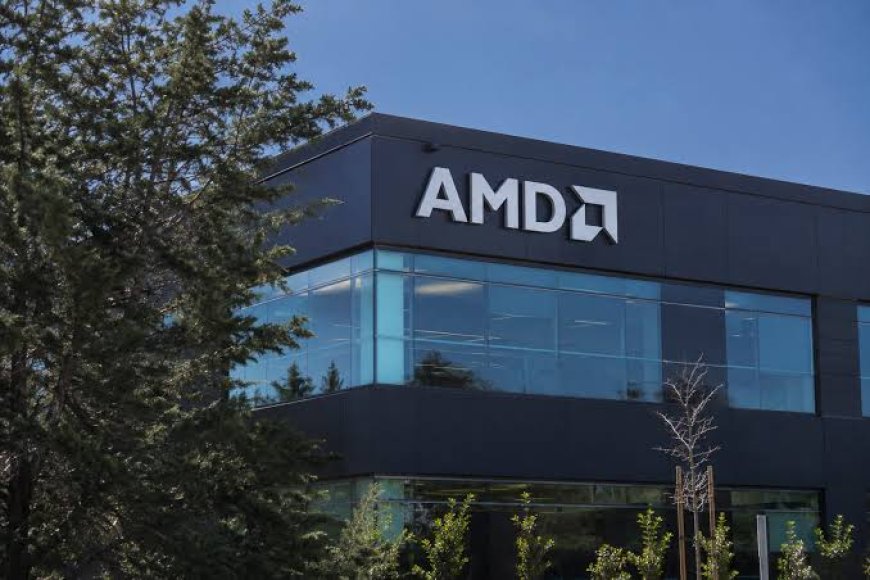
AMD is making one of its biggest moves yet beyond traditional chipmaking. The company has announced a definitive agreement to acquire World Labs, the AI research company co-founded and led by AI pioneer Fei-Fei Li, in an all-stock transaction valued at approximately $8.2 billion. The deal is expected to close by the end of 2026, subject to regulatory approval and other closing conditions. Rather than simply adding another AI software company to its portfolio, AMD is targeting a technology it believes could shape the next generation of computing: AI that understands the physical world.
What Does World Labs Actually Build?
World Labs specializes in spatial intelligence and world models—AI systems designed to understand, generate and simulate interactive three-dimensional environments. Its models can work with text, images and video to create or reconstruct 3D worlds, with potential applications ranging from robotics and simulation to design and other real-world systems. The company launched in 2024 and introduced its first commercial world-generation model, Marble, in 2025. The broader idea is to move AI beyond systems that primarily understand language or generate images toward models capable of reasoning about space, objects, movement and physical interactions.
Fei-Fei Li Is Joining AMD
The acquisition also brings one of the most recognized researchers in computer vision directly into AMD's leadership. Fei-Fei Li will become AMD's executive vice president and chief scientist after the transaction closes, reporting directly to CEO Lisa Su. Li is widely known for her work on ImageNet, a large visual database that played a major role in the development of modern computer vision and deep learning. World Labs will continue its AI model research within AMD, giving the chipmaker direct access to researchers working on emerging AI workloads.
Why AMD Wants World Labs
AMD's strategy is increasingly moving toward owning more of the AI stack rather than simply selling processors. The company says World Labs' research will give it a deeper understanding of how future AI workloads are evolving and help shape its hardware, software and system roadmaps. That could become particularly important as AI moves into robotics, simulation and other applications where traditional language-model workloads are only part of the problem. AMD and World Labs had already developed a technical relationship, including work on training and inference optimization using AMD GPUs.
The Bigger Physical AI Race
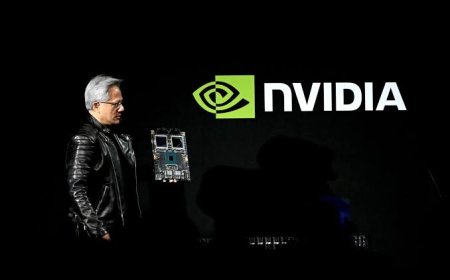
The acquisition comes as the AI industry increasingly looks beyond chatbots and image generators toward physical AI—systems that can perceive and reason about real or simulated environments and eventually help machines interact with them. Robotics, autonomous systems, industrial simulation and 3D design are among the areas that could benefit from these technologies. AMD is not alone in pursuing this direction: Nvidia has also been expanding its AI ecosystem through major acquisitions and investments, highlighting how chipmakers are increasingly trying to influence the models and software that determine future computing requirements.
A Major Shift for AMD
The $8.2 billion World Labs deal shows how quickly the definition of an AI company is changing. GPUs remain critical, but the next stage of competition may increasingly depend on how well hardware companies understand the models running on those chips. By bringing World Labs and Fei-Fei Li's research team inside AMD, the company is betting that spatial intelligence and physical AI will become important parts of the next generation of computing. Whether that investment ultimately pays off will depend on how quickly world models move from research and 3D generation into large-scale commercial applications, but AMD has clearly decided that the physical world is becoming the next major frontier for AI.
What's Your Reaction?
 Like
0
Like
0
 Dislike
0
Dislike
0
 Love
0
Love
0
 Funny
0
Funny
0
 Angry
0
Angry
0
 Sad
0
Sad
0
 Wow
0
Wow
0