
















































AI Startups Face a Funding Hole as Jensen Huang Leaves Nvidia, Investors Warn
Venture capitalists and founders say Jensen Huang's resignation as Nvidia chief executive leaves AI startups without their biggest backer, after the chipmaker took part in 105 funding rounds in 2026 alone, often as the largest investor.
AI Startups Face a Funding Hole as Jensen Huang Leaves Nvidia, Investors Warn
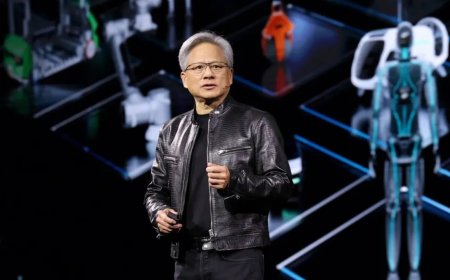
Jensen Huang's resignation as chief executive of Nvidia has sent a shock through the world of artificial intelligence startups. Venture capitalists and founders who spoke to TechCrunch say the departure of the man who co-founded the company and led it for 33 years leaves young AI companies without their most important backer, at a moment when many of them depend on Nvidia's money as much as on its chips.
Huang stepped down on November 12, and chief financial officer Colette Kress is now serving as interim chief executive while the board searches for a permanent successor. For the startup ecosystem, the change is not just about who runs Nvidia. It is about who writes the cheques that have kept the AI build-out moving.
105 rounds in 2026 alone
Over the last several years, Nvidia has been one of the most prolific investors in technology, pouring tens of billions of dollars into startups every year. According to PitchBook data cited by TechCrunch, the company took part in 105 funding rounds in 2026 alone, often as the largest investor in the round.
Investors say that scale of backing is now in doubt. "If that direction changes, it'll be a big blow to so many young companies," Maria Davidson, founder of Relational Capital, told TechCrunch. Huang's absence, investors say, leaves the ecosystem without one of its biggest champions and with far less capital for now, which could affect dealmaking, valuations, funding and even competition across the sector.
"Nvidia is carrying almost every AI-native startup from application to neocloud," Shamillah Bankiya of Dawn Capital told TechCrunch. The warning is not that the money disappears overnight, but that the pipeline of deals that depended on Huang's personal backing is suddenly uncertain.
The deals Huang personally backed
Many of the biggest investment decisions at Nvidia came from Huang himself, according to Umesh Padval, managing partner at Seligman Ventures, who has known Huang since serving on the board of Mellanox Technologies, a networking chipmaker Nvidia acquired for approximately 7 billion dollars in 2020.
Nvidia's largest bets went to neoclouds, inference providers and open-weight model builders, the kinds of companies that are expensive for smaller firms to build. The chipmaker backed CoreWeave while it was still private and took part in two of Crusoe's funding rounds, including its 1.4 billion dollar Series E. It agreed this year to buy Hugging Face for 13 billion dollars, a deal expected to close in 2027, and holds investments in Mistral AI, Lambda and Black Forest Labs. Last year it wrote an 800 million dollar cheque into a 2 billion dollar Series B round for Reflection AI, before the open-source startup had begun earning meaningful revenue, according to the Wall Street Journal.
The support also reached beyond the United States. "Jensen believed in open source and frankly speaking, Europe," Bankiya said. If that backing were to stop, she added, the loss of support in regions outside America "would be a massive funding and honestly ecosystem gap that no one can fill."
A more cautious Nvidia under Kress
Nvidia is now expected to be more selective about the new companies it backs, and to write smaller cheques into its existing portfolio, a shift investors say would push valuations down. "She's much more conservative," one investor said of Kress. "I don't think she's going to commit the same amount of money to keep the early-stage ecosystem going."
Under Huang, infrastructure companies that needed 100 million to 500 million dollars in GPUs would often raise half of that amount at valuations of 1 billion dollars or more from Nvidia just to get started, one venture capitalist told TechCrunch. The chipmaker's participation gave other investors the comfort to back these companies at those lofty valuations. "When Nvidia was on the cap table, everyone felt safe," Padval said. Without that backing, investors say traditional venture firms are likely to think twice before writing cheques into these startups, and may pause some dealmaking altogether.
The caution is not new. Huang's dealmaking in the data centre build-out had already become a source of concern on Wall Street, and Kress is expected to bring changes to how Nvidia invests in AI startups. Kress, a longtime Nvidia executive known for pushing back on risky financing, is profiled in our earlier report on her appointment as interim chief executive.
Who could fill the gap
Some investors hope large cloud companies and other chipmakers will step in to back startups and fill part of the void. Dharmesh Thakker, a general partner at Battery Ventures, expects Big Tech rivals to vie for Nvidia's investment crown, "depending upon who brings the best combination of a great product, an ecosystem and community to compete with CUDA, and the financial power to bankroll the ecosystem." CUDA is Nvidia's software platform that lets developers run AI models on its graphics processors.
Thakker doubts, though, that Google, Amazon, Microsoft or AMD will pour hundreds of millions of dollars into pre-revenue infrastructure startups the way Nvidia did, even if they back more mature companies to drive adoption of their own chips and clouds. Google, for its part, announced two new AI chip variants this week amid the fallout from Huang's exit, as covered in our report on Google's new TPU models.
There is also an uncomfortable side to Nvidia's dominance. By backing so many companies with such generous cheques, the chipmaker effectively locked those startups into using its chips, which helped reinforce its dominant market position. If Nvidia does grow more conservative, that could leave more room for rivals and smaller competitors.
The boom is not over, investors say
Even so, few believe that a slowdown in Nvidia's startup investing will by itself halt the broader AI boom. "That talent will, and must, continue to thrive," said Amulya Vishwanath, a former Nvidia employee who now runs her own venture fund, adding that founders and leaders must be held accountable and that the ecosystem is bigger than one person.
The funding gap is real, and the startups that counted on Huang's personal support now face a harder road. But the demand for AI infrastructure, the capital already committed across the sector, and the rivals now competing for Nvidia's crown suggest the ecosystem will adapt, even if the valuations of the next round of deals look very different from the last.
Sources
- TechCrunch: Jensen Huang's departure blasts big hole in AI startup funding, VCs and founders say (Marina Temkin and Dominic-Madori Davis, November 13, 2026; PitchBook data and Wall Street Journal reporting as cited by TechCrunch)
- Innopark IT: Colette Kress, Nvidia's interim CEO
- Innopark IT: Neocloud AI stocks slide again on Friday
What's Your Reaction?
 Like
0
 Dislike
0
 Love
0
 Funny
0
 Angry
0
 Sad
0
 Wow
0