






















OPPO’s Find X10 Pro Max Is Bringing MediaTek’s 2nm Revolution to the Global Stage
OPPO is preparing to put one of MediaTek’s most advanced smartphone chips into a global flagship as the Find X10 Pro Max arrives with the new 2nm Dimensity 9600 Pro. The phone will debut in China on September 22 before expanding to international markets, combining cutting-edge silicon with a huge battery and an ambitious triple-200MP camera system.


OPPO Is Taking a Big Bet on 2nm
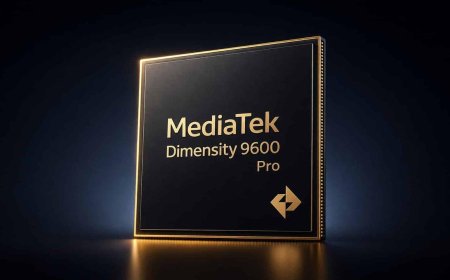
The next big smartphone battle isn't only about cameras, displays or how thin a phone can be. Increasingly, it is happening inside the device — at the chip level. OPPO is now putting itself directly into that conversation with the Find X10 Pro Max, which will be among the first smartphones powered by MediaTek's new Dimensity 9600 Pro, a flagship processor built using TSMC's advanced 2nm N2P process. OPPO has confirmed that the phone will launch in international markets, while the Chinese debut is scheduled for September 22, 2026.
For OPPO, this isn't simply another yearly upgrade. The company is using the Find X10 Pro Max to showcase what the next generation of smartphone hardware can look like when smaller manufacturing technology, AI processing and flagship performance come together. MediaTek says the Dimensity 9600 Pro is its first mobile processor built on a 2nm process, putting the chipmaker into an increasingly important race against Qualcomm for the premium smartphone market.

A 2nm Chip Built for the AI Era
The headline number is 2nm, but the more interesting story is what OPPO and MediaTek are trying to do with it. OPPO says the Dimensity 9600 Pro can deliver up to a 61% improvement in CPU multi-core energy efficiency compared with the previous-generation process. The chip uses an all-big-core architecture with two C2-Ultra cores reaching up to 4.55GHz, alongside six performance cores. OPPO also claims an overall CPU performance improvement of 17 percent.
The processor is also designed with the AI-heavy future of smartphones in mind. Its dual-NPU architecture is aimed at running more AI workloads directly on the phone rather than depending entirely on the cloud. OPPO says the high-performance NPU delivers a 51% improvement in LLM prefill performance, while its efficiency-focused NPU is designed to use 40% less power. In everyday terms, the goal is straightforward: make AI features faster while keeping the phone from constantly draining its battery to do the work.
And Then There Are Those Cameras
If the processor is the technical headline, the camera system may be the feature that gets people talking.
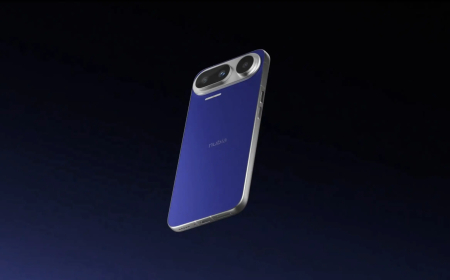
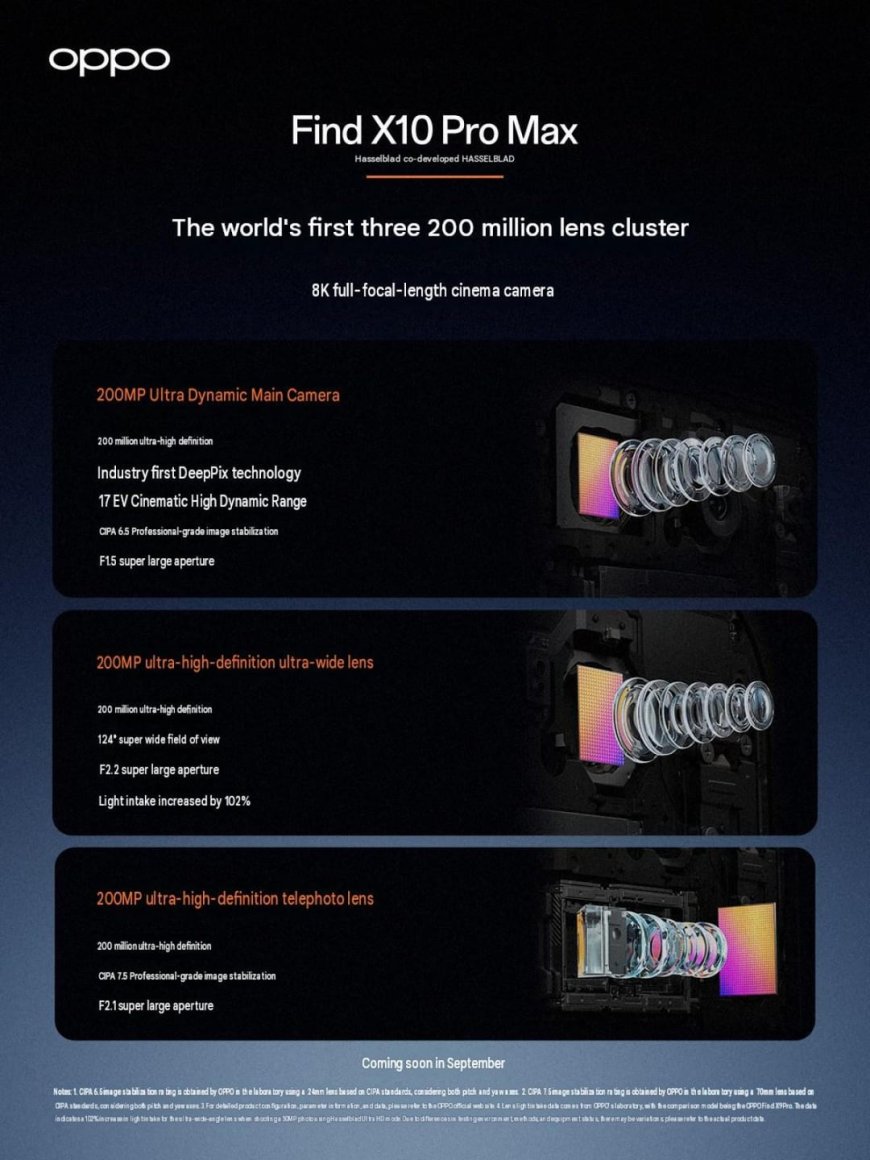
The Find X10 Pro Max is expected to feature three 200-megapixel rear cameras, with Hasselblad continuing its collaboration with OPPO on imaging. The company is also introducing its second-generation Danxia colour system, which is designed to improve colour and ambient-light reproduction. The camera hardware is housed in a distinctive rear design with a large main camera section and a separate area for the flash and another sensor.
A three-200MP setup sounds almost excessive on paper, but the real test will be what OPPO can do with all that hardware. Megapixels alone don't guarantee better photographs. Image processing, sensor size, optics, stabilisation and computational photography ultimately determine whether a flagship camera actually feels different when someone takes a photo at night, zooms into a distant subject or records challenging video.
A Battery Big Enough to Match the Ambition
OPPO also appears to understand that powerful AI and a high-end camera system are only useful if the phone can keep running.
The Find X10 Pro Max is reported to feature a battery of up to 8,000mAh, giving the phone considerably more capacity than many conventional flagship smartphones. OPPO has also developed a system called the Laminar Flow Engine with MediaTek. The technology connects rendering and system scheduling in an effort to maintain smooth performance without unnecessarily wasting power.
That combination is important because modern flagship phones are being asked to do more than ever. Gaming, high-resolution photography, video recording, generative AI and background services can all put pressure on a phone's processor and battery. A more efficient 2nm chip paired with a large battery could therefore matter more in real life than another incremental benchmark increase.
September 22 Is the Day to Watch
OPPO has officially scheduled the Find X10 series' Chinese launch for September 22 at 7 p.m. local time. The lineup is expected to include the Find X10, Find X10 Pro Max and Find X10 E, with OPPO also preparing other products for the event. The Pro Max will be the headline device, sitting at the top of the range with the most ambitious hardware.
The bigger story, however, is what happens after that. OPPO has already confirmed that the Find X10 Pro Max will reach international markets, although exact global pricing and the full international release schedule have not yet been announced. That means the September 22 event is likely to be more than a China-only hardware reveal — it could be the first major look at a flagship that OPPO intends to take to a much wider audience.
MediaTek Wants a Bigger Piece of the Flagship Pie
There is another story hiding underneath OPPO's announcement: MediaTek is coming for the premium smartphone market more aggressively than ever.
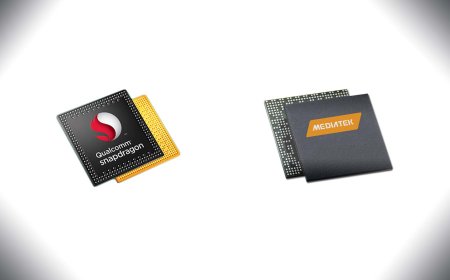
For years, Qualcomm's Snapdragon chips have been closely associated with Android flagships, while MediaTek built much of its reputation around the broader smartphone market. That picture has been changing. The Dimensity 9600 Pro represents MediaTek's attempt to compete directly at the highest end, and the company is using advanced manufacturing and on-device AI as major parts of that strategy. Reuters reports that MediaTek is specifically targeting the lucrative premium segment as smartphone makers look for more powerful chips and consumers become increasingly interested in AI features.
That makes the Find X10 Pro Max an important showcase. If the phone can turn the technical advantages of a 2nm processor into noticeably better battery life, sustained performance, gaming and AI experiences, MediaTek gets something far more valuable than a specification-sheet victory — it gets credibility at the top of the smartphone market.
The Real Test Starts After the Launch
On paper, the Find X10 Pro Max is shaping up to be one of the most ambitious Android flagships of the year: a 2nm flagship processor, massive battery, three 200MP rear cameras, Hasselblad imaging collaboration and international availability.
But the specifications are only half the story. The real question is whether all of those numbers translate into something people can actually feel when they use the phone. Does the 2nm chip deliver meaningful battery gains? Do the three 200MP cameras produce genuinely better images? Can OPPO keep the phone cool during demanding workloads? And perhaps most importantly, can all of this technology come together without pushing the price beyond what buyers are willing to pay?
We won't have to wait long to find out. September 22 is when OPPO opens the door, and the Find X10 Pro Max could become one of the clearest demonstrations yet of where flagship Android phones are heading next.
What's Your Reaction?
 Like
0
Like
0
 Dislike
0
Dislike
0
 Love
0
Love
0
 Funny
0
Funny
0
 Angry
0
Angry
0
 Sad
0
Sad
0
 Wow
0
Wow
0