
















































Samsung Plans Starlink Chip Production at Austin Fab in $1.9 Billion Texas Expansion
Samsung plans to produce the STM32V8 microcontroller used in SpaceX's Starlink satellites at its Austin, Texas fab, as part of a $1.9 billion expansion of the plant, Seoul Economic Daily reported on November 15. The 18-nanometre chip, co-developed with STMicroelectronics, powers the laser links between Starlink satellites, and output in Austin is targeted to begin by 2030.
Samsung Plans Starlink Chip Production at Austin Fab in $1.9 Billion Texas Expansion
Samsung Electronics plans to produce the microcontroller that powers communications between SpaceX's Starlink satellites at its chip plant in Austin, Texas, according to a report published on November 15. The move would add a space customer to a Texas foundry business that already makes artificial intelligence chips for Tesla, Nvidia and AMD, and it comes with a $1.9 billion expansion of the Austin site.
Seoul Economic Daily reported, citing chip industry sources and the U.S. Commerce Department, that Samsung will make the STM32V8 microcontroller unit at its Austin fab. Samsung itself has not confirmed the arrangement, telling the newspaper it cannot officially confirm contracts with individual customers, so the Starlink work should be read as reported, not announced.
The chip at the centre of the deal
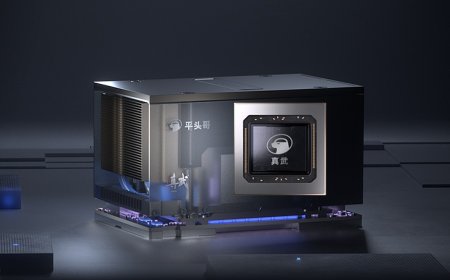
The STM32V8 is a high-performance microcontroller built on an 18-nanometre fully depleted silicon-on-insulator process, known as FD-SOI, which Samsung developed jointly with France's STMicroelectronics. The process is designed for high-speed computing at low power and for stable performance in harsh environments, including space.
SpaceX said in December last year that the chip is used in the laser communication system of its Starlink low-Earth-orbit satellite network. Those laser links let satellites talk directly to one another in orbit, reducing reliance on ground stations to relay data around the planet.
Today the STM32V8 is manufactured at STMicroelectronics' plant in Crolles, France. Under the reported plan, Samsung would produce volumes of the chip at Austin while output in France continues, giving the component a second production site on another continent.
A $1.9 billion bet on Austin
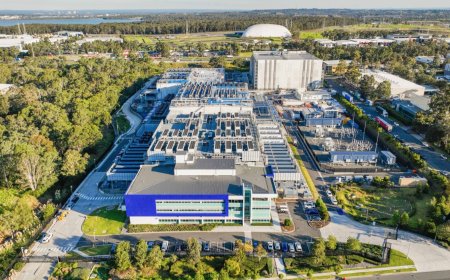
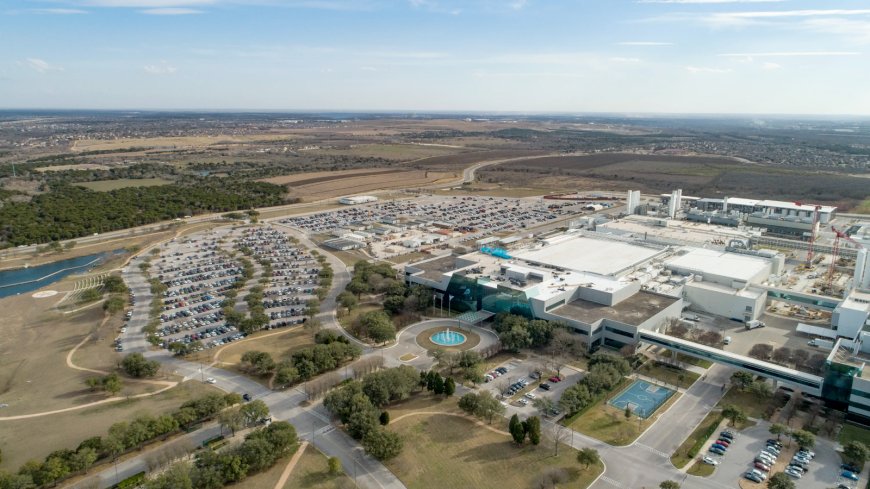
Samsung is investing $1.9 billion, about 2.7 trillion won, to expand production facilities at the Austin plant. The fab runs mature processes from 65 nanometres to 14 nanometres, and the investment is expected to strengthen its satellite chip capabilities and broaden cooperation with U.S. customers.
A subsidy project disclosed by the National Institute of Standards and Technology, part of the Commerce Department, states that the Austin fab will support production of FD-SOI chips needed by core U.S. industries including aerospace, defence and automobiles. Operations at the expanded site are targeted to begin by 2030.
The Austin expansion sits inside a much larger Texas commitment of roughly $37 billion, backed by up to $4.745 billion in federal support under the CHIPS Act, the U.S. law designed to bring semiconductor manufacturing back to American soil. Samsung's newer site in Taylor, Texas, is being positioned separately for advanced two-nanometre artificial intelligence processors.
What Samsung has not confirmed
Neither Samsung nor SpaceX has announced a contract, and no regulatory filing confirms Starlink production at Austin. An industry official told Seoul Economic Daily that with domestic foundry lines running at full capacity, Samsung is moving faster on expanding its U.S. plant, and that the chances have grown that Starlink chips will also be made at the Austin fab at the customer's request.
That framing matters. The reporting rests on industry sources and Commerce Department material rather than a company statement, so the plan is best described as reported and in preparation, with the 2030 operational target as the next stated milestone.
Why it matters
For Samsung, a Starlink order would be a marquee reference for its specialty foundry lines and would help justify the Austin expansion and the federal subsidies behind it. The Austin fab has long been a mature-node plant; adding aerospace work diversifies it beyond mobile and consumer silicon.
For SpaceX, a second source in Texas would shorten the supply chain for a component at the heart of its satellite network, and it would sit close to the company's own Texas operations. SpaceX is also planning major artificial intelligence supercomputing campuses in Texas and Arizona, as previously reported, underlining how much of its hardware footprint is now centred on the state.
The broader pattern is the same one reshaping the chip industry: governments and customers want critical silicon made closer to home, and foundries are answering with specialty capacity in the United States. Whether the Starlink work lands in Austin will become clearer as the expansion progresses toward its 2030 target.
Sources
What's Your Reaction?
 Like
0
 Dislike
0
 Love
0
 Funny
0
 Angry
0
 Sad
0
 Wow
0