










































Apple HomeView Smart Home Hub Reportedly Arrives in November
Apple’s rumored HomeView smart home hub could reach customers around mid-November, following an expected unveiling on October 13, 2026. Reports suggest the device will feature an A18 chip, a touchscreen, Siri-powered voice controls, and countertop and wall-mounted designs. The product could become a central control point for Apple’s smart home ecosystem, although its price, final specifications, and availability remain unconfirmed.
Apple HomeView Smart Home Hub Reportedly Arrives in November
Apple could soon give its smart home ecosystem a dedicated screen. The company’s rumored smart home hub, reportedly called HomeView, is expected to be unveiled on October 13, 2026, but buyers may have to wait until around the middle of November to get their hands on it.
The latest details come from Bloomberg’s Mark Gurman, whose reporting has outlined the device’s name, hardware, design options, and expected release window. Apple has not yet officially confirmed the product’s specifications, price, or shipping date, so these details should be treated as reported plans rather than a finished product announcement.
If the reports prove accurate, HomeView would represent a more focused approach to controlling an Apple-powered home. Instead of relying entirely on an iPhone, voice commands, or a smart speaker, users could have a dedicated display for interacting with Siri, checking information, and managing connected devices.
Apple HomeView Release Date: When Could It Arrive?
According to reports based on Gurman’s latest Power On newsletter, Apple plans to introduce HomeView during its October 13 “Welcome home” event in New York. The device is reportedly scheduled to ship around mid-November, roughly a month after its expected unveiling.
That would put HomeView on a different release schedule from two other anticipated Apple products. Reports indicate that refreshed Apple TV 4K and HomePod mini models could arrive in stores on October 30, ahead of the new smart home hub.
The staggered timing could give Apple additional time to prepare the software and connected-home experience before HomeView reaches customers. However, the reported dates could change, and the company has not confirmed a firm release schedule for the hub.
For prospective buyers, the October event should be important for a different reason: it may reveal whether HomeView is a practical addition to an existing Apple setup or a more expensive product aimed at people building a smart home from scratch.
HomeView Could Come in Two Different Designs
One of the more interesting details is that Apple reportedly plans to offer two versions of HomeView. Both would serve a similar purpose, but their physical designs would suit different locations around the home.
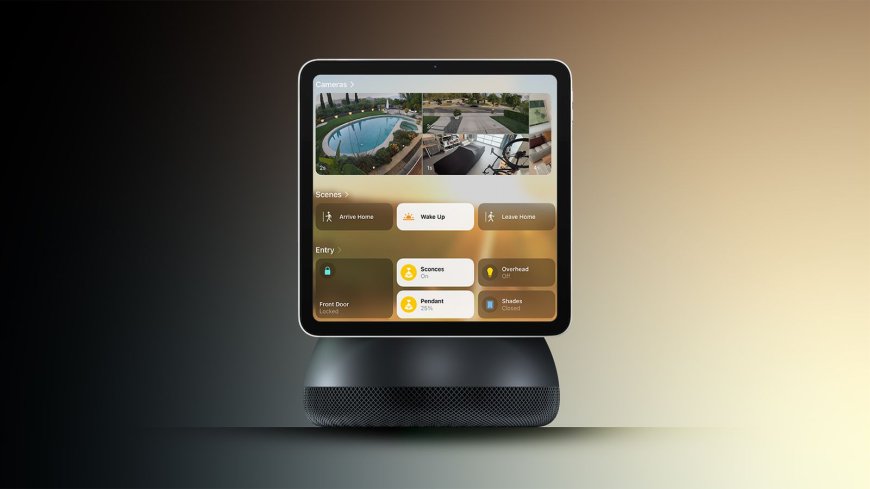
The countertop model is expected to feature a display positioned above a metal speaker base. The floating-screen appearance reportedly draws inspiration from Apple's distinctive older desktop designs, giving the hub a more decorative look than a conventional smart display.
This version is reportedly planned in four finishes: space gray, silver, starlight, and pink. The different colors could help the device fit into kitchens, living rooms, bedrooms, or home offices without looking like a purely functional piece of equipment.
A second version is expected to be designed for wall mounting. Rather than using the countertop model's prominent speaker base, it reportedly features a flatter, square mounting plate and comes in space gray and silver.
The two designs could make HomeView useful in different situations. A countertop model would be easier to move between suitable surfaces, while a wall-mounted version could provide a permanent interface for controlling lights, thermostats, and other connected accessories.
A18 Chip and Siri AI Could Power the Experience
HomeView is reportedly built around Apple's A18 chip, the same processor generation used in the iPhone 16 family. Its inclusion suggests that Apple wants the hub to have enough processing capability to support a modern touchscreen interface and its planned software features.
However, the processor alone does not establish exactly how much of the device's AI processing would happen locally. Apple has not confirmed the final hardware configuration, memory capacity, or division of work between the device and online services.
Siri is expected to be central to the experience. Rather than functioning as a conventional tablet that users operate primarily through touch, HomeView is reportedly designed to be controlled mainly by voice, with its screen providing information users can glance at from across a room.
That approach could make everyday tasks more convenient. Someone preparing dinner, for example, might want to check information, interact with smart home controls, or request help from Siri without repeatedly picking up a phone.
The actual value will depend on how reliably Siri understands requests, how quickly it responds, and which functions are available at launch. Those details matter more than simply putting an AI label on the product.
Will Apple HomeView Have an App Store?
One reported limitation deserves attention: HomeView is not expected to include a dedicated App Store. Instead, the device would run a more limited selection of Apple applications, with the main focus on smart home controls and information displayed through its interface.
That would distinguish it from an iPad, which offers a much broader range of applications and user-controlled customization. HomeView appears to be intended as a household appliance rather than a general-purpose tablet.
Reports also suggest that users may be able to bring some third-party app widgets or information to the hub through a nearby iPhone. The exact capabilities and restrictions have not been confirmed, however, and it remains unclear how much flexibility developers will have.
A limited software environment could make the interface simpler and more consistent for household use. The trade-off is that buyers would have less freedom to install their preferred applications or customize the device in the same way they would a tablet.
Apple will need to make sure the built-in features are useful enough to justify a dedicated screen. If everyday tasks still require users to reach for an iPhone, the hub could struggle to establish a clear purpose.
How HomeView Could Fit Into Apple's Smart Home Ecosystem
A dedicated hub could help Apple bring its existing smart home services together in one place. Instead of opening the Home app on an iPhone every time they want to adjust a setting, household members could use a shared display for compatible accessories and everyday controls.
Compatibility will be particularly important. Apple's HomeKit ecosystem has historically competed with smart home platforms from Amazon and Google, while the Matter standard has been developed to improve interoperability between compatible products from different manufacturers.
Matter can help supported devices work across different smart home ecosystems, but compatibility is not automatic for every product or feature. Buyers would still need to check whether their existing lights, sensors, locks, cameras, and other accessories support the required standards and functions.
Thread could also play a role in the broader setup. It is a low-power wireless networking technology used by many smart home accessories, although its usefulness depends on compatible devices and the network infrastructure required by a particular setup.
Apple is also reportedly working with partners on a wider collection of connected-home accessories, including products such as smart doorbells, locks, thermostats, and security cameras. The timing, compatibility, and availability of these accessories remain separate questions from HomeView's expected launch.
If Apple can make these products work together smoothly, HomeView could become more useful over time. A central display is much more compelling when it controls a broad selection of reliable accessories than when it works with only a small group of devices.
Apple HomeView Price: How Much Could It Cost?
Apple has not confirmed a price for HomeView. Earlier reporting suggested a possible price around $350, but that figure should be treated as an estimate rather than an official retail price.
The potential cost matters because smart displays are already available from competing companies. Amazon's Echo Show range and Google's Nest Hub products offer ways to manage compatible devices, view information, and interact with voice assistants, often at different price points.
HomeView would need to offer a convincing reason for Apple users to pay a premium. A polished interface, dependable Siri controls, strong integration with Apple devices, and a useful range of compatible accessories could help justify the expense.
On the other hand, customers who primarily want to switch lights on and off or check a camera feed may find that an existing smart speaker or inexpensive display already meets their needs.
Until Apple reveals the final price and feature set, it is too early to determine whether HomeView will offer competitive value. The countertop and wall-mounted models could also have different prices, but no confirmed pricing structure is available.
What HomeView Could Mean for Amazon and Google
Apple would be entering a market where Amazon and Google have already established smart displays, voice assistants, and broad collections of connected-home products. HomeView would therefore need to compete on more than its design or brand name.
Its strongest potential advantage is integration with the Apple ecosystem. People who already use an iPhone and compatible smart home accessories may appreciate having a dedicated screen that works alongside their existing devices and services.
But Apple's ecosystem could also become a limitation if customers find that important features or accessories are unavailable outside its preferred hardware and software environment. Compatibility with common standards will help, but it will not eliminate every difference between platforms.
Siri's performance could prove especially important. A smart home hub is most useful when it understands requests, responds consistently, and makes routine tasks easier. If the voice experience falls short, the touchscreen alone may not be enough to persuade customers to switch from established alternatives.
For Apple, the product could also strengthen the role of the home within its wider device lineup. A useful hub may encourage customers to buy compatible accessories and make more use of Apple's existing services, although the commercial impact remains uncertain until the product launches.
What Buyers Should Know Before the Launch
For now, the most important details remain provisional. HomeView's name, A18 chip, two reported designs, color options, and mid-November shipping window come from media reports rather than a complete official specification sheet.
Potential buyers should wait for Apple to confirm the price, supported accessories, software features, regional availability, and release date before making purchasing decisions. People with an existing smart home should also check compatibility rather than assume every HomeKit, Matter, or Thread device will support every HomeView feature.
The October 13 event is expected to provide a clearer picture of Apple's plans. If the reported launch goes ahead, HomeView could give Apple users a new way to control their homes without turning a tablet into a permanent fixture.
Ultimately, the device's success will depend on whether it makes connected living genuinely easier. A well-designed screen and a capable processor may attract attention, but reliable voice controls, broad compatibility, sensible pricing, and useful everyday features will determine whether HomeView earns a place in people's homes.
Sources
What's Your Reaction?
 Like
0
Like
0
 Dislike
0
Dislike
0
 Love
0
Love
0
 Funny
0
Funny
0
 Angry
0
Angry
0
 Sad
0
Sad
0
 Wow
0
Wow
0