














































SpaceX Investors Focus on Starship Milestones Over Financial Results
SpaceX investors are watching Starship’s technical progress closely as the company works toward rocket reusability, orbital refuelling and future payload deliveries. While revenue growth and spending remain important, Starship’s ability to achieve reliable, repeatable launches could shape the company’s long-term growth prospects across satellite connectivity, space transportation and artificial intelligence infrastructure.
SpaceX Investors Focus on Starship Milestones Over Financial Results
SpaceX investors have more than quarterly revenue and profit figures to consider as they assess the company's future. The development of Starship, its next-generation launch system, is emerging as an important measure of whether the business can deliver on its ambitions in satellite communications, space transportation and AI infrastructure.
The central question is not simply whether Starship can reach space. It is whether SpaceX can make the enormous rocket reliable, reusable and economical enough to support frequent commercial missions. Progress on those objectives could influence how investors evaluate the company's long-term opportunities, capital requirements and execution risks.
SpaceX has already established a substantial business around its launch services and Starlink satellite network. Starship is intended to expand what the company can transport into orbit, potentially changing the economics of deploying satellites and enabling missions that would be difficult or expensive with smaller launch vehicles.
Why Starship's Technical Milestones Matter
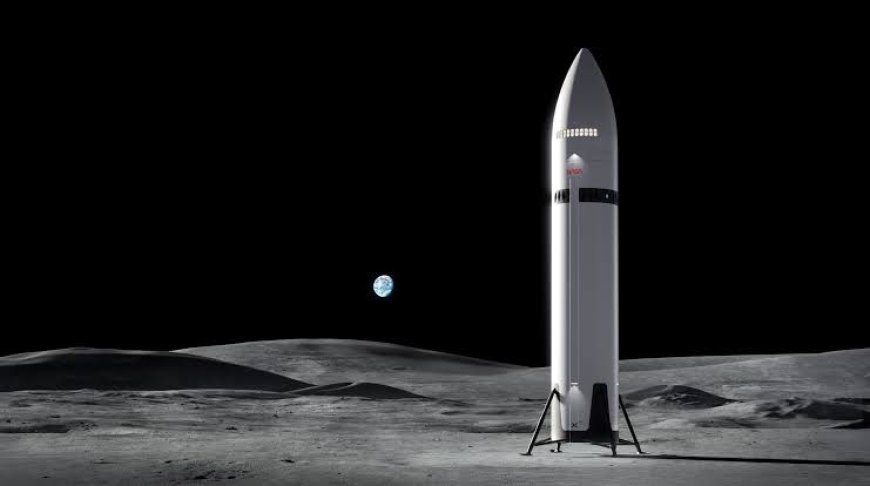
Starship is designed to be a fully reusable transportation system consisting of the upper-stage spacecraft and the Super Heavy booster. Recovering and reusing both stages would be a major step toward reducing the time, equipment and expense associated with preparing rockets for subsequent flights.
That capability has commercial implications beyond the launch business itself. If SpaceX can transport larger payloads more frequently, it could deploy next-generation Starlink satellites more efficiently, support additional customer missions and expand the infrastructure available for future space-based computing projects.
However, the economic benefits remain conditional on technical performance. A rocket that reaches orbit but requires extensive refurbishment, suffers repeated delays or cannot reliably recover its components may not deliver the expected cost advantages. Investors therefore have reason to examine the quality and repeatability of each milestone rather than treating every successful flight as proof that the business model has been fully validated.
The Milestones Investors Will Be Watching
Reliable orbital flights and payload delivery
Reaching orbit is an important achievement, but routine commercial operations require more. SpaceX must demonstrate that Starship can complete its missions consistently, protect its payloads and deliver them to their intended destinations.
In an update published on September 15, 2026, SpaceX outlined plans for Starship to move into a new orbital-flight phase beginning with Flight 14. The company said the phase is intended to support Starlink V3 satellite deployments and new tests, including the first orbital propellant-transfer demonstration.
The stated objectives represent planned milestones, not confirmation that all those capabilities are already operational. Their progress will help determine how quickly Starship can move from experimental flights toward a more regular launch service.
Booster recovery and full reusability
Recovering a rocket booster is only one part of making a launch system reusable. The spacecraft itself must also return safely, while both stages need to be inspected, maintained and prepared for future missions.
SpaceX's Starship development programme has involved repeated flight tests intended to improve performance and reliability. Each test can provide useful engineering information, but a dependable commercial system requires success across multiple flights and operating conditions.
For investors, repeatability matters because it connects engineering achievements to business outcomes. Faster turnaround times and reliable recovery could increase launch capacity without requiring a completely new vehicle for every mission. Until those capabilities are demonstrated at scale, the financial benefits remain an expectation rather than a settled result.
Orbital propellant transfer
Refuelling in space is another critical technology for Starship's longer-term ambitions. Transferring propellant between spacecraft in orbit could allow a vehicle to depart Earth with a smaller initial fuel load and replenish its tanks before attempting more demanding missions.
The technology is particularly important for lunar exploration, where a fully fuelled vehicle may need to travel beyond low-Earth orbit and deliver substantial payloads. NASA selected Starship as the Human Landing System for its Artemis programme, making progress on the required technologies relevant to future lunar missions.
Orbital propellant transfer is technically demanding, however. SpaceX must demonstrate that the process can work reliably under operational conditions before investors can confidently attach commercial value to the capability.
Financial Results Still Matter
Technical milestones may attract considerable attention, but financial performance remains central to understanding SpaceX's position. Rocket development requires substantial investment, and even an impressive engineering programme must ultimately be supported by a sustainable business model.
SpaceX reported second-quarter 2026 revenue of $7.8 billion, up 92% from $4.1 billion a year earlier, according to its earnings release filed with the US Securities and Exchange Commission. The company reported a net loss of $541 million, compared with a loss of approximately $1.0 billion in the same quarter of 2025. Adjusted EBITDA rose to $3.5 billion from $1.2 billion.
These figures illustrate why investors need to consider more than a single financial measure. Revenue growth and higher adjusted EBITDA indicate expanding business activity, while the net loss highlights that stronger operating performance does not necessarily translate into positive net income.
The company's financial results also cover several business areas, including connectivity, launch services and AI-related operations. Consequently, consolidated figures alone do not reveal the full economics of Starship development or establish how quickly the rocket programme will generate a direct financial return.
Starship, Starlink and the AI Opportunity
Starship's potential value is closely linked to SpaceX's other businesses. Starlink has developed into a major satellite internet operation, and a more capable launch system could help the company deploy larger or more advanced satellite networks.
The relationship is straightforward: satellite services depend on spacecraft reaching orbit, and launch capacity affects how quickly a network can expand or be upgraded. If Starship eventually delivers satellites at a higher cadence and competitive cost, it could support future connectivity growth. The scale of that benefit will depend on the vehicle's actual operating performance and the economics of each mission.
SpaceX is also investing heavily in artificial intelligence infrastructure. Its second-quarter results highlighted AI compute agreements alongside its space and connectivity operations. This creates an additional reason for investors to monitor capital spending carefully: the company is pursuing several ambitious programmes that may compete for funding, engineering resources and management attention.
Starship could eventually support the deployment of infrastructure in orbit, but that remains a longer-term opportunity rather than an established source of revenue. Investors must distinguish the potential benefits of future space-based computing from the company's existing commercial activities.
The Cost of Delays and Technical Setbacks
The same milestones that could strengthen investor confidence also create risks. Starship development involves complex hardware, propulsion systems, launch facilities and flight operations. Delays or unsuccessful tests can push back planned missions and increase the amount of capital required before the system becomes commercially productive.
SpaceX's public filings have identified delays in achieving Starship's planned capabilities and launch cadence as risks to its growth strategy. The company has described full reusability, booster recovery and in-orbit propellant transfer as important steps toward expanding its launch capacity.
That distinction matters when assessing investor expectations. A successful test may reduce uncertainty about a particular engineering challenge, but it does not automatically eliminate risks associated with later milestones. Nor does it guarantee that future launch costs will meet internal targets or market expectations.
Investors will also need to consider how Starship spending interacts with the cash generated by established operations. A technically successful programme can still put pressure on financial performance if development costs rise faster than the commercial opportunities it unlocks.
What Investors Should Watch Next
The most useful indicators are likely to include progress toward orbital propellant transfer, the reliability of future flights, payload-delivery demonstrations and evidence that the rocket's components can be recovered and reused efficiently.
Financial disclosures will remain important alongside those developments. Revenue growth, operating performance, cash resources and capital expenditure can help investors understand whether SpaceX has the financial capacity to sustain its development plans without undermining other businesses.
It is also important to separate company targets from completed achievements. SpaceX's proposed mission schedule provides a guide to its priorities, but technical milestones can move as testing reveals new engineering challenges. Independent confirmation of flight outcomes and operational capabilities will be more informative than ambitious timelines alone.
Ultimately, Starship's significance lies in what it could enable if the technology works at scale. A reusable launch system capable of carrying large payloads could strengthen SpaceX's existing businesses and create new opportunities. Until reliable, economical operations are demonstrated, however, those possibilities must be weighed against development costs and execution risks.
For investors, the clearest picture will come from considering engineering progress and financial performance together. Starship may help determine how far SpaceX can expand its ambitions, but the company's ability to fund that expansion and convert technical achievements into sustainable commercial activity will be just as important.
Sources
- SpaceX Investor Relations — Second-quarter 2026 results and company updates: https://ir.spacex.com/updates/
- SpaceX — Starship development and orbital-flight plans: https://www.spacex.com/updates/reusability
- U.S. Securities and Exchange Commission — SpaceX company filings and risk disclosures: https://www.sec.gov/edgar/search/
- Reuters — Analysis of Starship's technical progress and investment implications: https://www.reuters.com/business/aerospace-defense/spacexs-starship-test-strengthens-ipo-case-though-hurdles-remain-2026-05-27/
What's Your Reaction?
 Like
0
Like
0
 Dislike
0
Dislike
0
 Love
0
Love
0
 Funny
0
Funny
0
 Angry
0
Angry
0
 Sad
0
Sad
0
 Wow
0
Wow
0