




































Huawei Mate 90 Pro Max Redefines Smartphone Photography With a Detachable 1-Inch Camera
Huawei has launched the Mate 90 Pro Max in China, bringing a 200MP periscope telephoto camera, a 12,000-nit dual-layer OLED display, a 6,800mAh battery and an optional detachable camera module with a 1-inch sensor and 10x continuous optical zoom. Powered by Huawei's Kirin 9050 series and running HarmonyOS 7, the flagship targets photography enthusiasts with an ambitious combination of advanced imaging hardware, fast charging and premium design.

Huawei Mate 90 Pro Max Arrives With a 200MP Zoom Camera and an Unusual Modular Photography System
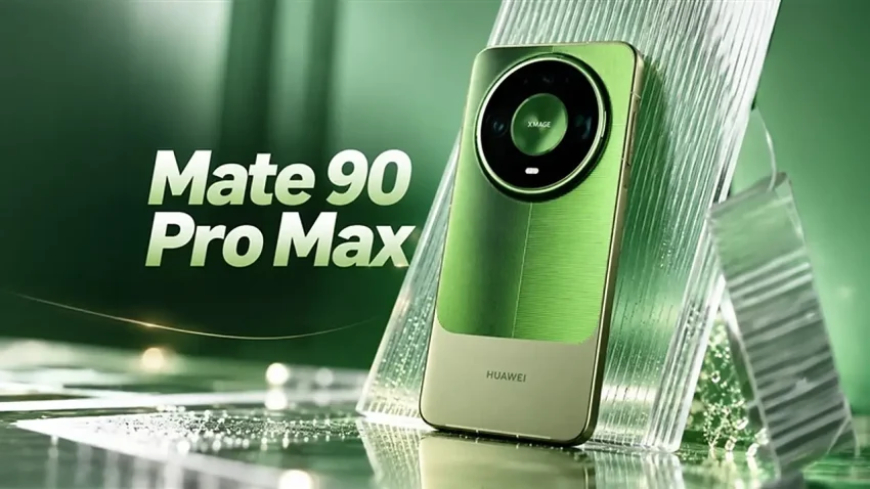
Huawei has introduced the Mate 90 Pro Max in China, placing advanced photography hardware at the center of its latest flagship smartphone. The new device combines a 200MP periscope telephoto camera, a 50MP variable-aperture main sensor, a large dual-layer OLED display with a claimed peak brightness of 12,000 nits, and a 6,800mAh battery. However, its most unusual feature is an optional external camera module that brings a dedicated 1-inch image sensor and continuous 10x optical zoom to a compatible version of the phone.
The Mate 90 Pro Max is part of Huawei's latest Mate 90 lineup and is positioned as a premium device for people who want more than conventional smartphone photography. Rather than relying exclusively on software-based zoom and computational processing, Huawei is offering a modular imaging accessory designed to extend the phone's optical capabilities. The approach makes the device particularly interesting in a market where manufacturers are competing to improve long-range photography, image quality and low-light performance.
A Detachable 1-Inch Camera Takes Center Stage
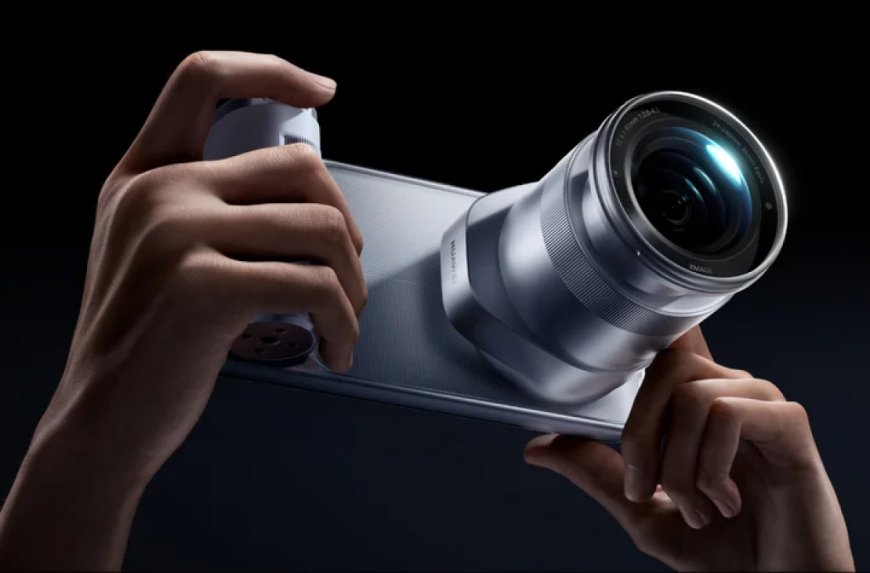
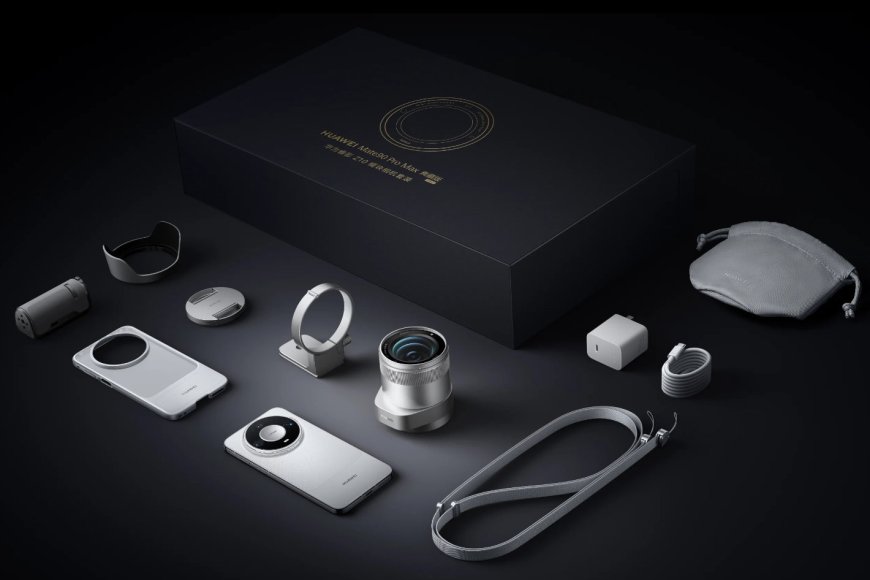
The most distinctive addition is Huawei's Ruiying Z10 modular camera, an external imaging unit designed for the Mate 90 Pro Max Collector's Edition and the Mate 90 RS. Unlike a conventional clip-on lens, the Z10 is a substantial camera module with its own 1-inch-type, 50MP RYYB sensor and optical zoom system.
The module offers a 24–240mm equivalent focal range, a variable aperture from f/2.0 to f/4.5, and continuous 10x optical zoom. In practical terms, it is designed to cover a broad range of photographic situations, from wider compositions to distant subjects, without relying entirely on digital cropping. Its larger sensor also gives Huawei another way to improve image capture beyond what a phone's built-in cameras can achieve alone.
The accessory connects through Huawei's dedicated mounting system and is intended to work with compatible Collector's Edition hardware rather than every Mate 90 model. This distinction matters because buyers cannot assume that the standard Mate 90 Pro Max supports the complete modular camera setup. The Z10 is an additional purchase, not a built-in component of the phone.
There is also a practical trade-off. The module weighs approximately 346 grams, making it a considerable accessory to carry alongside a smartphone. Its extra size and cost mean it is aimed primarily at photography enthusiasts who are willing to bring additional hardware for greater optical flexibility. It is not simply a small lens attachment for casual snapshots.
200MP Periscope Camera and a Variable-Aperture Main Sensor
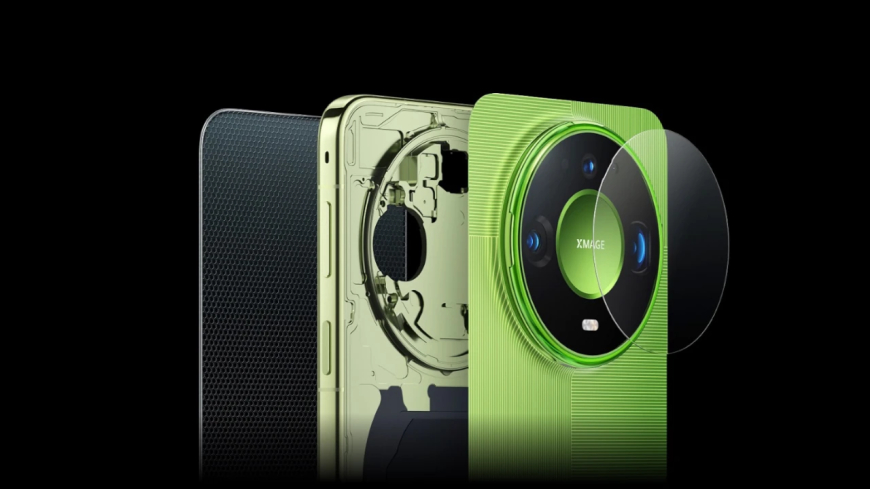
The phone's built-in camera system is already extensive without the external module. The rear setup includes a 50MP main camera with a 1/1.28-inch RYYB sensor, optical image stabilization and a continuously variable aperture ranging from f/1.4 to f/4.0. A 200MP periscope telephoto camera with a 1/1.28-inch RYYB sensor and OIS handles long-range photography, while a 40MP ultra-wide camera covers broader scenes.
Huawei also includes its third-generation Red Maple color sensor, designed to help reproduce colors more accurately. The combination of different sensor types and focal lengths gives the phone more flexibility for portraits, landscapes, architecture and distant subjects.
The 200MP telephoto camera is particularly notable. Its high resolution provides considerable image detail, while the periscope design allows the phone to offer 4x optical zoom without requiring a conventional lens assembly to extend far beyond the device's body. Huawei also advertises higher zoom levels using its imaging system, although results at extreme magnifications depend on lighting, stabilization and image processing.
The variable-aperture main camera offers another important advantage. A wider aperture allows more light to reach the sensor, which can help in darker environments and create a shallower depth of field. Narrowing the aperture provides greater control over light and depth of field in brighter conditions. These adjustments do not guarantee better photographs in every situation, but they give the camera system additional flexibility.
For selfies, Huawei has included a 13MP ultra-wide front camera with autofocus, accompanied by a 3D depth-sensing camera. The device also supports 4K video recording. Overall, the camera hardware suggests that Huawei is targeting users who frequently take photos and videos, rather than treating the camera as a secondary smartphone feature.

6.9-Inch OLED Display With a Claimed 12,000-Nit Peak Brightness
The Mate 90 Pro Max features a 6.9-inch dual-layer LTPO OLED display with a resolution of 2848 × 1320 pixels and an adaptive refresh rate ranging from 1Hz to 120Hz. The LTPO technology allows the display to adjust its refresh rate according to the content being shown, potentially reducing power consumption during less demanding tasks while maintaining smoother scrolling and animations when needed.
Huawei advertises peak brightness of up to 12,000 nits. This is an extremely high local peak-brightness figure, but it should not be confused with the brightness of the entire screen during ordinary use. Actual brightness varies according to the displayed content, viewing conditions and operating mode.
The display also supports a wide BT.2020 color gamut and high-frequency PWM dimming. These features are intended to deliver vivid colors and provide additional options for managing screen flicker. Kunlun Glass provides protection against everyday damage, with a different glass implementation used on the Collector's Edition.
For users who regularly watch videos, view photographs or edit images on their phones, the large screen and high refresh rate should make the Mate 90 Pro Max well suited to multimedia use. Its unusually high advertised peak brightness is another headline specification, although real-world testing would be needed to determine how consistently it performs under different lighting conditions.
Kirin 9050 Series and HarmonyOS 7
Huawei powers the Mate 90 Pro Max with its Kirin 9050 series processors. According to the published specifications, the 12GB RAM configuration uses the Kirin 9050, while 16GB variants use the Kirin 9050 Pro. The phone runs HarmonyOS 7, Huawei's software platform, with integrated services and AI-assisted features.
Huawei has not positioned the phone solely around processor specifications. Its broader strategy combines the company's own hardware, operating system, imaging software and connected-device features. That integration is particularly relevant to the camera system, where image processing, color reproduction, stabilization and software controls all contribute to the final result.
The processor's actual performance will depend on the application, thermal conditions and software optimization. Without independent benchmark results and sustained-use testing, it would be premature to declare it faster than competing flagship chipsets. Buyers should also consider app compatibility and access to the services they rely on, particularly when importing a China-market phone into another country.
6,800mAh Battery With 100W Wired Charging
The Mate 90 Pro Max includes a 6,800mAh battery, providing a substantial power reserve for its large display, camera hardware and connectivity features. Huawei advertises up to 45 hours of video playback under its testing conditions, although actual battery life will vary with brightness, mobile signal strength, gaming, camera use and background activity.
Charging is another strong point. The device supports up to 100W wired Huawei SuperCharge and 50W wireless SuperCharge with compatible charging equipment. It also supports wired reverse charging, allowing it to provide power to compatible accessories and devices.
The battery capacity is particularly useful for people who spend long periods taking photographs, recording video, navigating or using mobile data away from a power outlet. However, the optional camera module adds to the equipment a user may need to carry, so the complete photography setup is less portable than the phone alone.
Premium Design and Durability
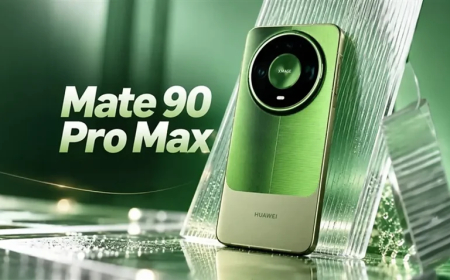
Huawei has given the Mate 90 Pro Max a symmetrical design with a prominent circular camera arrangement and a geometric rear finish. The standard model is offered in Crystal White, Emerald Green, Obsidian Black and Rose Gold, while the Collector's Edition has a more distinctive finish and is available in Emerald Green.
The phone also carries IP68 and IP69 protection ratings, offering resistance to dust, immersion and high-pressure water exposure under specified test conditions. These ratings provide useful protection, but they do not make the device indestructible or guarantee that it will remain waterproof after wear or physical damage.
The Collector's Edition is the version to consider for buyers interested in Huawei's modular camera ecosystem. However, the premium design and accessory system also place the device firmly in the high-end price category.
Huawei Mate 90 Pro Max Price
Huawei's initial pricing in China varies according to memory capacity and edition:
- 12GB RAM + 512GB storage: CNY 9,499
- 16GB RAM + 512GB storage: CNY 9,999
- Collector's Edition, 16GB + 512GB: CNY 10,999
- Collector's Edition, 16GB + 1TB: CNY 12,999
The Ruiying Z10 modular camera is priced at CNY 5,999 separately. Huawei has also listed a complete Pro Camera Kit at CNY 19,499, while a separate SmallRig teleconverter kit is priced at CNY 1,799.
These are China-market prices, not confirmed retail prices for Bangladesh. Import duties, retailer margins, warranty arrangements and accessory availability can substantially affect the final cost. Buyers should also confirm whether the particular handset version they are considering supports the camera module before purchasing it.
What the New Camera System Means for Smartphone Photography
The Ruiying Z10 highlights a different approach to improving smartphone cameras. Most manufacturers focus on built-in sensors, computational photography and increasingly sophisticated periscope lenses. Huawei is also exploring a system in which an external camera can provide additional optical hardware when needed.
That approach has clear potential for photography enthusiasts. A dedicated 1-inch sensor and continuous optical zoom could offer greater flexibility than a phone's internal camera system alone. It also gives users a way to carry a more capable camera setup when they need it without making the external module a permanent part of the phone.
The challenges are equally clear. The accessory is expensive, relatively heavy and compatible only with selected models. Most smartphone users may prefer the convenience of a built-in camera system, even if it offers less optical flexibility. The modular approach will therefore appeal to a narrower audience than the phone's standard camera features.
Huawei Mate 90 Pro Max: What to Know Before Buying
The Huawei Mate 90 Pro Max combines an ambitious camera system with a high-brightness OLED display, a large battery, fast wired and wireless charging, and Huawei's latest Kirin platform. Its optional 1-inch modular camera is the defining feature, giving the Collector's Edition an imaging capability that goes beyond the conventional smartphone design.
For photography enthusiasts who value long-range optical zoom and are willing to carry additional equipment, the system is worth watching. The standard phone also has substantial camera hardware of its own, including the 200MP periscope telephoto and variable-aperture main camera.
There are practical considerations before buying, particularly the total price with the camera module, the accessory's weight, software compatibility and local warranty support. The 12,000-nit figure is a local peak-brightness claim rather than a guarantee of that brightness across the whole display, and camera performance should ultimately be judged through independent testing.
The Mate 90 Pro Max is a notable example of Huawei pushing smartphone photography toward a more modular future. Whether that approach becomes widely adopted will depend on how much value photographers see in the extra optical hardware compared with the convenience of a conventional flagship phone.
What's Your Reaction?
 Like
0
Like
0
 Dislike
0
Dislike
0
 Love
0
Love
0
 Funny
0
Funny
0
 Angry
0
Angry
0
 Sad
0
Sad
0
 Wow
0
Wow
0