




























































China Turns American AI Answers Into Training Data for Its Own Models as Chip Curbs Tighten
Chinese companies are systematically using output from leading American AI models to train domestic rivals, a Reuters review of more than 300 documents shows, as Beijing pushes the technique to make AI cheaper to deploy and offset tightening US chip curbs.
China Turns American AI Answers Into Training Data for Its Own Models as Chip Curbs Tighten
Chinese companies and researchers are using the answers produced by leading American artificial intelligence models to train homegrown rivals, and the practice has moved well beyond university labs into mainstream industrial use, according to a Reuters review of more than 300 Chinese academic papers, patents, corporate disclosures, recruitment notices and government documents.
The technique, known as distillation, lets a developer take the output of a powerful "teacher" model and use it as training material for a smaller "student" system. For Chinese teams working under tight limits on computing power, the appeal is straightforward: one expensive query to an American model can produce examples that are reused again and again to improve a local system, without going back to the original provider each time.
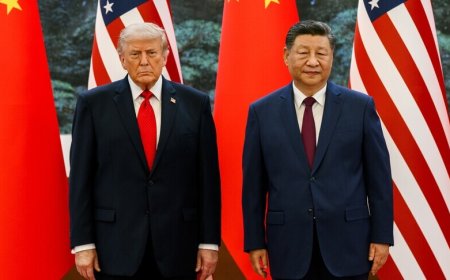
Beijing is now actively encouraging the approach as part of a wider push to spread AI across China's manufacturing sector, and the timing matters. Washington said on Monday that it would further restrict China's access to advanced chips from companies such as Nvidia, and distillation is emerging as one more source of friction between the world's two largest economies just as their leaders prepare to meet at the Asia-Pacific Economic Cooperation summit in Shenzhen on November 18 and 19.
From academic experiments to industrial practice
The documents reviewed by Reuters trace how distillation has grown from an academic exercise into an organised industrial process. Researchers are using American models to produce answers to difficult questions, generate computer code and work through complex problems, while Chinese companies have built software to automate the collection and specialist workers prepare the material for training smaller domestic models.
One early example comes from a November 2024 paper by researchers at Shanghai Jiao Tong University, who selected about 5,000 answers from OpenAI's o1 model, translated them using GPT-4o mini, and assembled 10,750 bilingual training examples to further train Alibaba's Qwen2.5-72B model. The researchers themselves warned that leaning too heavily on distillation could stifle original innovation, leaving developers dependent on breakthroughs made by more advanced model providers.
Alibaba researchers described a more systematic approach in an April 2025 paper, using OpenAI's GPT-4 and GPT-4o to generate training material in languages other than Chinese, then refining and scoring the responses before training smaller Qwen models. And in a February 2026 paper, researchers from Shanghai Jiao Tong University and food-delivery company Meituan described using GPT-4o to generate plans for coordinating AI agents working together on programming problems, helping train a smaller model to organise such tasks.
Shanghai Jiao Tong University, Alibaba and Meituan did not respond to Reuters' requests for comment.
Why distillation matters for China's chip problem
Distillation is not illegal, and it is used in other parts of the world. It cannot reproduce a leading model's full capabilities, and it does not remove the need for advanced computing power altogether. But it can help developers preserve selected skills in smaller systems that cost less to run, potentially reducing their reliance on American technology — which is exactly why it has caught Beijing's attention.
Chinese government documents do not instruct companies to distil American models, but they encourage the technique as part of the push to deploy AI across the world's second-largest economy. A national AI plus Manufacturing policy package published by eight Chinese government agencies in January includes guidance supporting model training, fine-tuning and distillation for industrial applications, and Shanghai and Shenzhen have encouraged techniques that reduce computing requirements. The policies reflect Beijing's ambition to deploy smaller, cheaper AI systems across industries.
A former Alibaba engineer, speaking anonymously, told Reuters that for developers facing computing constraints, the attraction lies in making one expensive query do repeated work: an American model can generate the answer to a difficult question once, allowing a Chinese team to keep the useful examples and train a local system around them.
The practice could also undercut the effectiveness of US curbs on advanced chip sales to China, since Chinese developers can build AI capability by drawing on the strengths of their American rivals. That concern is not new: Washington has already tightened controls on the sale of advanced chips, and the dispute reaches beyond chips into the models themselves. Evidence has also emerged that export-restricted Nvidia Blackwell chips are behind some of China's most powerful AI models, while billions of dollars of Chinese AI projects reliant on Nvidia hardware are now at risk after Jensen Huang's exit.
A growing US-China dispute
US authorities publicly accused Chinese companies in September of aggressive, targeted distillation of American AI models on an industrial scale. At meetings in Chengdu in July, US Commerce Department officials raised concerns with Chinese regulators about developers collecting output from leading American AI models, warning that some of the activity could amount to intellectual-property theft, according to three people familiar with the discussions. Chinese officials defended distillation as a standard AI-development technique and said they were open to acting where the conduct constituted IP theft, but made no concrete commitments, a US official familiar with the previously unreported exchange said. The US Commerce Department and China's Cyberspace Administration did not respond to requests for comment.
The American AI companies themselves draw a line in their terms of use. OpenAI's terms restrict using its output to develop competing models, subject to exceptions, while Anthropic similarly restricts training competing systems without permission.
A US official familiar with the July discussions said Washington believes industrial-scale distillation is the main reason Chinese AI models have narrowed the gap with their American rivals. Two people familiar with Chinese developers' operations disputed that assessment, saying distillation was only one factor alongside advances in engineering, algorithms, data and model design.
What happens next
Concerned by distillation's growing geopolitical sensitivity, Chinese AI developers have in recent months asked Beijing's industry regulator for guidance on where the boundary lies between ordinary use of foreign models and organised collection of output for training, according to one person familiar with the discussions. China's Ministry of Industry and Information Technology did not respond to a request for comment.
The dispute now lands on the agenda of the APEC summit in Shenzhen, where US President Donald Trump and Chinese President Xi Jinping are expected to meet on November 18 and 19. With Washington tightening chip access and Beijing pushing AI deeper into manufacturing, distillation has become a quiet but central front in the technology rivalry — one that turns the output of American AI into the raw material for its Chinese competitors.
Sources
What's Your Reaction?
 Like
0
 Dislike
0
 Love
0
 Funny
0
 Angry
0
 Sad
0
 Wow
0