













































Apple HomeView Launch Today: A18 Chip, Two Designs and New Details Revealed
Apple is expected to introduce HomeView, its long-awaited smart home hub, during its October 13 “Welcome Home” product event. According to recent reports, the device will feature an A18 chip, a touchscreen display, AI-powered Siri controls and two designs for different home setups. Apple is also expected to unveil an updated HomePod mini and Apple TV 4K, signaling a broader push into connected home technology.
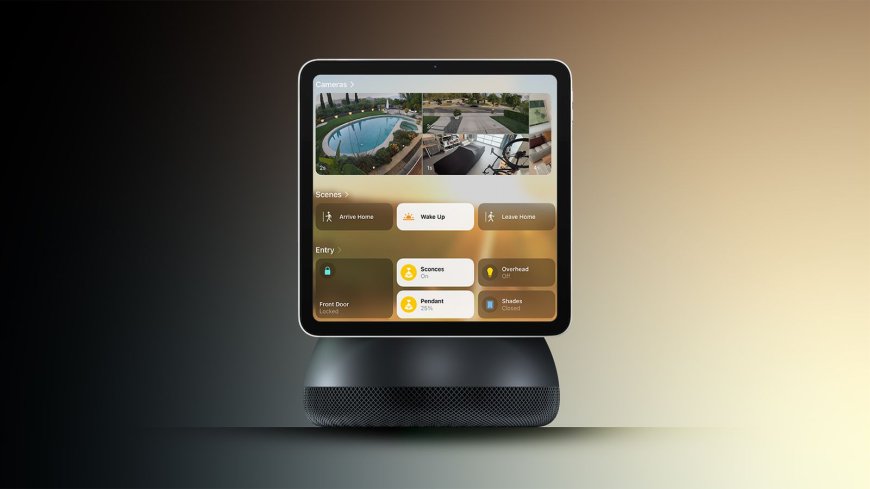
Apple HomeView Launch Today: A18 Chip, Two Designs and New Details Revealed
Apple is preparing to take a more serious step into the smart home market, with its long-awaited HomeView device expected to make its debut on October 13. The new product is reportedly designed to become a central control point for an Apple-powered home, bringing smart device management, voice assistance and everyday information together on a dedicated screen.
The announcement is expected during Apple's “Welcome Home” product experience in New York. Rather than a conventional public keynote, the event is expected to focus on product announcements and demonstrations for invited members of the media.
Although Apple has not confirmed the full HomeView specifications, recent reports from Bloomberg's Mark Gurman, MacRumors and other technology publications have revealed several details about its design, hardware and expected release schedule.
What Is Apple HomeView?
HomeView is reportedly Apple's upcoming smart home hub, a device intended to make controlling connected household products easier without relying entirely on an iPhone or iPad.
The concept combines a touchscreen display with voice-based interaction through Siri. Users could potentially use it to manage compatible smart home accessories, access supported Apple applications and view information relevant to their household.
The idea is not entirely new. Amazon's Echo Show devices and Google's smart displays already combine voice assistants with screens for controlling connected devices, viewing information and communicating with other people. Apple's approach is expected to place greater emphasis on its existing ecosystem, including Siri, the Home app and compatible Apple devices.
One important distinction is that HomeView is reportedly being designed primarily as a home control interface rather than a general-purpose tablet. That could make it more convenient for shared spaces such as kitchens, living rooms and hallways, where family members need quick access to household controls.
Apple HomeView Specifications and Expected Features
According to recent reports, HomeView will use Apple's A18 chip, the processor family introduced with the iPhone 16 generation. The reported hardware choice suggests that Apple wants enough processing capability to support its newer software and AI-related features.
The device is also expected to feature a touchscreen measuring approximately six inches. That would provide enough space for common smart home controls, notifications and selected applications without making the hub as large as a tablet.
Siri is expected to play a central role in the experience. Instead of navigating multiple menus, users may be able to request information or control compatible accessories through voice commands, with the display providing a visual interface when needed.
However, the exact software capabilities remain unconfirmed ahead of Apple's announcement. Reports suggest that HomeView will support a limited selection of Apple applications and will not include a dedicated App Store for downloading third-party apps. If accurate, this would reinforce its role as a purpose-built household device rather than an alternative to the iPad.
Apple's choice of an A18 chip also raises questions about how much of its AI processing will happen directly on the device and how much will depend on other services. The processor alone does not establish which AI features will be available, and those details will need to be confirmed through Apple's official specifications.
Two Designs: Countertop and Wall-Mounted Models
One of the most notable details is that HomeView is reportedly being developed in two physical configurations.
The countertop version is expected to feature a metal speaker base, allowing the display to sit on a desk, kitchen counter or table. Reports indicate that this model will be available in space gray, silver, starlight and pink.
A second version is reportedly designed for wall mounting, with a flatter, square base. Its expected color options are more limited, with space gray and silver mentioned in recent coverage.
Offering two designs would give customers more flexibility when deciding where to install the device. A countertop model could suit households that want a portable-looking central control screen, while a wall-mounted version could provide a more permanent interface for lighting, temperature and other connected systems.
The reported speaker base also suggests that Apple wants HomeView to provide more than a visual interface. According to Bloomberg-related reporting, the countertop model is expected to offer better sound quality than the HomePod mini. That comparison has not yet been independently tested.
The final design, dimensions, mounting requirements and available accessories remain subject to official confirmation.
How HomeView Could Change Apple's Smart Home Strategy
Apple already has a smart home platform built around the Home app, Siri, HomePod speakers, Apple TV and compatible third-party accessories. Yet the company has not established the same visible presence in dedicated smart displays as Amazon and Google.
HomeView could address that gap by giving households a permanent screen for managing connected devices. Instead of asking users to take out their phones every time they want to adjust a setting, a shared display could make common tasks easier for everyone at home.
The potential benefits depend heavily on compatibility and software quality. A smart home hub becomes much more useful when it can reliably communicate with lighting systems, locks, sensors, thermostats and cameras from different manufacturers. Apple's support for compatible accessories and relevant smart home standards will therefore be an important part of the product's appeal.
Personalization could also become a differentiating feature. Earlier reporting suggested that the hub could recognize individual household members and provide personalized information. The precise recognition method, privacy safeguards and supported functions have not been fully confirmed.
For Apple, the bigger challenge is not simply selling another device. It is making the wider Home ecosystem more useful and consistent, encouraging customers to connect additional products and rely on Apple's platform for everyday household tasks.
Apple HomeView Release Date and Availability
Apple is expected to unveil HomeView on October 13, 2026, but its retail availability may come later.
According to reports citing Bloomberg's Mark Gurman, the smart home hub is expected to reach customers around mid-November. That would place its anticipated release several weeks after the announcement, although Apple has not officially confirmed the shipping schedule.
The delay could give Apple additional time to prepare its software and compatible accessory ecosystem. However, the reason for the reported schedule has not been officially established, so it would be premature to treat any particular explanation as confirmed.
The price is another important unanswered question. Without an official figure, it is impossible to determine how HomeView will compare with competing smart displays or whether the countertop and wall-mounted versions will have different prices.
Availability by country is also unclear. Apple's initial launch markets, regional compatibility requirements and support for local smart home products will influence how attractive the device is to customers outside the United States.
HomePod mini 2 and Apple TV 4K May Join the Launch
HomeView is not expected to be the only product featured in Apple's smart home announcement. Reports also point to updated versions of the HomePod mini and Apple TV 4K.
The next HomePod mini is reportedly expected to use Apple's S10 chip, a processor also associated with recent Apple Watch models. The new speaker is said to be planned in several colors, including pink, white, green, blue and midnight.
The update could give Apple more processing headroom for its evolving Siri features, although the actual performance improvements and new capabilities will depend on the final hardware and software configuration.
A refreshed Apple TV 4K is also expected, with reports pointing to an A19 chip. An updated Siri Remote with a built-in speaker has also been mentioned, potentially making the remote easier to locate when misplaced. These details remain unconfirmed until Apple publishes official product information.
The reported release schedule places the new HomePod mini and Apple TV 4K on October 30, ahead of HomeView's anticipated mid-November arrival. If that schedule holds, Apple could introduce its smart home lineup in stages rather than making every product available at once.
What About Apple's New Smart Home Accessories?
Reports have also pointed to an expanded collection of smart home accessories developed with third-party partners, including LG and Schneider Electric.
The reported lineup could include products such as a smart doorbell, deadbolt lock, thermostat, temperature sensor and indoor or outdoor security cameras. Some accessories may arrive later than the main Apple devices, and their exact launch dates remain uncertain.
These products would be important because a smart home hub is only as useful as the devices it can control. A broader accessory lineup could help Apple offer a more complete household experience, rather than relying on customers to assemble a system from products with varying levels of compatibility.
The key questions will be which devices work with HomeView, whether all reported accessories support the same features, and how Apple handles setup, remote access and notifications. Until official specifications are available, the reported product list should be treated as a preview rather than a confirmed retail catalog.
What Buyers Should Know Before the Announcement
For customers considering an Apple smart home setup, the most useful details to watch for are the official price, supported accessories, software capabilities, privacy controls and regional availability.
The A18 chip and touchscreen may attract attention, but neither alone guarantees a better experience. Reliability, responsiveness, compatibility with existing devices and the usefulness of Siri will matter far more in daily use.
Customers who already own HomePods, Apple TV devices or compatible smart home accessories may find HomeView especially interesting if it integrates smoothly with their existing setup. Those who use products from several manufacturers should wait for the compatibility list before deciding whether the hub fits their needs.
Apple's announcement should also clarify whether the device requires specific accessories or subscriptions for particular functions. Until then, comparisons based on price or capability would be premature.
HomeView could become an important addition to Apple's smart home platform, but its success will ultimately depend on how well the hardware, Siri and connected accessories work together. The October 13 announcement is expected to provide the first official answers.
Sources
- MacRumors: Apple to Unveil Three New Products Tomorrow
- MacRumors: Apple's HomeView Smart Home Hub Expected to Ship in Mid-November
- MacRumors: New Apple TV 4K, HomeView, and HomePod mini: 16 Details Just Leaked
- Reuters: Apple Plans to Launch New Smart-Home Hub on October 13, Bloomberg News Reports
- The Verge: Apple Announces Surprise 'Welcome Home' Launch Event
What's Your Reaction?
 Like
0
Like
0
 Dislike
0
Dislike
0
 Love
0
Love
0
 Funny
0
Funny
0
 Angry
0
Angry
0
 Sad
0
Sad
0
 Wow
0
Wow
0