





























































Apple HomeView Teardown: iFixit Finds Glue, Fragile Connectors and a Step Back for Repairs
iFixit's teardown of Apple's HomeView smart home display found heavy adhesive, fragile connectors and mixed screws, making the device surprisingly hard to repair — a step back from Apple's recent repairability gains.

Apple HomeView Teardown: iFixit Finds Glue, Fragile Connectors and a Step Back for Repairs
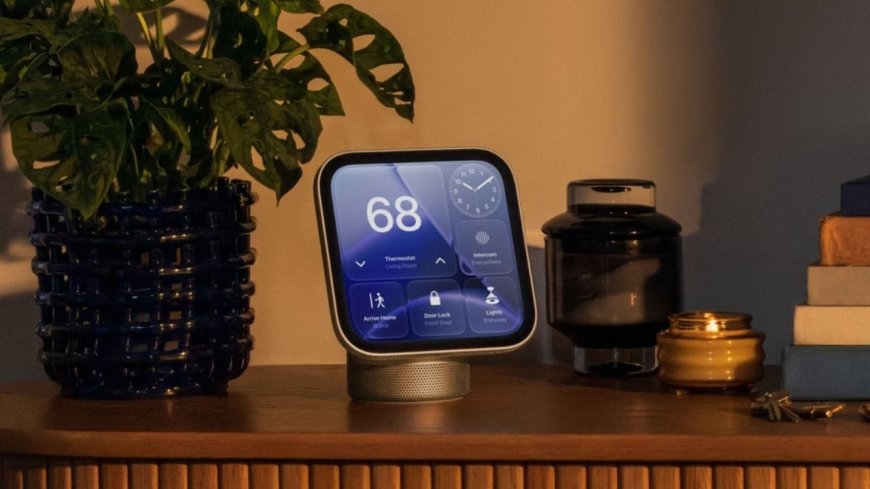
Apple's first smart home display has barely been on sale a week, and it has already earned an unwanted verdict. A teardown by repair specialists iFixit, published on 17 November 2026, found the HomeView surprisingly difficult to take apart — held together by heavy adhesive, fragile connectors and a mix of fasteners that make even basic repairs a risky job. For a company that has spent the past few years making its devices easier to fix, the HomeView looks like a step in the wrong direction.
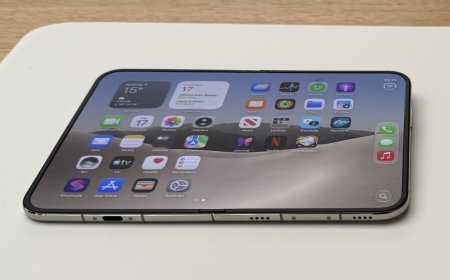
The HomeView, a 7-inch smart display mounted on a HomePod-style speaker base, went on sale on 13 November 2026 with a starting price of 299 dollars. iFixit tore down both versions — the tabletop model with the speaker base and the wall-mounted version — and ran into trouble at almost every stage.
Glue everywhere, starting with the display
Getting inside the HomeView means going through the front glass first, as with an iPad. iFixit found that unusually hard here. The aluminium enclosure is very good at carrying heat away, so the heat mat used to soften the display adhesive took far longer than usual to work — and even then, the adhesive held on harder than on any Apple product the team has opened recently.
Once the screen was finally free, the pattern repeated. The two large speakers behind the display are held in place with thick adhesive pads. iFixit soaked one in isopropyl alcohol and worked at it with a pick, a spudger and a metal pry tool. It still snapped in half. More adhesive sits under the antennas and the speakers, needing considerable force to pry out, and the logic board is glued down with a heavy layer of thermal adhesive as well.
Fragile connectors that break instead of unplugging
The most damaging discovery came at the speaker connectors. A thin layer of adhesive around their edges looked harmless, but when iFixit scraped it away and pried, the leads ripped straight out of the plastic housing. The team tried again on the second speaker with more care, more heat and cuts along the connector seams — and got the same result. The connectors, iFixit concluded, are designed to go in, stay in and never come out again.
The fasteners are no kinder. The bracket covering the display connector is held on one side by a Phillips screw and on the other by a Torx screw. The antenna connectors and the camera bracket need different driver bits too, so a repair that should take one tool takes several. The pivot that joins the display to the base uses large Torx screws secured with threadlocker, set at an angle that is hard to reach without a ratchet of exactly the right size.
What is inside the HomeView
With the logic board finally removed, iFixit confirmed the hardware Apple does not advertise in detail: an Apple A18 chip, 8GB of SK Hynix LPDDR5X memory and a 64GB Kioxia NAND flash module, all soldered to the board. The board carries a shield that clips on and connects to the rear aluminium enclosure, turning the whole casing into a heat sink. That helps the device stay cool, but the thermal paste and adhesive bonding the shield to the casing are a large part of why the board is so hard to remove.
The two HomeView models are not interchangeable inside, either. The wall-mounted version has smaller speakers and a slightly different internal layout from the tabletop model, so parts cannot be swapped between them.
The speaker base fares better
Not everything in the teardown was bad news. The speaker base, built along HomePod lines, comes apart far more easily than the display. The power supply board is straightforward to reach, and the USB-C port is replaceable. Even there, though, iFixit found a catch: an extremely short cable connects the woofer to the board underneath, making it hard to disconnect — and hard to imagine reconnecting during reassembly.
A step backward for Apple
The verdict matters because Apple has genuinely been improving. The original HomePod needed a hacksaw to open; the second generation could be opened without destroying anything. Even the iPad, long notorious for glue, has gained easier battery access, replaceable USB-C ports and official repair manuals. The HomeView reverses that progress, and iFixit said Apple made several design choices that made repairs unreasonably and unnecessarily difficult, with little thought for servicing.
iFixit does not publish a formal repairability score for this kind of device, but the tone of the teardown left little doubt. The team suggested the HomeView may have been ready for more than a year before launch, held back while Apple finished the Siri features it depends on — which could explain why it carries an older design philosophy than Apple's latest hardware.
For owners, the practical message is simple. A cracked screen, a dead speaker or a faulty connector on a HomeView is likely to mean a replacement, not a repair — at least until Apple publishes repair manuals and parts for the device. At 299 dollars, that is an expensive lesson for a product meant to sit at the centre of a home for years.
Sources
- GSMArena — The Apple HomeView is a repairability nightmare (18 November 2026)
- iFixit — HomeView Teardown: A Surprising Step Backward (17 November 2026)
- MacRumors — iFixit Says Apple's HomeView is Unnecessarily Hard to Repair (17 November 2026)
- 9to5Mac — iFixit tears down Apple HomeView, finds lots of glue and endless frustration (17 November 2026)
What's Your Reaction?
 Like
0
 Dislike
0
 Love
0
 Funny
0
 Angry
0
 Sad
0
 Wow
0