


















































Zelenskyy Urges US and Musk to Lift Starlink Restrictions as Ukraine's Interceptor Drones Lose Link at 161 km/h
Ukrainian President Volodymyr Zelenskyy has urged the United States and Elon Musk to lift speed restrictions on the Starshield satellite service, warning that interceptor drones lose contact with their operators at 161 km/h and cannot catch Russia's jet-powered Shahed drones as Moscow targets energy infrastructure ahead of winter.
Zelenskyy Urges US and Musk to Lift Starlink Restrictions as Ukraine's Interceptor Drones Lose Link at 161 km/h
Ukrainian President Volodymyr Zelenskyy has publicly urged the United States and Elon Musk to lift restrictions on the Starshield satellite service, warning that the limits are leaving Ukraine unable to stop Russian drones attacking its energy infrastructure as winter approaches.
In a post on X on Sunday, November 15, Zelenskyy said restrictions on the operating speed of Starshield terminals along the front line and in temporarily occupied territory were still in place, five days after they were reimposed. "We are counting on these restrictions being lifted. The protection of lives and Ukraine's energy infrastructure ahead of winter directly depends on this," he wrote.
The appeal followed a fresh wave of Russian strikes. Overnight into Sunday, Russia hit energy infrastructure in the Zaporizhzhia, Sumy, Odesa, Zhytomyr and Kirovohrad regions, according to Ukrainian officials, and an energy facility in Odesa was struck, leaving 41,000 households without electricity. Two people were killed in an attack on infrastructure in the Koriukivka area of the Chernihiv region.
A speed limit interceptor drones cannot fly past
The problem, as Zelenskyy described it, is brutally simple. Ukraine's interceptor drones — the aircraft sent up to hunt and destroy incoming Russian drones — lose their connection to their operators once they pass 161 kilometres per hour (100 mph). Russia's jet-powered Shahed drones fly far faster, at up to around 1,000 km/h, so the chase ends before it begins.
"Our interceptor drones lose connection with their operators at a speed of 161km/h (100mph) and simply cannot catch up with Russian jet-powered 'shaheds'," Zelenskyy wrote.
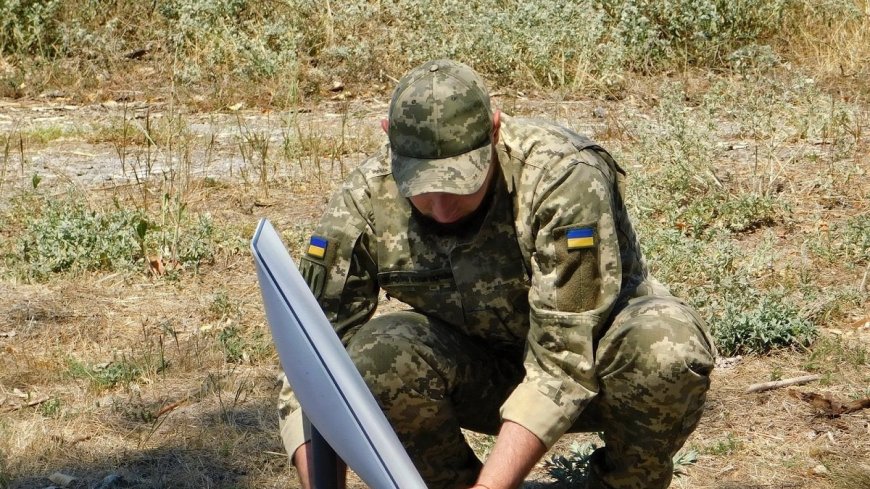
Starshield is the military-grade version of Starlink, provided to Ukraine by the US government. Kyiv uses the standard Starlink service for battlefield communications, while Starshield carries the encrypted satellite links that guide interceptor drones to their targets. Ukraine has relied on the service for drone interception since December 2024, according to a November 2 report by the Center for Strategic and International Studies (CSIS), which described Starshield as critical to encrypting the communications needed to steer the drones.
The speed gap is already showing in the numbers. Ukraine's air force said in September that its interception rate against propeller-powered drones exceeds 90 percent, but falls to only around 60 percent against jet-powered models. Russia has increasingly deployed jet-powered variants of the Shahed, including the Geran-3, Geran-4 and Geran-5, which fly much faster than the propeller-driven versions Ukraine's defences were built to handle.
Weeks of dispute over who imposed the limits
The speed restrictions were first identified in October, and the question of who imposed them has been passed back and forth ever since. Musk has said the US government is responsible, writing last month that "Starshield systems are owned and controlled by the US government" and that "any limits on speed or usage are decided by the US military and ultimately POTUS." President Donald Trump has denied any White House role, saying he told Musk to "put it back", while US Secretary of State Marco Rubio has said decisions about Starlink's speed and access belong to Musk under a private commercial contract.
Zelenskyy said on Friday that speed limits of around 100 mph had been enforced since the previous Monday, but only in Russian-occupied areas rather than across the whole country. He argued the distinction itself carried a political message. "It already has political implications. If you impose restrictions there, you are already partially recognising the temporary occupied territories as not ours," he said, as reported by the New York Times.
He also told his foreign ministry, defence ministry and presidential office teams "to work as closely as possible with the American side and SpaceX" to remove the restrictions, adding: "It is important to be on the right side of history. It is essential to help Ukraine." The BBC reported that it had asked the White House and Starlink for comment; neither had responded at the time of publication.
Energy grid under strain as winter nears
The timing matters because Russia has spent the autumn systematically targeting Ukraine's power grid, and the strikes are landing as temperatures fall. Ukraine's army said on Sunday it had shot down 106 of 132 Russian drones launched overnight, but the ones getting through are hitting substations and power facilities — the targets Zelenskyy says the Starshield limits are helping Russia reach.
Ukraine is also short of US-made Patriot interceptors for defending against Russian missiles, a shortage Russia has exploited to intensify its strikes, and Kyiv has been pressing Washington on both fronts.
The connection problems have coincided with a tense diplomatic stand-off between Zelenskyy and Trump over Ukrainian strikes on oil infrastructure inside Russia. Kyiv says those strikes are aimed at cutting off the main revenue source for Moscow's war effort; Trump has said they pushed global oil prices higher. Ukraine said its forces struck a petrochemical plant and an oil refinery in Nizhnekamsk, in the Russian republic of Tatarstan, on the night of November 15.
For now, the restrictions remain, and Zelenskyy's message was aimed as much at Washington as at SpaceX: the drones that defend Ukraine's power grid cannot fly faster than the network that guides them will allow.
Sources
What's Your Reaction?
 Like
0
 Dislike
0
 Love
0
 Funny
0
 Angry
0
 Sad
0
 Wow
0