






































































Google Turns Gemini Notebook Into a Website Builder: Your Research Becomes Interactive Sites
Google has given Gemini Notebook a new trick: the AI research tool can now turn the notes, documents and sources in a notebook into a shareable interactive website, from a study guide to a sales dashboard, with a single prompt. The feature is rolling out globally on the web to users aged 18 and over, including Google Workspace subscribers, with mobile support to follow.
Google Turns Gemini Notebook Into a Website Builder: Your Research Becomes Interactive Sites
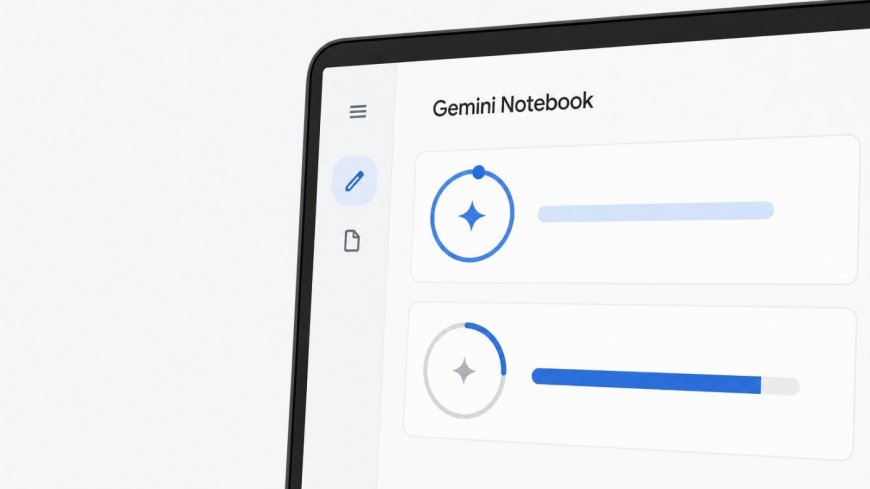
Google has added a new output to Gemini Notebook, its AI research tool: the notes, documents and sources you have already gathered in a notebook can now be turned into an interactive website. Announced on November 16, 2026, the feature lets users type "make me a site" into the notebook's chat, describe what they want to build, and get back a working page they can open in a new tab or share with others.
Until now, Gemini Notebook helped people understand their material. It summarised documents, answered questions with citations, and produced audio overviews, video overviews, slides and infographics. The new capability takes a step further: instead of an answer meant only for the person who asked, it produces a small interactive tool that someone else can use too.
How it works
Everything starts from the sources already in a notebook. A user opens an existing project in Gemini Notebook, types "make me a site" in the chat along with a description of what they want, and the tool builds the site from that material. Google's announcement, published on its News from Google blog and signed by software engineer Maria Ines Aranguren, puts it plainly: "Starting today, Gemini Notebook can turn your sources into interactive sites to help you quickly make sense of complex information."
The finished site opens in a separate browser tab, where it can be explored and shared. Google's demo examples show the range of what the tool produces: a clickable periodic table with a short quiz at the bottom for exam preparation, a project tracker with tasks, statuses and risks, and a regional sales dashboard built from a notebook of business figures.
Three kinds of site
Google describes three main uses for the new feature. For study, a notebook can become a visual explainer, such as an interactive periodic table or a historical timeline. For work with data, it can become an interactive dashboard, for example one that lets a team explore quarterly sales performance. And for organisation, it can become a project management tracker that lays out tasks and deadlines.
The common thread is that the site is grounded in the user's own sources rather than in the open web. A study guide draws on the student's own files; a sales dashboard draws on the company's own numbers. That is also the feature's main limitation to keep in mind: the quality of the site depends on the quality of the sources, and Google still carries its familiar warning in the product that Gemini Notebook can make mistakes, so users should double-check its output before sharing it.
Who gets it, and when
The feature is rolling out globally on the web to Gemini Notebook users aged 18 and over, including Google Workspace subscribers. Support for the mobile app will arrive later, Google says, without giving a date. That means for now the site-building works on desktop browsers, while phone users will have to wait.
Google has not said how the shared sites are hosted, who can open a shared site, whether viewers need a Google account, or what usage limits apply. Those details matter before anyone relies on the feature for anything serious, and they were not covered in the launch announcement.
Part of a bigger shift
The launch continues a busy month for Google's AI products. Gemini Notebook itself was known as NotebookLM until Google renamed it in July 2026, and the company says more than 30 million people use it. The new site-building output sits alongside the recent Gemini 4 model family, including the Gemini 4 Hydrogen model announced earlier in November, as Google pushes its AI tools from answering questions toward doing useful work with the material people already have.
For students, teachers and teams who already keep their research in Gemini Notebook, the change is a practical one: the same notebook that once produced a summary can now produce something they can hand to someone else. The test will be whether the generated sites are accurate and reliable enough to trust, something only real use over the coming weeks will show.
Sources
- The Times of India — Google launches new Gemini Notebook feature to turn research into interactive sites
- Android Police — Gemini Notebook made your study notes into something you can explore
- Unite.AI — Google Adds Shareable Interactive Sites to Gemini Notebook
- PPC Land — Google's Gemini Notebook turns notes and files into sites
What's Your Reaction?
 Like
0
 Dislike
0
 Love
0
 Funny
0
 Angry
0
 Sad
0
 Wow
0