





























































Delaware Lawyer Fined $2,500 After AI Tool Invented Case Citations in Court Brief
A Delaware Chancery Court judge has fined a partner at Richards, Layton & Finger $2,500 after a court brief revised with the AI tool Perplexity Enterprise contained fabricated quotations and mischaracterised legal authorities. The firm itself escaped punishment because of its GenAI policy and ethics training.
Delaware Lawyer Fined $2,500 After AI Tool Invented Case Citations in Court Brief
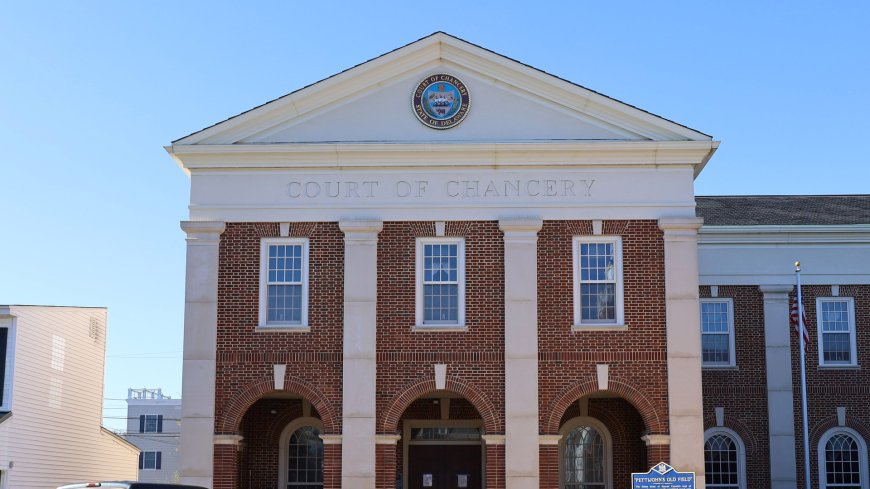
A Delaware judge has fined a lawyer $2,500 for filing a court brief that contained quotations and legal authorities invented by an artificial intelligence tool, in the latest court decision confronting the risks of unchecked AI in legal practice.
Vice Chancellor Lori W. Will of the Delaware Court of Chancery said in a letter opinion dated Friday, November 13, that Richard Rollo, a partner at Richards, Layton & Finger, violated court rules by submitting a brief with flawed citations and mischaracterised legal authorities. Rollo, who accepted full responsibility and expressed remorse, must pay the fine personally.
The AI tool at the centre of the case was Perplexity Enterprise, which Rollo told the court had been used to revise an answering brief in the case of Kevin Leiske et al v. Robert Gregory Kidd et al, Delaware Court of Chancery, No. 2025-0426-CDW. The firm represented plaintiffs who sued to secure advancement of legal fees tied to a broader dispute involving their investment fund.
How the errors were caught
The problems came to light only after the defendants spotted them. According to the opinion, the brief contained fabricated quotations attributed to real cases, presented as genuine precedent. After the errors were flagged, the plaintiffs' counsel acknowledged using a generative AI tool without verifying its output and filed a corrected brief.
But the correction did not fix everything. The revised filing removed the quotation marks, yet kept inaccurate legal propositions, the opinion says — a detail that underscored for the court that nobody had gone back to check the underlying authorities.
Will wrote that Rollo "failed to verify the accuracy of the answering brief despite his law firm's comprehensive GenAI policy and mandatory ethics training." The point carried extra weight because Rollo's responsibilities at the firm included leading its internal training efforts on AI.
The firm that escaped punishment
The court declined to sanction Richards, Layton & Finger itself — one of Delaware's oldest and largest law firms — even though one of its partners had filed the flawed brief.
The firm told the court it had adopted a GenAI policy, restricted the use of unapproved tools, and provided ethics training to more than 200 employees before the filing at issue was submitted. Will found the firm "acted reasonably to prevent GenAI misuse and should not be sanctioned for an individual lawyer bypassing those controls," and praised its "commendable efforts to prevent Gen AI misuse."
That split outcome is the heart of the ruling. The judge drew a line between an institution that had put safeguards in place and an individual who bypassed them — and made the individual pay.
A warning, not a ban
Will was careful not to condemn the technology itself. "The use of GenAI in legal practice is neither forbidden nor inherently problematic," she wrote, but counsel must use such tools with the care required by the court's Rule 11 and professional conduct rules. "That care was lacking here."
Perplexity, in a statement to Reuters, said it is "focused on achieving 100% accurate AI, which is why verifiable citations are a central feature of the product." Neither Rollo nor the firm immediately responded to requests for comment.
The ruling lands in a pattern that has been building for three years. The first high-profile incident came in 2023, when a lawyer in New York submitted a brief citing seven nonexistent cases invented by ChatGPT in Mata v. Avianca. Since then, courts across the United States have sanctioned lawyers for filing AI-generated briefs with fabricated citations, and in February 2026 the Fifth Circuit fined a lawyer $2,500 in a similar case. Reuters has reported that AI error-ridden court filings keep surging despite the sanctions.
The Delaware decision adds a new wrinkle to that story: a firm can now point to a real policy, real training and real restrictions — and still watch one of its own partners get fined for not using them. For lawyers, the message is that the tools are allowed, but the verification is not optional.
Sources
- Reuters — "Delaware lawyer sanctioned over AI misuse, but law firm escapes punishment" (November 16, 2026) — https://www.reuters.com/legal/litigation/delaware-lawyer-sanctioned-over-ai-misuse-law-firm-escapes-punishment-2026-11-16/
- Bloomberg Law — "Delaware Chancery Court Sanctions Attorney for AI Hallucinations" (November 13, 2026) — https://news.bloomberglaw.com/litigation/delaware-chancery-court-sanctions-attorney-for-ai-hallucinations
- Daily AI Brief — "Delaware Chancery Court fines lawyer $2,500 over AI-fabricated quotations in a brief" (November 14, 2026) — https://dailyaibrief.com/news/delaware-court-fines-attorney-ai-hallucinations-91Sn1Gyr
What's Your Reaction?
 Like
0
 Dislike
0
 Love
0
 Funny
0
 Angry
0
 Sad
0
 Wow
0