














































Apple HomeView Launches With 7-Inch Display and AI-Powered Siri
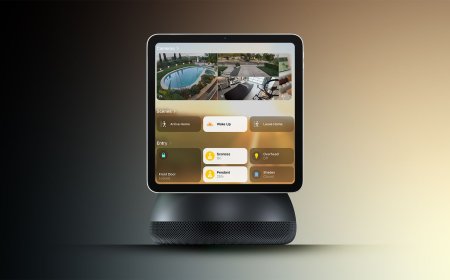
Apple has unveiled HomeView, a 7-inch smart home display designed to bring AI-powered Siri, home automation, video calls, entertainment and personalized information into one device. Powered by the A18 chip and Apple Intelligence, HomeView recognizes up to six household members and offers tabletop and wall-mounted versions. The device is priced at $299, with sales scheduled to begin on November 13, 2026.
Apple HomeView Launches With 7-Inch Display and AI-Powered Siri
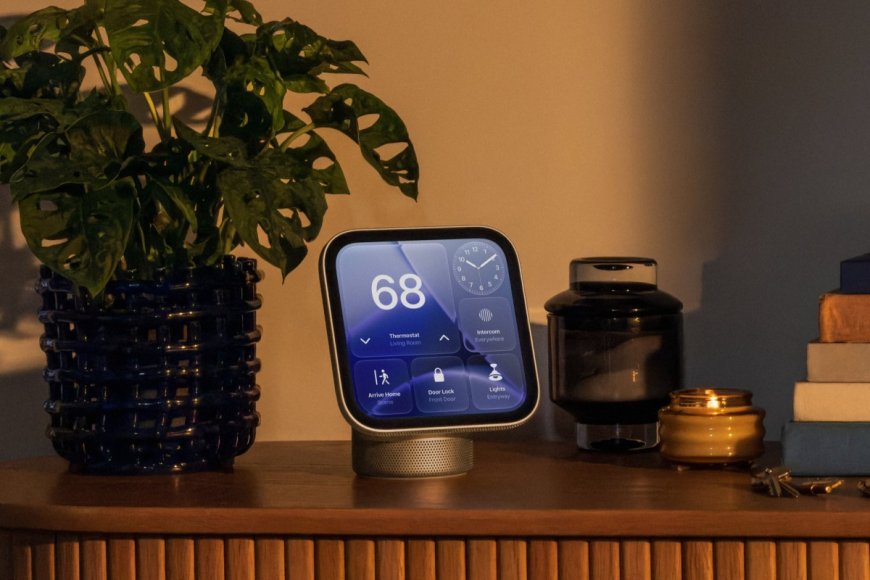
Apple has introduced HomeView, a new smart home display that combines an interactive touchscreen, AI-powered Siri, entertainment and home controls in a single device. Announced on October 13, 2026, the product is designed to give households a central place to manage connected accessories, make video calls, listen to music and access personalized information.
The launch represents a broader effort by Apple to make its smart home ecosystem more useful beyond the iPhone, iPad and HomePod. Instead of reaching for a phone whenever someone wants to adjust a light, check a connected camera or ask Siri a question, users can interact with a screen positioned on a kitchen counter, bedside table or wall.
HomeView starts at $299 in the United States. Apple has opened pre-orders in selected markets, with general availability scheduled for November 13, 2026. Its appeal will depend not only on the display and hardware but also on how well Apple's updated Siri can connect everyday requests with information and actions across its ecosystem.
Apple HomeView: Key Specifications and Features
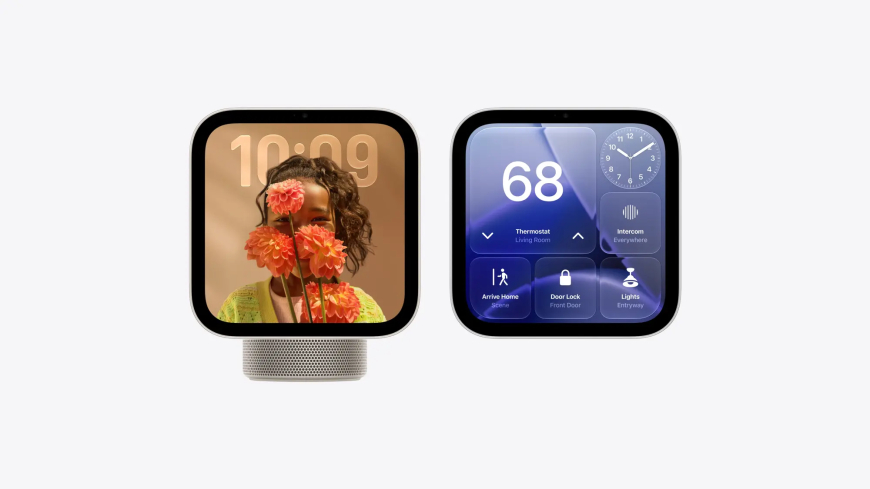
HomeView combines a 7-inch Liquid Retina display with Apple's A18 chip, a 12-megapixel camera and a speaker system designed for home entertainment. It is available in tabletop and wall-mounted configurations, allowing customers to choose between a movable display and a more permanent control panel.
| Feature | Apple HomeView |
|---|---|
| Display | 7-inch Liquid Retina touchscreen |
| Processor | Apple A18 |
| AI assistant | Siri AI with Apple Intelligence |
| Camera | 12MP Center Stage camera |
| Microphones | Four beamforming microphones |
| Audio | Spatial Audio support |
| User recognition | Up to six household members |
| Tabletop colours | Silver, Starlight, Rose Pink, Space Gray |
| Wall-mounted colours | Silver and Space Gray |
| Starting price | $299 |
| Release date | November 13, 2026 |
The display supports True Tone, which adjusts its colour temperature to suit the surrounding light. Apple lists brightness levels ranging from 0.3 nits to 500 nits, making it suitable for different environments, including dim bedrooms and brighter rooms.
A stainless-steel hinge allows the tabletop display to tilt for a more comfortable viewing angle. The wall-mounted version is designed for locations such as hallways and entrances, where a dedicated screen can provide quick access to smart home controls.
Siri AI Is at the Centre of Apple's Smart Home Plans
The biggest selling point of HomeView is its integration with Apple's updated Siri. Rather than functioning only as a screen for tapping buttons and viewing information, the device is designed to support conversational requests and help users carry out everyday tasks.
Apple says Siri AI can answer questions, assist with music discovery and use on-screen context to provide more relevant responses. When connected to a compatible Apple Intelligence-enabled iPhone or iPad, it can also draw on personal context from supported apps, including Messages and Calendar, to help users find information and take actions.
Consider a common household situation: someone wants to know when a family member will arrive home. Instead of manually checking messages and calculating a journey, a capable assistant could use relevant information to help answer the question. Apple is positioning HomeView around this kind of interaction, although the actual results will depend on supported features, permissions and the user's connected devices.
The distinction matters because an AI assistant is more useful when it can help complete tasks rather than simply respond to isolated commands. Apple's approach connects Siri with its existing software and hardware ecosystem, giving the company a potential advantage among households that already rely on its devices.
However, customers should not assume that every AI feature works independently. Apple says some personalized capabilities require a compatible Apple Intelligence-enabled iPhone or iPad. The company also notes that Siri AI initially supports English and that usage limits may apply.
HomeView Recognizes Up to Six Household Members
A shared smart display creates a privacy challenge: different people may want access to different messages, appointments, reminders and other personal information.
Apple addresses this with user recognition. HomeView can recognize up to six household members and adjust the experience according to who is using the device. Recognized users can access supported personal content, while shared household functions remain available to guests and unrecognized users.
For example, a family member might want to check a personal calendar, while another person simply wants to play music or switch on a connected light. Separating these experiences could make the display more practical in a busy household.
Apple says personalized access requires an Apple Account, a compatible iPhone or iPad and membership in the shared home through the Home app. The paired device must also meet the company's connection and authentication requirements.
The A18 chip includes Secure Exclave technology, which Apple says helps process camera and microphone information in a protected environment for recognition tasks. Apple also describes its approach to Siri processing as privacy-focused, with requests handled on-device where possible or through Private Cloud Compute when needed.
These protections are important for a device that may remain in a shared living space throughout the day. Nevertheless, buyers should review Apple's privacy information and the permissions associated with connected services before enabling personal features.
Smart Home Controls, Cameras and Automation
HomeView is designed to act as a central dashboard for compatible smart home accessories. Users can interact with supported lights, locks, cameras and other devices through Apple's Home ecosystem, rather than opening separate controls on a smartphone for every task.
Its touchscreen provides a more visible alternative to a voice-only smart speaker. Someone walking through a hallway could check a compatible camera feed, while a person in the kitchen could adjust connected lighting or activate an existing home automation.
The device also supports hands-free voice control. That could be useful when a user's hands are occupied with cooking, cleaning or other household activities. Apple says HomeView can recognize the sounds of smoke and carbon monoxide alarms, adding another home-monitoring feature.
Camera-related capabilities depend on compatible accessories and services. Apple notes that supported iCloud+ features can enable additional HomeKit Secure Video functions, including intelligent recognition and video descriptions. These should not be confused with a guarantee that every camera or monitoring feature works without a subscription or compatible hardware.
For customers building a connected home from scratch, compatibility will be an important consideration. Apple directs buyers to look for accessories carrying the Works with Apple Home designation and to check the requirements for individual devices.
12MP Camera Makes FaceTime More Practical
HomeView includes a 12-megapixel ultra-wide camera with Center Stage, Apple's technology for keeping people appropriately framed during supported video calls.
The camera is intended to make FaceTime more convenient in shared spaces. When people move around or join a conversation, Center Stage can adjust the framing to keep participants in view. Combined with the touchscreen and built-in microphones, this gives HomeView a role beyond home automation.
For households that regularly communicate with relatives or friends through FaceTime, a stationary display could be more convenient than holding an iPhone or propping up an iPad. Its placement on a kitchen counter or side table also makes it accessible to multiple people.
The wider camera and four beamforming microphones are designed for a room-based experience, rather than the close-up interaction typical of a phone. Actual call quality will still depend on room acoustics, network conditions and the people using the device.
Audio and Entertainment Are Part of the Package
Apple has also given HomeView a dedicated audio system. The tabletop version combines two full-range drivers in the display unit with a down-firing woofer and dual force-cancelling passive radiators in its base.
The device supports Spatial Audio with Dolby Atmos, while computational audio adjusts sound output to suit its surroundings. These features are intended to improve music and podcast playback without requiring a separate speaker.
The wall-mounted model uses a different acoustic configuration, with two drivers tuned for its installation position. This distinction is worth considering before purchasing, particularly for customers who expect the wall-mounted version to deliver the same sound performance as the tabletop model.
HomeView also brings photos, video content and other supported entertainment features to a dedicated screen. Rather than replacing a television or tablet, it is designed to provide convenient access to everyday media in places where a larger device would be unnecessary.
Apple HomeView Price and Release Date
Apple has set the starting price at $299 for both the standard tabletop model and the wall-mounted version. However, the wall-mounted configuration requires a separately purchased mounting solution, so the final installation cost may be higher.
Pre-orders opened on October 13, 2026, in selected markets, including the United States, United Kingdom, Canada, Australia, India and New Zealand. Apple has also announced availability in Singapore beginning October 15. General sales are scheduled to start on November 13, 2026.
The wall-mounted model is available in Silver and Space Gray, while the tabletop version offers four colour options: Silver, Starlight, Rose Pink and Space Gray.
Apple has not listed Bangladesh among the initial pre-order markets. Local availability, retailer pricing, warranty coverage and any import-related costs should therefore be confirmed before buyers make purchasing decisions. The US starting price should not be treated as a confirmed Bangladeshi retail price.
Apple has also indicated that HomeView will not launch in the European Union at this stage because of regulatory issues related to Siri AI. Its availability could change as the company addresses regional requirements.
How HomeView Compares With Amazon Echo Show and Google Nest Hub
HomeView enters a market where Amazon and Google already offer smart displays designed for voice assistance, entertainment and connected-home controls.
Amazon's Echo Show family combines Alexa with screens of different sizes, while Google's Nest Hub range focuses on Google Assistant or Gemini-related capabilities, depending on the product and software availability. Both approaches offer ways to manage smart home devices without relying entirely on a phone.
Apple's main distinction is its integration with the company's existing ecosystem. HomeView is designed to work closely with Apple Home, Siri, FaceTime, Messages, Calendar and compatible Apple devices. That could make it particularly attractive to people who already use an iPhone and other Apple products.
Price is another factor. At $299, HomeView occupies a premium position in the smart display category. Buyers should compare the price, display size, supported services, compatible accessories and privacy controls of competing devices rather than assuming that a higher price automatically means a better experience.
The most important question is whether HomeView offers enough daily convenience to justify the investment. Households with several compatible Apple devices and smart home accessories may find its integrated approach appealing. Users who primarily want a basic screen for timers, music and a few connected lights may find less reason to pay the premium.
What Apple HomeView Means for Smart Homes
HomeView shows how Apple wants to bring artificial intelligence into a more visible, shared part of the home. AI assistants have traditionally been accessed through phones, computers or voice-only speakers. A dedicated display creates another option: a device that can present information, respond to requests and control connected accessories from a fixed location.
The challenge is making that experience reliable enough to become part of everyday life. Users will expect personal information to remain private, voice commands to work consistently and smart home accessories to respond without unnecessary complexity.
Apple's ecosystem could help it deliver a more connected experience, but the company's success will depend on the quality and availability of Siri's capabilities, regional support and the range of compatible accessories. The initial English-language limitation also narrows the audience that can use the full experience at launch.
For existing Apple users, HomeView offers a new way to interact with services and devices they may already own. For everyone else, the $299 price and the requirements for personalized features are reasons to examine the details before buying.
HomeView is therefore more than a touchscreen speaker, but its long-term value will be determined by what it can reliably do in real households—not simply by the promise of AI.
Sources
- Apple Newsroom — Meet Apple HomeView: A New Way to Enjoy Entertainment and Manage the Home
- Apple — Apple HomeView: Official Product Details and Features
- Reuters — Apple Bets on New Screen Gadget and Siri AI in Home Device Push
- The Verge — I Tried Out Apple's HomeView Smart Display
- Ars Technica — Apple's First Smart Display Is the 7-Inch HomeView for $299
What's Your Reaction?
 Like
0
Like
0
 Dislike
0
Dislike
0
 Love
0
Love
0
 Funny
0
Funny
0
 Angry
0
Angry
0
 Sad
0
Sad
0
 Wow
0
Wow
0