


























































ULA Vulcan Suffers First-Ever Mission Failure, Losing 40 Amazon Leo Satellites
A United Launch Alliance Vulcan rocket suffered an anomaly about 10 minutes after liftoff from Cape Canaveral on Sunday, November 15, 2026, failing to deliver 40 Amazon Leo broadband satellites to orbit. It is the first outright mission failure in ULA's 20-year history, and the cause has not yet been identified.
ULA Vulcan Suffers First-Ever Mission Failure, Losing 40 Amazon Leo Satellites
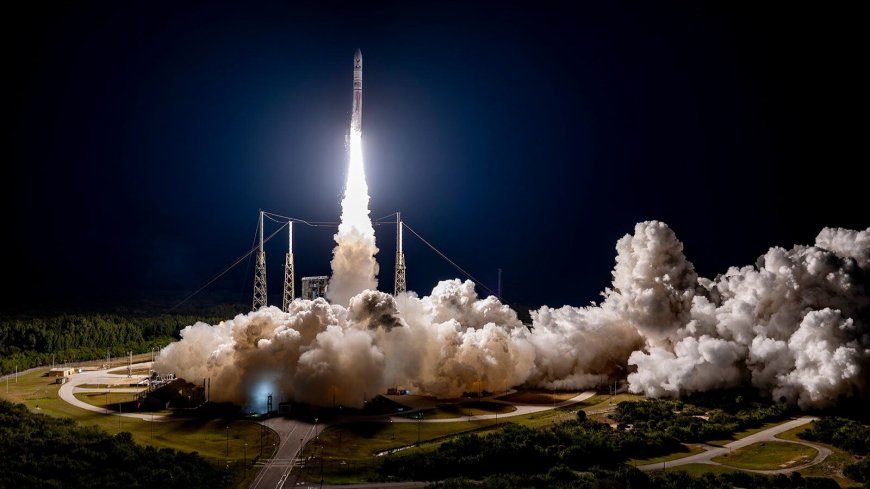
Featured image: a ULA Vulcan rocket lifting off from Cape Canaveral on an earlier flight.
United Launch Alliance's Vulcan rocket failed minutes after liftoff on Sunday, November 15, 2026, destroying the 40 Amazon Leo broadband satellites it was carrying and handing the launch provider its first outright mission failure in two decades.
The 214-foot Vulcan Centaur lifted off from Space Launch Complex 41 at Cape Canaveral Space Force Station in Florida at 12:40 p.m. EST, thundering away on 3.8 million pounds of thrust from six strap-on solid rocket boosters and two methane-burning BE-4 main engines. About 10 minutes into the flight, during the first burn of the hydrogen-fueled Centaur V upper stage, something went wrong. The rocket never reached orbit, and all 40 satellites were lost.
"Based on data received by our Launch Director, we confirm that the Vulcan vehicle launched from Space Launch Complex 41 suffered an anomaly 10 minutes into the flight and failed to deliver the Amazon mission to orbit," ULA said in a statement about 50 minutes after liftoff. "We will work closely with our customer and other appropriate organizations to find the cause, determine the appropriate corrective action and return to flight as quickly as possible."
It was the first total loss of a mission since ULA, a joint venture between Boeing and Lockheed Martin, was formed in 2006 — ending a run of more than 170 launches without an outright failure across its Atlas V, Delta IV and Vulcan rockets.
What happened during the flight
The early part of the flight appeared to go as planned. The six Northrop Grumman GEM-63XL solid rocket boosters burned out and peeled away about a minute and 45 seconds after liftoff, and the two Blue Origin-built BE-4 engines kept pushing the first stage toward space. But observers noted that the BE-4s appeared to fire longer than called for in ULA's pre-launch timeline, and the first stage seemed to separate from the Centaur later than expected.
After stage separation, the Centaur's two RL10 engines took over for a planned 12-minute 15-second burn. Telemetry shown during the webcast indicated the Centaur making unusual orientation adjustments early in that burn. ULA's launch commentators did not mention any problems, and the broadcast ended without confirming whether the Centaur's first engine firing ran its full duration.
Ars Technica, citing multiple industry sources, reported that the twin BE-4 engines burned for at least 30 seconds past their planned five-minute window, and that the root problem appeared to lie in the booster stage rather than in the solid rocket boosters or the Centaur upper stage. ULA itself has not confirmed any cause, saying it did not yet have specific data on what went wrong. Any claim about the cause should be treated as unconfirmed until ULA publishes its findings.
A troubled return to flight
Sunday's mission, designated Leo 1, was only the fifth flight of the Vulcan rocket, which debuted in January 2024, and its first in nine months. ULA had grounded the vehicle since February 12, 2026, when a solid rocket booster nozzle failed during the USSF-87 national security mission. A similar nozzle problem had also marred Vulcan's second flight in October 2024, though both of those missions still reached orbit.
ULA and booster supplier Northrop Grumman spent months working on the nozzle problem. ULA chief executive Mark Peller told Aviation Week before the flight that the company had identified three credible causes of the nozzle issue and taken steps to mitigate all of them. The boosters appeared to work normally on Sunday. The failure that followed was a different kind of problem — and a more serious one, because the rocket could not recover from it.
The BE-4 engines on this flight had also been retrofitted by Blue Origin engineers with a design fix for an oxygen valve issue linked to a catastrophic on-pad explosion of Blue Origin's New Glenn rocket in May 2026. The same BE-4 engine powers both rockets.
Getting to the launch pad had already been difficult. A launch attempt on Friday was scrubbed after problems knocked out a gaseous nitrogen plant serving multiple launch providers, and Saturday's attempt was called off because of network problems between the rocket and ground systems. On Sunday, controllers held the countdown at the T-minus 20-second mark over a technical issue before resolving it and launching at the end of the window. It is not yet known whether that countdown hold played any role in the failure.
What the failure means for Amazon Leo
The mission was the first of 38 Vulcan launches Amazon has bought to build its Leo broadband constellation, the network formerly known as Project Kuiper, designed to compete head-to-head with SpaceX's Starlink. It was also the largest single batch of Amazon satellites ever launched at once. Had it succeeded, it would have pushed the total number of Leo satellites launched to 436. Amazon has roughly 396 satellites in orbit today, against more than 11,100 working Starlink satellites.
Amazon will now have to wait for ULA's failure investigation to run its course before trying again with a Vulcan, and the rocket is expected to be grounded for an indefinite period. The company has also booked 24 Leo launches aboard Blue Origin's New Glenn rocket, 24 on Europe's Ariane 6, and 13 on SpaceX's Falcon 9. But New Glenn is itself recovering from its May explosion, so Amazon's deployment schedule faces severe bottlenecks on two fronts at once.
More than 3,300 Leo satellites will be needed to complete the constellation, and Amazon is under a US Federal Communications Commission deadline to deploy half of its first-generation fleet. The lost batch eats directly into that schedule.
National security missions also affected
The failure reaches beyond Amazon. Vulcan is on contract to launch roughly half of the US military's national security space missions over the next few years, and the US Space Force had already put Vulcan launches of national security payloads on hold after the February booster incident, pending additional analysis. Defense officials had also moved six national security missions from Vulcan to SpaceX during earlier development delays.
NASA Administrator Jared Isaacman offered the agency's help with the investigation, writing on X that NASA was available to assist "in all matters related to the investigation and remediation effort" and adding: "Artemis, Moon Base, and the nation need ULA."
Investigation begins, cause unknown
ULA has promised transparency with its customers during the investigation, which will work through flight telemetry to find the cause and decide on corrective action. With the boosters cleared of suspicion in the early reporting and the Centaur's burn cut short, attention is likely to focus on the first stage — but until ULA says so, the cause remains unknown.
For a company that had never lost a mission in 20 years, Sunday was a first in the worst sense. How long Vulcan stays grounded, and what the failure means for Amazon's race against Starlink, will depend on what the investigation finds.
Sources
- Spaceflight Now — ULA suffers first outright failure with loss of Vulcan rocket carrying 40 Amazon Leo satellites
- Florida Today — ULA Vulcan suffers anomaly after return-to-flight launch from Cape Canaveral
- NASASpaceFlight — ULA's Vulcan suffers anomaly on return to flight with first Amazon Leo payload
- Business Today — ULA Vulcan crash wipes out 40 Amazon Leo satellites. How it stacks up against Musk's Starlink
- Ars Technica — Vulcan rocket fails during launch, dealing major blow to SpaceX competitors (reporting on the BE-4 burn duration and booster-stage indications, consulted via syndication)
What's Your Reaction?
 Like
0
 Dislike
0
 Love
0
 Funny
0
 Angry
0
 Sad
0
 Wow
0