







































POCO F9 Ultra Review: An 8,050mAh Battery Meets Flagship Power and a 185Hz Display
The POCO F9 Ultra combines the Snapdragon 8 Elite Gen 5 processor, an enormous 8,050mAh battery, a 6.9-inch 185Hz AMOLED display and a 200MP camera system. With 100W wired charging, 50W wireless charging and a Bose-tuned speaker system, the phone aims to deliver a premium experience for gamers and power users. Here is a detailed look at its specifications, price, performance, cameras, battery life and key drawbacks.

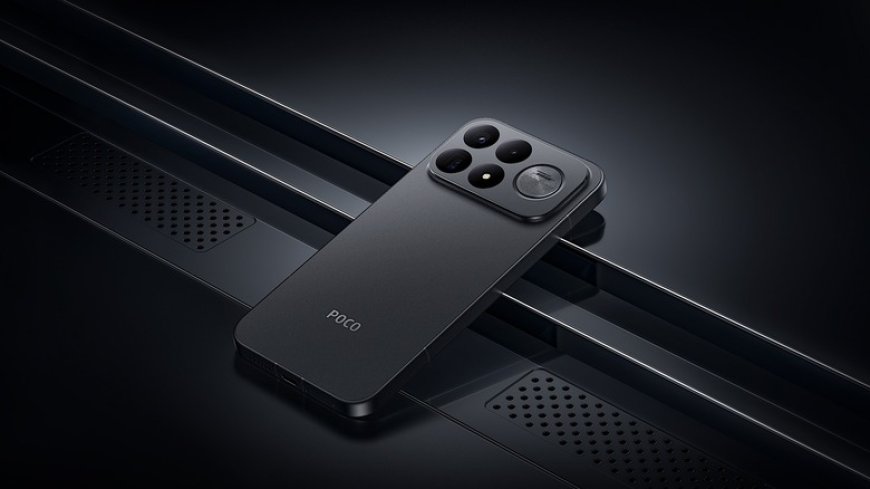
POCO F9 Ultra Review: A Battery Giant With Serious Flagship Ambitions
The smartphone market has changed considerably over the past few years. Large batteries, high-refresh-rate displays and powerful processors are no longer exclusive to expensive flagship phones, but combining all three without major compromises remains a challenge. With the POCO F9 Ultra, Xiaomi's performance-focused smartphone brand is attempting to deliver precisely that combination.
The F9 Ultra brings together Qualcomm's Snapdragon 8 Elite Gen 5 processor, an enormous 8,050mAh battery, a 6.9-inch AMOLED display with a headline refresh rate of 185Hz and a 200MP main camera. It also includes a 50MP periscope telephoto camera, wireless charging and a speaker system developed in collaboration with Bose. These features make it more than a conventional gaming phone: POCO is positioning the device as a premium all-rounder for people who want powerful performance without giving up battery endurance or multimedia features.
However, the phone arrives with a higher price than its predecessor, and independent testing has highlighted another concern: heat under sustained heavy workloads. The F9 Ultra therefore raises an important question. Can its huge battery, impressive hardware and upgraded cameras justify its price, or has POCO moved too far away from the affordable flagship formula that made the brand popular?
POCO F9 Ultra Specifications at a Glance
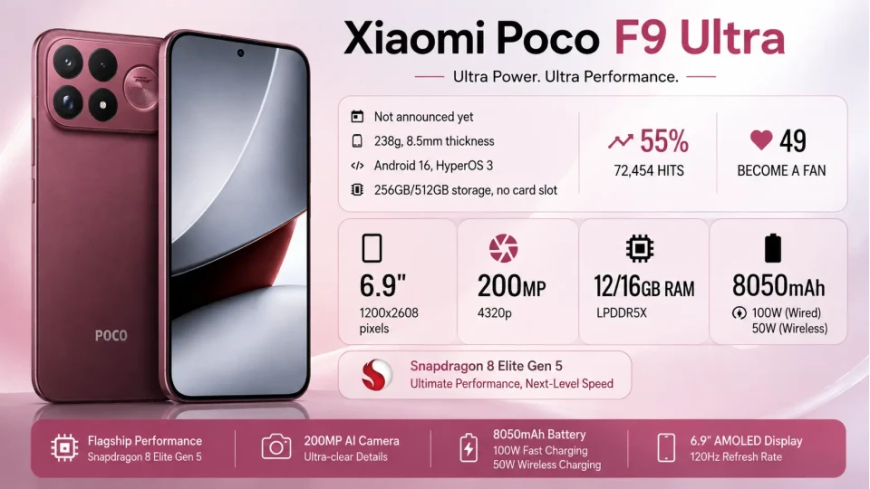
The POCO F9 Ultra features a 6.9-inch AMOLED display with a resolution of 2608 × 1200 pixels, support for Dolby Vision and HDR10+, and a maximum advertised refresh rate of 185Hz. The phone is powered by the 3nm Snapdragon 8 Elite Gen 5 chipset and comes in configurations with 12GB or 16GB of RAM and 256GB, 512GB or 1TB of storage, depending on the market.
Its rear camera system consists of a 200MP primary camera with optical image stabilization, a 50MP periscope telephoto camera with 5x optical zoom and a 50MP ultra-wide camera. The front camera has a 32MP sensor. The battery has a typical capacity of 8,050mAh, with support for 100W wired charging, 50W wireless charging and reverse charging. The device runs Android 16 with Xiaomi HyperOS 3 and carries an IP68 rating for dust and water resistance under specified laboratory conditions.
The phone weighs approximately 235 grams and measures around 8.74mm thick. That makes it a substantial device, although its battery capacity is unusually large for a smartphone with a conventional flagship design.
Design and Build Quality: Premium, but Not Lightweight
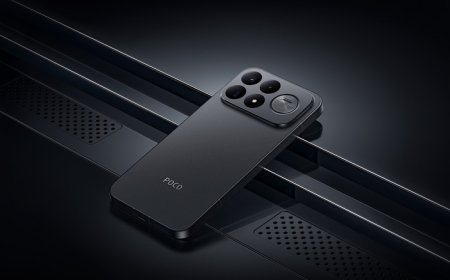
POCO has given the F9 Ultra a more premium hardware package, with a glass front, an aluminium frame and a glass-fibre-reinforced plastic back on the reviewed configuration. The large rear camera module makes the phone's flagship ambitions immediately apparent, while its overall design remains consistent with POCO's performance-oriented identity.
At approximately 235 grams, the device is heavier than many mainstream smartphones. That weight is understandable given its enormous battery and extensive hardware, but users who prefer compact phones may find it cumbersome during extended one-handed use. Its 6.9-inch screen also makes it better suited to two-handed gaming, watching videos and browsing.
The IP68 rating provides protection against dust and water under defined testing conditions. It should not be treated as a guarantee against every accident, and water resistance can deteriorate with wear or physical damage. Nevertheless, it adds a useful layer of protection to a phone designed for demanding everyday use.
6.9-Inch AMOLED Display With a 185Hz Refresh Rate
The display is one of the F9 Ultra's major attractions. Its 6.9-inch AMOLED panel offers a resolution of 2608 × 1200 pixels, producing a sharp image for games, videos, photographs and everyday applications. Support for Dolby Vision and HDR10+ also allows compatible content to take advantage of the panel's wide colour range and high dynamic range.
The advertised 185Hz refresh rate is particularly unusual. A higher refresh rate can make animations and supported games look smoother, while the panel's high touch-sampling capability is designed to improve responsiveness during interaction. POCO also incorporates dedicated display-processing hardware intended to improve motion clarity and gaming performance.
There is an important distinction, however: 185Hz does not mean every game will run at 185 frames per second. The actual frame rate depends on the game's settings, software support, processor load and thermal conditions. Many everyday applications also operate at lower refresh rates to conserve power. For most users, the display's brightness, colour reproduction and general responsiveness will matter more than reaching the maximum refresh rate.
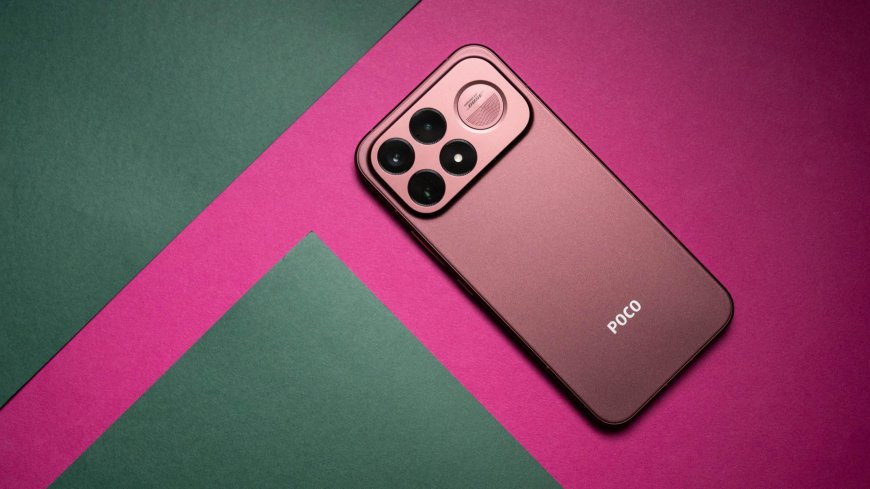
Snapdragon 8 Elite Gen 5: Flagship Performance for Gaming
At the heart of the POCO F9 Ultra is Qualcomm's Snapdragon 8 Elite Gen 5, a high-end 3nm mobile platform designed for demanding applications, advanced graphics and on-device AI workloads. Paired with up to 16GB of RAM and UFS 4.1 storage, it gives the phone the hardware foundation needed for intensive multitasking, demanding games and fast application loading.
In everyday use, this level of processing power should comfortably handle social media, navigation, photography, video editing and switching between multiple applications. Its graphics capabilities also make it suitable for resource-intensive games, particularly when paired with the large, high-refresh-rate display.
Yet raw performance is only part of the gaming experience. Notebookcheck's review reported that the F9 Ultra can become very hot under sustained workloads. Heat can lead to performance throttling, in which the phone reduces processing speed to manage temperatures. This means the device's impressive peak performance does not necessarily translate into identical performance throughout a long gaming session.
For casual gaming and everyday use, the hardware is more than sufficient. People who regularly play demanding games for extended periods should pay attention to sustained-performance and temperature tests rather than relying exclusively on processor benchmarks.
8,050mAh Battery: The Feature That Changes the Experience
The battery is arguably the most distinctive part of the POCO F9 Ultra. Its typical capacity of 8,050mAh is substantially larger than the batteries found in many conventional flagship smartphones. The phone uses silicon-carbon battery technology to accommodate this capacity within a relatively familiar smartphone form factor.
For heavy users, the practical benefit is straightforward. Gaming, streaming, navigation, photography and mobile data can consume considerable power, but a battery of this size provides a much larger energy reserve. Actual battery life will vary with screen brightness, mobile signal, refresh-rate settings, gaming intensity and background activity, so no single endurance figure will apply to every owner.
Charging is equally well equipped. The F9 Ultra supports 100W wired charging, as well as 50W wireless charging. It also offers reverse wired and reverse wireless charging, allowing it to supply power to compatible accessories and devices.
Actual charging speeds depend on the charger, cable, temperature and battery level. Maximum charging power is not maintained throughout the entire charging cycle, as the phone adjusts power to manage heat and protect battery health.
The main trade-off is physical size and weight. The battery makes the phone heavier than many alternatives, but users who value endurance over portability may consider that a reasonable compromise.
200MP Main Camera and 5x Periscope Zoom
POCO has made a substantial camera push with the F9 Ultra. Its primary camera uses a 200MP sensor with optical image stabilization, designed to capture detailed images while helping compensate for camera movement. The phone also features a 50MP periscope telephoto camera with 5x optical zoom and a 50MP ultra-wide camera.
The telephoto camera is especially useful for photographing distant subjects. Unlike digital zoom, optical zoom uses the lens system to magnify the scene before the image reaches the sensor, helping preserve detail. Optical stabilization on the main camera and telephoto system can also help produce steadier shots in suitable conditions.
The ultra-wide camera provides a broader field of view for landscapes, architecture and group photographs. However, Notebookcheck noted that the ultra-wide camera lacks autofocus and is less convincing in low-light conditions. This makes the three-camera system versatile, but not every lens performs at the same level.
The main camera is capable of recording video at up to 8K at 30 frames per second, with 4K recording also available at higher frame rates. The 32MP front camera supports high-resolution selfies and video calls.
As always, megapixel counts alone do not determine image quality. Sensor size, lens quality, image processing, autofocus and low-light performance all contribute to the final result. The F9 Ultra's camera system is well equipped on paper, but buyers should consider independent sample images and video tests when comparing it with other premium phones.
Bose-Tuned Speakers and HyperOS 3
The audio system is another unusual feature. The F9 Ultra uses a 2.1-channel speaker arrangement developed with Bose, combining stereo speakers with a dedicated subwoofer. This configuration is designed to deliver fuller sound than the typical smartphone speaker setup, particularly when watching videos, listening to music or playing games without headphones.
The effect will naturally be limited by the size of a phone's enclosure, but the additional subwoofer gives POCO a distinctive multimedia feature. It may be especially appealing to people who frequently watch films or play games on their phone.
On the software side, the F9 Ultra runs Android 16 with Xiaomi HyperOS 3. The interface includes system customisation options, multitasking features and integration with Xiaomi's broader software ecosystem. The company lists support for up to four major Android OS upgrades, although the timing of individual updates can vary by region.
As with other feature-rich Android interfaces, the experience will depend partly on software updates, preinstalled applications and personal preferences. Buyers should check the update policy and available regional software features before purchasing an imported device.
POCO F9 Ultra Price: How Much Does It Cost?
The POCO F9 Ultra's pricing is significantly higher than the traditional budget-phone image associated with the brand. According to GSMArena's review, the official suggested price for the 12GB RAM and 256GB storage model is US$799, with an early-bird price of US$729. In Europe, the corresponding official price is €1,099, while promotional pricing starts lower. The 16GB/512GB and 16GB/1TB versions cost more.
These figures vary by market, configuration and promotion. They should not be treated as the official retail price in Bangladesh. Local availability, import duties, retailer margins, warranty coverage and currency movements can all affect the final price paid by buyers.
Anyone considering the F9 Ultra in Bangladesh should confirm the price for the exact storage variant and whether the handset comes with an official local warranty. A grey-market import may have a different price and after-sales support arrangement from an officially distributed device.
POCO F9 Ultra Review: Pros and Cons
The F9 Ultra's strongest qualities are its enormous battery, powerful processor, large AMOLED display and versatile camera hardware. Wireless charging, IP68 protection and the Bose-tuned audio system further broaden its appeal. It is a phone designed to do much more than deliver high benchmark scores.
Its drawbacks are worth considering too. The 235-gram body is relatively heavy, sustained gaming can produce significant heat, and the ultra-wide camera is weaker than the main and telephoto cameras in some situations. The higher launch price also makes the value proposition less straightforward than it was for older POCO flagship-killer models.
What stands out
- 8,050mAh battery with 100W wired and 50W wireless charging
- Snapdragon 8 Elite Gen 5 flagship processor
- 6.9-inch AMOLED display with up to 185Hz refresh rate
- 200MP main camera and 50MP 5x periscope telephoto
- Bose-tuned 2.1-channel speaker system
- IP68 dust and water resistance
What to consider
- Relatively heavy at approximately 235 grams
- Can become hot during sustained intensive workloads
- Ultra-wide camera has limitations, particularly in low light
- Higher launch price than previous POCO generations
Final Verdict: Is the POCO F9 Ultra Worth Considering?
The POCO F9 Ultra combines several features that rarely appear together in one device: flagship-class processing power, an 8,050mAh battery, a very fast AMOLED display, 5x optical zoom and a dedicated subwoofer. It is particularly suited to people who spend long hours gaming, watching videos, using mobile data or running demanding applications and want to recharge less frequently.
It is not without compromises. Its weight makes it less convenient for users who prefer compact phones, while heat during sustained workloads could affect long gaming sessions. The higher price also means buyers should compare it with competing flagship devices rather than judging it solely by POCO's historical reputation for low prices.
Ultimately, the POCO F9 Ultra is a powerful, endurance-focused flagship with an ambitious feature set. Its appeal rests on the combination of battery life, display quality, performance and multimedia features—not on any single specification. Whether it represents good value depends on the price available in your market and how much you value those particular strengths.
What's Your Reaction?
 Like
0
Like
0
 Dislike
0
Dislike
0
 Love
0
Love
0
 Funny
0
Funny
0
 Angry
0
Angry
0
 Sad
0
Sad
0
 Wow
0
Wow
0