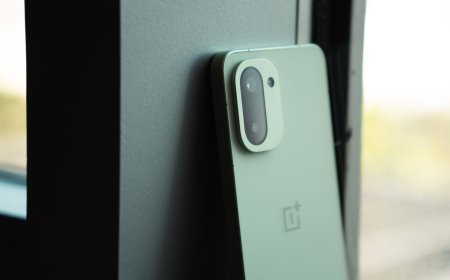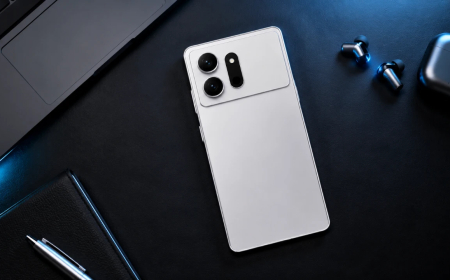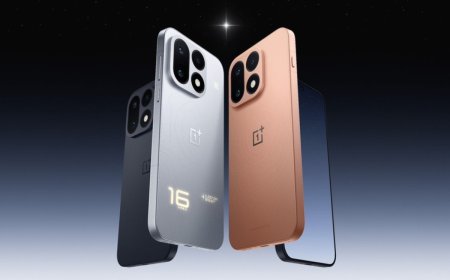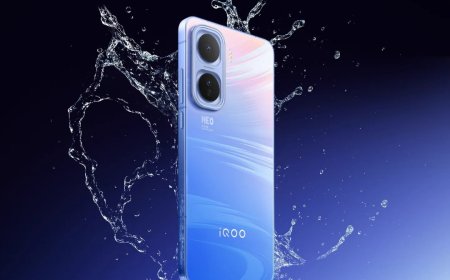











































iQOO 16 vs OnePlus 16: Specs, Cameras, Battery and Gaming Compared
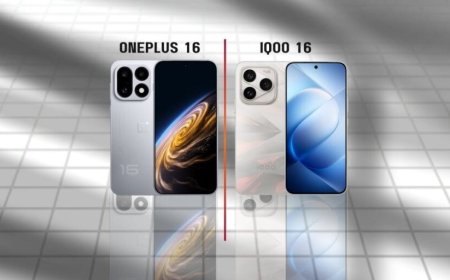
The iQOO 16 and OnePlus 16 are competing flagship smartphones powered by Qualcomm’s Snapdragon 8 Elite Extreme Gen 6 processor. Both offer high-refresh-rate AMOLED displays, large batteries, fast charging and advanced camera systems, but they take different approaches to the flagship experience. Here is a detailed comparison of their specifications, display quality, performance, cameras, battery life, prices and availability, including what buyers in India, the US, China and Bangladesh should know.
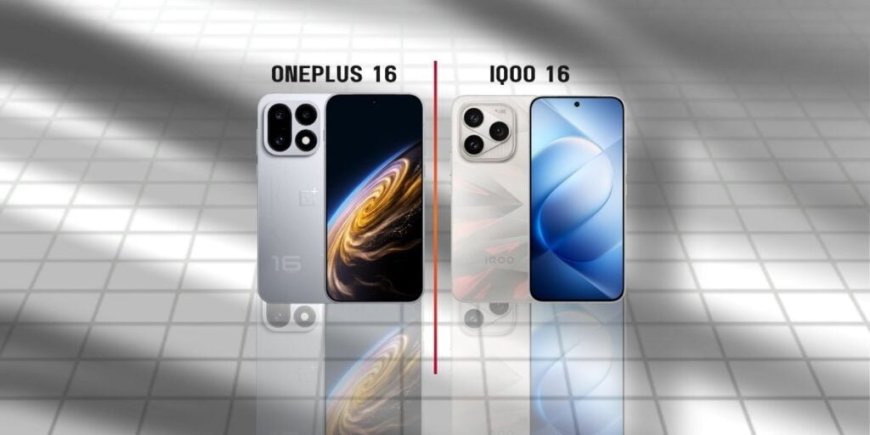
iQOO 16 vs OnePlus 16: Which Flagship Smartphone Is Better?
The iQOO 16 and OnePlus 16 are built around a similar idea: deliver flagship-level performance without forcing buyers to compromise on battery capacity, display technology or camera hardware. Both phones use Qualcomm’s Snapdragon 8 Elite Extreme Gen 6 platform, but their specifications reveal some important differences.
The iQOO 16, launched in China on September 29, 2026, puts considerable emphasis on display resolution, gaming technology and a large battery. The OnePlus 16, which arrived in China in October, counters with a higher maximum gaming refresh rate, a 200-megapixel main camera and a larger advertised battery capacity.
For buyers comparing the two phones, the decision is not simply about which has the bigger numbers. Screen resolution, sustained gaming performance, camera processing, software support and local availability can make a meaningful difference to everyday use.
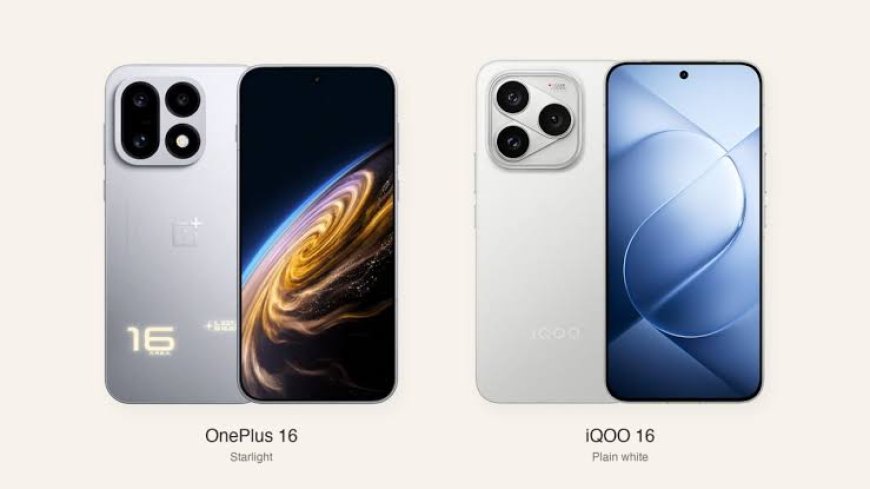
iQOO 16 vs OnePlus 16: Key Specifications
| Specification | iQOO 16 | OnePlus 16 |
|---|---|---|
| Processor | Snapdragon 8 Elite Extreme Gen 6 | Snapdragon 8 Elite Extreme Gen 6 |
| Display | 6.85-inch AMOLED | 6.78-inch AMOLED |
| Resolution | 3168 × 1440 pixels | 2772 × 1272 pixels |
| Maximum refresh rate | 165Hz | 185Hz in supported games |
| RAM | 12GB or 16GB | 12GB or 16GB |
| Storage | 256GB, 512GB or 1TB | 256GB, 512GB or 1TB |
| Main camera | 50MP | 200MP |
| Other rear cameras | 50MP ultrawide and 50MP periscope telephoto | 50MP ultrawide and 50MP telephoto |
| Front camera | 32MP | 50MP |
| Battery | 8,400mAh | 9,000mAh equivalent |
| Wired charging | Up to 100W | Up to 100W |
| Wireless charging | Up to 40W | Availability and support should be checked against the regional model |
| Software at launch | OriginOS 7, Android 17 | ColorOS 17, Android 17 |
| Water resistance | IP68 and IP69 | IP66, IP68, IP69 and IP69K |
| China launch | September 29, 2026 | October 2026 |
Specifications are based on official product information and published reporting available at the time of writing. Features, software, charging support and prices can differ by market.
Design and Display: iQOO Offers More Resolution, OnePlus More Refresh Rate
The display is one of the clearest differences between these smartphones.
The iQOO 16 has a 6.85-inch Samsung AMOLED panel with a resolution of 3168 × 1440 pixels. Its 2K-class resolution gives it a pixel-density advantage over the OnePlus 16, which uses a 6.78-inch AMOLED screen with a resolution of 2772 × 1272 pixels.
That difference matters most when reading small text, examining detailed images or viewing high-resolution video at close range. The iQOO screen also provides more physical space, which can be useful for gaming controls, documents and multitasking.
The OnePlus 16 takes another route. Its display supports a refresh rate of up to 185Hz in compatible games, compared with the iQOO 16's maximum of 165Hz. A higher refresh rate can make motion appear smoother, particularly in fast-paced competitive games.
However, refresh rate is not the same as image quality. A game must support the relevant frame rate, and the processor, graphics hardware, temperature and game settings all influence the final experience. Many everyday applications will not benefit visibly from the highest available refresh rates.
For buyers who prioritize sharpness and a larger screen, the iQOO 16 has the more attractive specification sheet. The OnePlus 16 may appeal more to gamers who want the highest supported refresh rate.
Performance and Gaming: Both Use the Same Flagship Processor
The iQOO 16 and OnePlus 16 share Qualcomm's Snapdragon 8 Elite Extreme Gen 6 mobile platform. Both also offer configurations with up to 16GB of RAM and 1TB of storage, making them well equipped on paper for demanding applications, multitasking and large mobile games.
Using the same processor does not guarantee identical performance. Manufacturers can configure cooling systems, power limits and performance modes differently. Those decisions affect how long a phone can maintain high performance during extended gaming sessions.
The iQOO 16 has a gaming-focused hardware and software approach, including a dedicated Q4 gaming chip and features designed around gaming responsiveness and network performance. Its high-resolution display is another advantage for players who prefer detailed visuals.
The OnePlus 16 combines the same flagship processor with a high-refresh-rate display and its own performance-management features. Its 185Hz gaming mode is particularly relevant to titles capable of taking advantage of very high frame rates.
For demanding games, both devices have strong hardware foundations. Nevertheless, actual performance should be judged using independent tests that measure frame rates, heat, power consumption and stability over time. A specification comparison alone cannot establish which phone runs every game faster.
Gaming verdict: The iQOO 16 is a strong choice for players who value display resolution and dedicated gaming features. The OnePlus 16 is appealing for those who prioritize its higher maximum gaming refresh rate. Neither should be declared the universal winner without comparable sustained-performance testing.
Camera Comparison: OnePlus Has the Megapixel Advantage
Camera hardware is another major difference.
The iQOO 16 features three rear cameras, each with a 50-megapixel sensor. The system includes a main camera with a large 1/1.3-inch sensor, a Sony periscope telephoto camera and an ultrawide camera. The front camera is rated at 32 megapixels.
This arrangement gives the iQOO 16 a balanced camera setup on paper. The main sensor's size can help with light collection, while the periscope telephoto camera provides a dedicated option for distant subjects. The ultrawide camera is useful for landscapes, architecture and group photographs.
The OnePlus 16 uses a 200-megapixel main camera alongside 50-megapixel ultrawide and telephoto cameras. Its front-facing camera is rated at 50 megapixels.
The 200MP main camera gives OnePlus greater nominal image resolution, potentially allowing detailed high-resolution captures and more flexibility when cropping photographs. However, megapixel count alone does not determine image quality. Sensor design, lens quality, image processing, autofocus and optical stabilization all contribute to the final result.
The iQOO 16's 50MP main camera should not automatically be considered inferior, particularly given its large sensor. Likewise, the OnePlus 16's higher-resolution sensor does not guarantee better photographs in every lighting condition.
Low-light photography, skin tones, portrait separation, moving subjects and video stabilization are areas where real-world testing will matter more than the headline specifications.
Camera verdict: The OnePlus 16 looks more ambitious in terms of main-camera resolution and selfie-camera specifications. The iQOO 16 has a promising large-sensor main camera and dedicated periscope telephoto hardware. A definitive winner requires comparable sample photographs and independent testing.
Battery Life: OnePlus Has the Larger Capacity
Battery capacity is one of the most important practical differences between the two phones.
The iQOO 16 includes an 8,400mAh battery and supports wired charging at up to 100W. It also supports wireless charging at up to 40W according to its official specifications.
The OnePlus 16 advertises a battery equivalent to 9,000mAh, using a dual-cell configuration with a combined typical energy rating of 33.93Wh. It also supports up to 100W wired charging.
The OnePlus therefore has a nominal capacity advantage of 600mAh, or roughly 7.1% compared with the iQOO 16's advertised capacity. That does not mean it will last exactly 7.1% longer.
Battery endurance depends on screen brightness, refresh rate, gaming workloads, mobile signal strength, background applications and software optimization. A high-refresh-rate display running demanding games can consume substantially more power than ordinary messaging or browsing.
Charging figures also describe maximum supported power rather than a guaranteed charging speed throughout the entire charging cycle. Actual results depend on temperature, battery level, charger compatibility and other safeguards.
For users who frequently play games, travel or spend long periods away from a charger, both phones offer unusually large batteries for flagship devices. The OnePlus 16 has the capacity advantage on paper, while the iQOO 16 combines a substantial battery with fast wired and wireless charging.
Software and Everyday Experience
The iQOO 16 runs OriginOS 7 based on Android 17 in its Chinese configuration. The software includes productivity and multitasking features alongside tools intended to improve gaming and device connectivity.
The OnePlus 16 runs ColorOS 17 based on Android 17 in China. Its interface, customization options and system features are designed around the ColorOS software ecosystem.
Although both phones use Android, their user experiences will not necessarily be identical. Interface design, preinstalled applications, regional services, language support and update policies can differ between the Chinese versions and any international variants.
This is particularly important for buyers outside China. A Chinese-market smartphone may not provide exactly the same software experience as a model officially sold in another country. Buyers should confirm Google service compatibility, supported network bands, notification behavior, warranty coverage and the availability of local-language features before importing either phone.
Long-term software support is another important consideration. The official update commitments for the exact regional models should be checked before purchase rather than inferred from their launch software.
Build Quality and Water Resistance
Both phones are designed as premium devices, but their dimensions and protection ratings differ.
The iQOO 16 measures approximately 163.75mm in height and weighs between 222.5g and 229.8g, depending on the color variant. Its official specifications list IP68 and IP69 protection.
The OnePlus 16 is shorter at approximately 161.42mm and weighs around 217g to 220g, depending on the finish. Its Chinese specifications list IP66, IP68, IP69 and IP69K protection.
The OnePlus is therefore slightly more compact and lighter in some configurations. That could make a difference for people who use their phones one-handed or carry them for long periods.
Water and dust resistance ratings also need to be interpreted carefully. They describe performance under specified laboratory conditions, not immunity to every type of liquid exposure or damage. Protection can deteriorate with wear, and warranty coverage for liquid damage varies.
Neither phone should be treated as indestructible simply because it has multiple protection ratings.
Price Comparison: Which Phone Offers Better Value?
Price is a major factor when comparing two similarly positioned flagships, especially for buyers considering an imported smartphone.
The iQOO 16's official Chinese specification page lists the following suggested retail prices:
| Configuration | iQOO 16 China price |
|---|---|
| 12GB + 256GB | CNY 5,999 |
| 12GB + 512GB | CNY 6,799 |
| 16GB + 512GB | CNY 7,499 |
| 16GB + 1TB | CNY 8,499 |
The launch announcement also described promotional pricing and subsidies for eligible Chinese buyers. Those offers should not be assumed to apply to international customers.
The OnePlus 16 has been reported to start at approximately CNY 5,699 in China, although buyers should confirm the current price and applicable configuration through its official Chinese store.
These figures are not directly comparable to final retail prices in other countries. Import duties, local taxes, shipping, retailer margins and warranty arrangements can change the amount a customer ultimately pays.
For Bangladesh, the key question is whether either phone receives an official local launch with dependable after-sales support. A lower overseas price may not represent better value if the buyer must pay substantial import costs or has difficulty obtaining repairs.
For India and the US, official regional availability should likewise be confirmed before making a purchasing decision. Chinese launch announcements alone do not establish a local release date or price.
Availability in India, the US, China and Bangladesh
China: Both smartphones have been announced for the Chinese market. Their official Chinese product pages provide the clearest reference for specifications and configurations.
India: An India-specific launch, price and retail configuration should be confirmed through official regional announcements. Chinese prices cannot be converted directly into reliable Indian retail prices.
US: Buyers should verify whether either phone is officially available for the US market and whether its network compatibility and warranty support meet their needs. A Chinese-market model should not be assumed to offer full US carrier compatibility.
Bangladesh: Buyers should check local retailer stock, the precise model number, supported mobile bands, software configuration and warranty conditions. An imported unit may have different software or service support from an officially distributed model.
Regional availability can ultimately matter more than a small difference in specifications. A phone that is easy to repair and fully supported locally may be a more practical purchase than a theoretically better device with uncertain warranty coverage.
iQOO 16 vs OnePlus 16: Which One Should You Choose?
The iQOO 16 and OnePlus 16 are close competitors because they share the same flagship processor and offer substantial memory, storage and battery capacities. Their differences are more apparent in the display, camera hardware, battery capacity and gaming priorities.
Choose the iQOO 16 if you prefer a higher-resolution 2K-class display, a large 6.85-inch screen, dedicated gaming features and a 50MP triple rear-camera setup with a large main sensor and periscope telephoto camera.
Choose the OnePlus 16 if you prefer its 185Hz gaming refresh rate, 200MP main camera, 50MP front camera and larger advertised 9,000mAh-equivalent battery. Its slightly smaller body may also appeal to buyers looking for a more compact flagship.
For gaming, the choice depends on the titles you play and how each phone performs during sustained sessions. For photography, independent image comparisons are needed to establish whether the OnePlus camera system delivers better results in practice. For everyday use, battery endurance, software reliability and regional support may matter more than the headline specifications.
Ultimately, neither phone is the automatic winner for every buyer. Compare the exact regional prices and configurations before deciding, and prioritize verified performance and support over marketing claims.
Sources
- vivo Official Website — iQOO 16 Product Specifications: https://www.vivo.com.cn/vivo/param/iqoo16
- vivo Official Newsroom — iQOO 16 Launch Announcement: https://www.vivo.com.cn/brand/news/detail?id=1396&type=0
- OnePlus Official China Website — OnePlus 16 Specifications: https://www.oneplus.com/cn/16/specs
- Gadgets 360 — iQOO 16 vs OnePlus 16 Comparison: https://www.gadgets360.com/compare-oneplus-16-137368-vs-iqoo-16-137361
- 91mobiles — iQOO 16 Launch, Price and Specifications: https://www.91mobiles.com/hub/iqoo-16-launched-china-price-specifications/
What's Your Reaction?
 Like
0
Like
0
 Dislike
0
Dislike
0
 Love
0
Love
0
 Funny
0
Funny
0
 Angry
0
Angry
0
 Sad
0
Sad
0
 Wow
0
Wow
0