

















US and China Open a New AI Channel as Trump-Xi Summit Brings $30 Billion Trade Deal
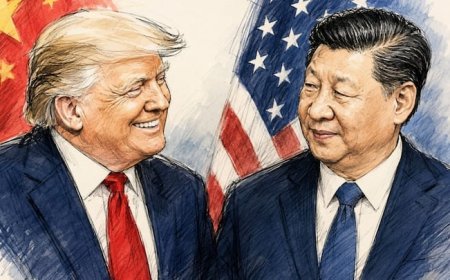
The United States and China have agreed to launch a formal dialogue on artificial intelligence and move ahead with reciprocal tariff reductions covering about $30 billion in goods following Chinese President Xi Jinping’s three-day visit to Washington. The agreement also includes a new communication channel for AI-related incidents and a trade council, marking a series of practical steps between the world’s two largest economies despite broader disagreements.

A New Chapter in the US-China Relationship?
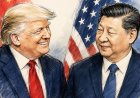
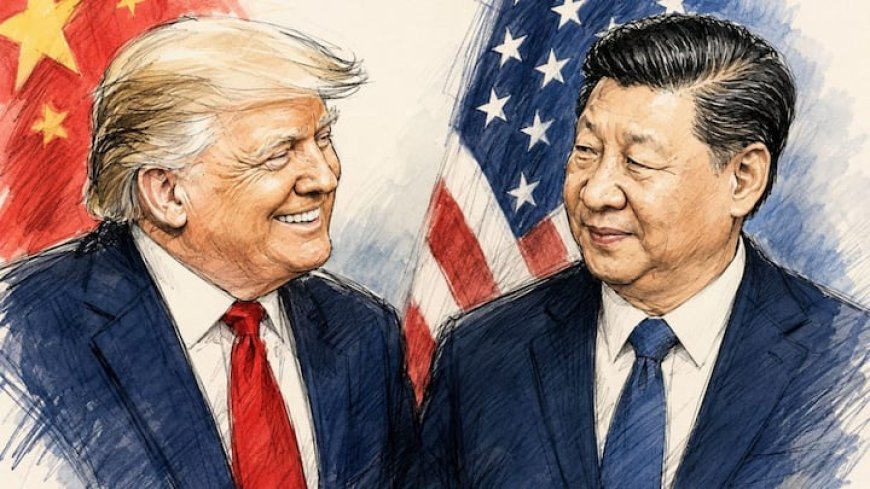
The latest meeting between U.S. President Donald Trump and Chinese President Xi Jinping has produced something the global economy has been waiting for: signs that Washington and Beijing are willing to keep talking. After Xi’s three-day state visit to Washington, the two countries agreed to move forward with reciprocal tariff reductions covering roughly $30 billion in goods and establish a formal dialogue on artificial intelligence. They also agreed to create a trade council and continue implementing the results of earlier economic negotiations.
The numbers matter, but the message behind the agreement may matter even more. The United States and China remain strategic competitors, yet the two governments are creating mechanisms that allow them to discuss problems before they become larger disputes. The summit did not produce a sweeping new trade agreement or resolve the biggest disagreements between Washington and Beijing. Instead, the outcome was built around smaller, concrete areas where cooperation is possible.
$30 Billion in Goods to Get Tariff Relief
At the center of the economic agreement is a reciprocal tariff-reduction arrangement covering around $30 billion worth of goods. The products involved are largely considered less sensitive than the technologies at the heart of the broader U.S.-China rivalry.
U.S. exports covered by the arrangement include agricultural products, fish and seafood, logs and wood products, cosmetics and medical devices. On the other side, U.S. imports from China covered by the reductions include products such as small appliances, toys, holiday decorations and children's car seats. The White House said the two sides would continue working on reducing reciprocal tariffs on these goods.
For businesses, even a limited tariff reduction can make a difference. Lower trade costs can reduce pressure on importers and exporters and potentially make some products cheaper or easier to move between the two markets. But this is not the end of the wider trade dispute. The two countries still have major disagreements over technology, industrial policy, market access and national security.
AI Has Now Become a Diplomatic Issue
Perhaps the most interesting part of the agreement is not about physical products at all. It is about artificial intelligence.
Washington and Beijing agreed to establish a China-U.S. AI Dialogue to discuss both the risks and benefits of AI. The next exchange is scheduled for November 2026, and the two countries also agreed to create a bilateral communication channel for AI-related incidents.
That is significant because AI has rapidly moved from being a technology-industry issue to a national-security and geopolitical issue. The United States and China are the world's two leading AI powers, and both are investing heavily in advanced models, computing infrastructure and semiconductor technology. A dedicated communication channel could give officials a way to discuss serious AI incidents and emerging risks rather than allowing misunderstandings to escalate.
The idea had already been discussed before the summit. U.S. Treasury Secretary Scott Bessent said earlier in September that Washington had proposed an AI safety notification mechanism covering incidents that could rise to the level of national security concerns. At that stage, the mechanism had not yet been formalized. The latest agreement moves the idea into a more concrete bilateral framework.
Why This Matters Beyond Washington and Beijing
The consequences of the U.S.-China relationship extend far beyond the two countries. Their economies are deeply connected to global manufacturing, technology, energy, agriculture and supply chains. When Washington and Beijing raise tariffs or impose technology restrictions, companies and consumers around the world can feel the effects.
The same is increasingly true for AI. Advanced chips, data centers, AI models and semiconductor manufacturing equipment have become strategic assets. Nvidia, for example, has become one of the most important companies in the global AI boom, while access to advanced computing technology has become a major point of tension between the United States and China.
That makes the decision to create an AI dialogue particularly notable. It does not mean Washington and Beijing have suddenly stopped competing. Instead, it creates a channel through which the two sides can talk while that competition continues.
The Trade Truce Gets More Time
The summit also builds on an earlier decision to extend the existing U.S.-China trade truce by two months. That extension gives both governments additional time to work toward a broader agreement rather than immediately returning to much higher tariff levels.
Still, many difficult issues remain unresolved. The latest agreement focuses on selected goods and creates new mechanisms for dialogue, but it does not remove the deeper strategic competition between the two countries. Issues involving advanced AI chips, technology controls, critical minerals, Taiwan and national security remain highly sensitive.
That is why the outcome of the summit is better understood as a collection of practical steps rather than a complete reset of U.S.-China relations. The two governments have found areas where they can continue talking, while leaving the harder disputes for future negotiations.
A Small Deal With a Much Bigger Meaning
The most important part of the Trump-Xi meeting may ultimately be what happens after the cameras disappear. A $30 billion tariff arrangement is meaningful for the companies and products directly affected, but the new AI dialogue could become much more important as artificial intelligence becomes increasingly powerful and globally influential.
For years, the U.S.-China relationship was dominated by trade and manufacturing. Now AI has joined that list as one of the defining issues between the two powers. Creating a direct communication channel for AI risks suggests both governments recognize that competition in this technology cannot happen without at least some form of communication.
The relationship remains complicated, and this summit did not erase those differences. But with tariff reductions, a trade council and a new AI dialogue now moving forward, Washington and Beijing have created several new channels for managing their competition. The real test will be whether those channels can survive when the next major disagreement arrives.
What's Your Reaction?
 Like
0
Like
0
 Dislike
0
Dislike
0
 Love
0
Love
0
 Funny
0
Funny
0
 Angry
0
Angry
0
 Sad
0
Sad
0
 Wow
0
Wow
0